
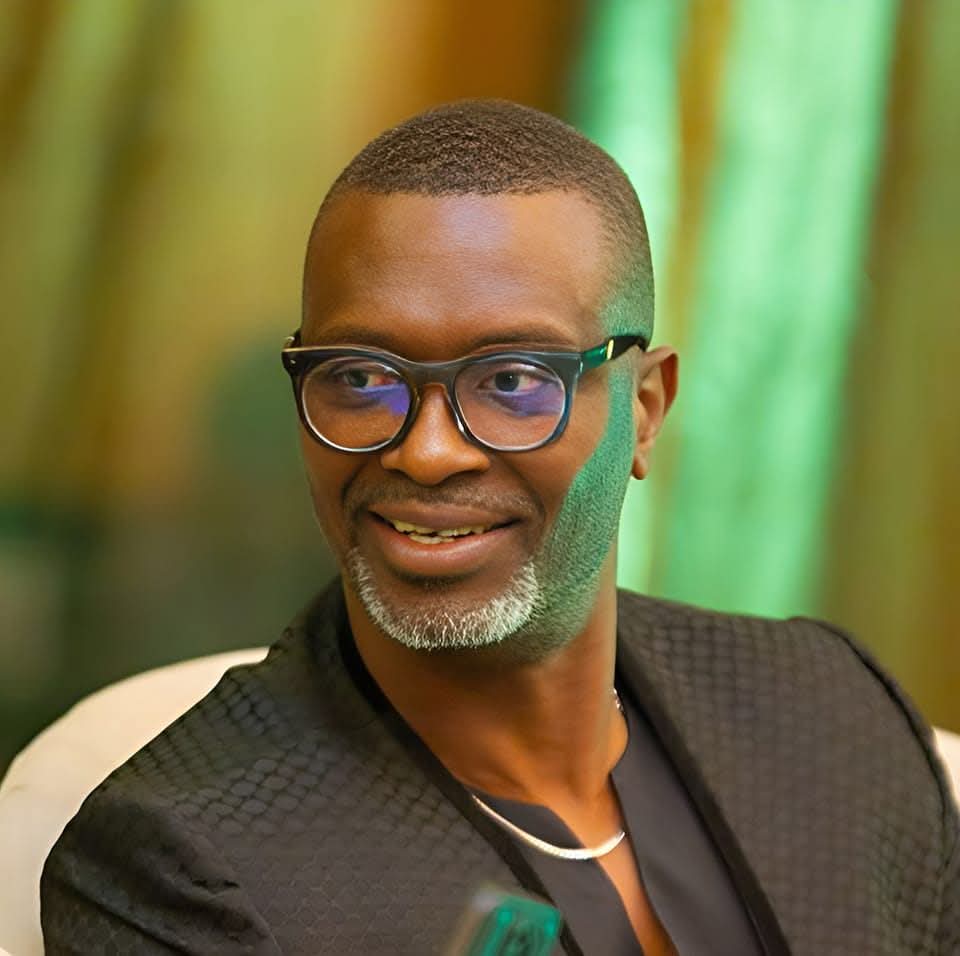

Interview with Adetokunbo Modupe | Ahead of Africa-Global PR Week
Africa must take greater ownership of the stories told about the continent and move from being the subject of global narratives to becoming an active force in shaping them, according to Nigerian strategic communications expert Adetokunbo Modupe.
Modupe, also known as Toks, is the Founder, Chairman and Group Chief Executive Officer of TPT International Limited. In an interview with DNE Africa, he said Africa’s global image has for decades been shaped largely through external perspectives that often focus on conflict, poverty, crisis and vulnerability.
While acknowledging that such challenges must be reported and addressed, Modupe said they represent only part of the African experience and should not define the continent’s identity.
What does it mean for Africans to take greater ownership of the stories being told about the continent?
Taking greater ownership means moving from being subjects of narratives created by others to becoming active architects of Africa’s global identity.
For decades, much of Africa’s international image has been shaped externally, often through lenses focused on crisis, poverty, conflict and vulnerability. These realities exist and must be addressed honestly, but they represent only a fraction of the African experience.
Narrative ownership means that Africans define the themes, platforms and voices through which the continent is understood. It means telling stories of innovation, entrepreneurship, scientific advancement, creative excellence, cultural influence, democratic progress and human resilience alongside the challenges.
It is not about creating a false positive image; it is about achieving narrative balance. A continent of 54 countries, 1.4 billion people and diverse experiences cannot be reduced to a single storyline.
Africa has enormous content across culture, history, business, innovation and human-interest stories. Are African media and PR professionals using this content enough to build stronger global narratives?
There has been significant progress, but we still are not doing enough.
Africa has become a global cultural force through Afrobeats, Nollywood, fashion, cuisine and sports. African entrepreneurs are building innovative solutions in fintech, agriculture, renewable energy and technology. Yet many of these stories remain fragmented, reactive and under-amplified.
One of the biggest gaps is that Africa often creates excellent stories but lacks the courage to project its achievements and assets consistently.
PR professionals and media organisations must move beyond event-based storytelling and develop long-term narrative platforms. A single news article or campaign cannot reshape perceptions; sustained storytelling creates reputation.
The question should no longer be whether Africa has stories. Africa has always had stories. The question is whether it has the structures, investment and strategies to ensure those stories travel globally.
What are the main challenges preventing African communicators from producing and distributing high-quality content to international audiences?
There are several challenges.
First is limited investment in storytelling infrastructure. Quality documentaries, research-driven journalism, multimedia content and global distribution require resources.
Second is the fragmentation of Africa’s communication ecosystems. The continent’s 54 countries often operate independently, making it difficult to create narratives with continental and global impact.
Third is the tendency towards reactive communication. Many organisations communicate during crises rather than building proactive reputation strategies. Our major communication assets are often too consumer-driven rather than reputation-focused.
Fourth is insufficient use of data-driven storytelling. Global audiences increasingly demand evidence, research and credible insights. African communicators must combine emotional storytelling with facts, statistics and measurable impact.
How can African PR agencies, media organisations and governments work together to move beyond crisis-driven coverage and showcase the continent’s economic, cultural and technological transformation?
Collaboration is essential.
Governments must recognise communication as a strategic national asset, not simply a publicity function. Long-term reputation strategies are needed to highlight policies, investments, innovation and their impact on citizens.
A strong model would involve partnerships between governments, private-sector organisations, universities, technology companies, creatives and media platforms to create credible Africa-focused storytelling initiatives.
Africa needs a coordinated narrative ecosystem where different actors contribute authentic stories that reinforce a broader understanding of the continent.
As PR professionals, we must address this coordination challenge.
When international media coverage focuses heavily on conflict, poverty, migration or political instability, how should African communicators respond while maintaining credibility?
The response should not be denial or defensiveness.
Credible communication acknowledges challenges while providing context, progress and solutions.
African communicators must avoid the temptation to say that everything is fine. That approach damages credibility because audiences recognise exaggeration.
Instead, communicators should acknowledge the challenges while showing the broader picture. Discussions about migration, for example, should also include Africa’s growing entrepreneurial class, expanding technology ecosystem and demographic advantage. Conversations about poverty should also consider economic reforms, innovation and development initiatives.
The objective is not to replace one incomplete narrative with another. It is to ensure that Africa is represented with complexity, accuracy and dignity.
Does Africa need stronger African-owned media and digital platforms to take the continent’s stories to global audiences?
Absolutely. Strong African-owned media platforms are critical to narrative sovereignty.
International media organisations play an important role and should remain partners, but no continent can fully control its identity if the primary channels of storytelling are not under its control.
Africa needs media platforms with global ambitions that combine journalism, technology, entertainment and data to tell African stories to global audiences.
However, ownership alone is not enough. These platforms must maintain credibility, professional standards and editorial independence.
The future belongs to platforms that can combine African perspectives with global standards.
How can African communicators counter inaccurate or one-dimensional narratives without turning communication into defensive or overly promotional messaging?
The answer is strategic storytelling, not propaganda.
Defensive communication often begins with reacting to what others have said. Strategic communication begins with defining what matters and consistently communicating it.
African communicators should lead with facts and evidence, tell authentic human stories, highlight progress without ignoring challenges, use credible third-party voices and build long-term reputation platforms rather than one-off campaigns.
The strongest narratives are believable because they reflect reality.
Africa does not need communication that says, “Believe us because we are African.” It needs communication that says, “Look at the evidence, the achievements and the people creating change.”
What role can social media, digital platforms and AI play in helping Africa shape its own global narrative?
Technology has fundamentally changed the balance of narrative power.
Social media allows African voices to bypass traditional gatekeepers and communicate directly with global audiences. Creators, entrepreneurs, artists and institutions can build international communities without waiting for traditional media validation.
AI presents a major opportunity. It can help African communicators analyse global conversations, identify perception gaps, translate content into multiple languages, personalise storytelling and improve content distribution.
But AI also presents risks. If African voices do not actively contribute data, content and perspectives to digital ecosystems, algorithms may continue reproducing incomplete or outdated perceptions of the continent.
Africa must not only consume digital technologies; it must also shape how those technologies represent Africa.
What practical steps should African communicators take now to ensure Africa is not simply being represented internationally, but is actively shaping the global conversation about itself?
African communicators should take several immediate steps.
First, they should develop intentional narrative strategies. Every country, organisation and institution should understand the stories it wants the world to associate with Africa.
Second, they should invest in storytelling capabilities, including multimedia production, research, data storytelling and digital communication.
Third, African storytelling networks should be created to bring together PR professionals, journalists, academics, creatives and policymakers.
Fourth, communicators should build global distribution channels because great stories need platforms capable of reaching audiences beyond Africa.
Fifth, data should be used to strengthen narratives. Reputation is built through evidence, not slogans.
Sixth, African communicators should embrace technology and AI responsibly and actively shape digital conversations.
Finally, communication must shift from crisis response to reputation building. The future of African communication must be proactive, strategic and confident.
Ultimately, Africa’s greatest communication challenge is not a shortage of stories. It is the need for greater ownership, coordination and confidence in telling those stories.
The world is already consuming African culture, creativity and innovation. The next step is ensuring that Africa not only inspires global conversations, but leads them.


