
More than 41,000 teachers and school leaders across Ethiopia’s war-affected Amhara region are set to receive professional development training this summer, in a major push to support the country’s revised curriculum amid an ongoing education crisis.
The initiative, announced by Demis Endris, Deputy Head of the Amhara Regional Education Bureau, is backed by the Ministry of Education and aims to equip educators with the tools and knowledge needed to deliver the new curriculum effectively. The program comes at a time when violence, displacement, and infrastructural collapse have severely disrupted learning for millions of children.
“This training directly responds to the concerns raised by teachers across the region,” said Demis. “They have consistently asked for proper orientation and capacity building on the new curriculum, and the government is now taking steps to address those needs gradually.”
The training initiative will involve over 27,700 secondary school teachers and education administrators, who will participate in sessions hosted by universities. Additionally, around 11,200 upper primary (grades 7 and 8) teachers and 2,300 school leaders will undergo training on new vocational education modules. A further 1,500 primary school administrators are expected to attend training sessions designed by regional teacher education colleges.
However, the ambitious rollout comes against the backdrop of a deepening conflict between federal forces and Fano militias in the Amhara region. Fighting has crippled public infrastructure, forced mass displacements, and led to the widespread closure of schools. Despite federal claims that the region is largely under control, armed resistance continues, casting uncertainty over the implementation of any long-term education plan.
According to data from UNICEF and other humanitarian organizations, over 2.3 million children in Amhara are currently out of school due to violence, insecurity, and the collapse of educational services. Many school buildings have been destroyed or repurposed as shelters for displaced families. Teachers and students alike are facing enormous psychological strain, and access to learning materials and safe spaces remains limited.
The education sector’s collapse is just one dimension of the broader humanitarian crisis unfolding in the region. Communities are grappling with acute shortages of food, medicine, and essential public services, while ongoing violence has made large parts of the region inaccessible to aid agencies.
While regional authorities see the training program as a hopeful step toward improving student performance in the upcoming 2025/2026 academic year, many educators and observers remain cautious. “Without peace and stability, these efforts may not succeed,” said one education official, who requested anonymity due to security risks.
As the conflict continues, the question remains whether ambitious reform plans can take root in a region still caught in the grip of armed conflict. For now, the fate of millions of children in Amhara depends not just on curriculum updates or teacher training—but on the restoration of peace, security, and a functioning education system.
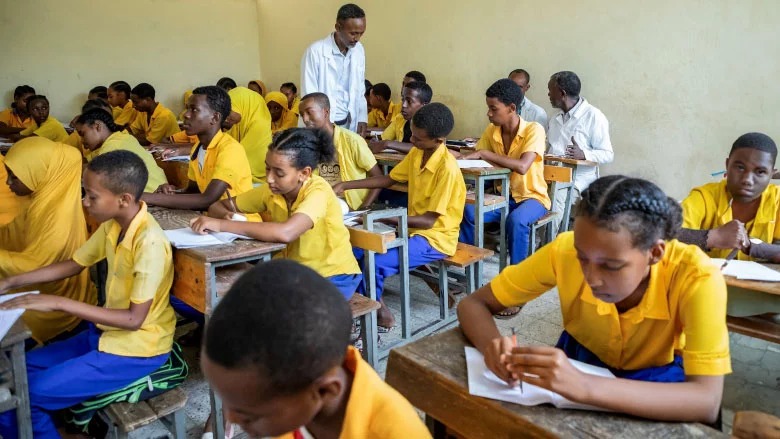
Over 41,000 Teachers in Ethiopia’s Amhara Region to Be Trained Amid Conflict and School Closures



