
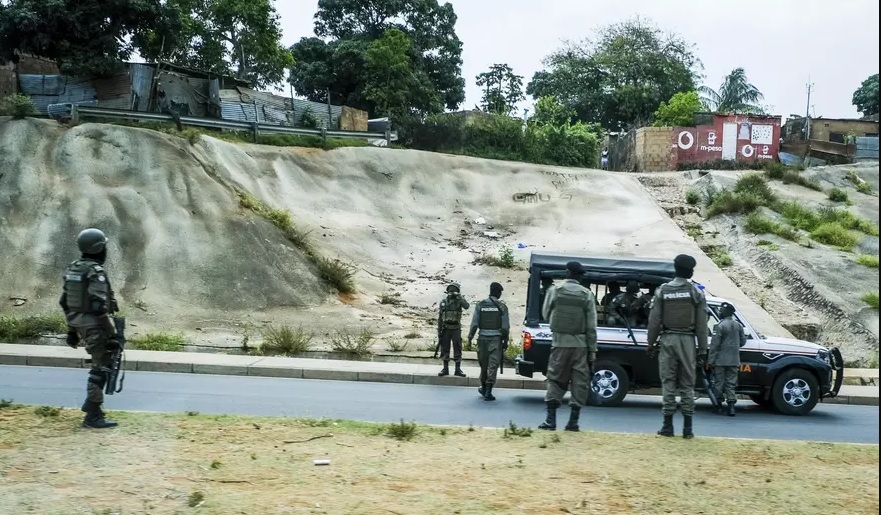

At least a dozen people were injured after Mozambican security forces fired live ammunition and tear gas to disperse an anti-government protest led by opposition leader Venâncio Mondlane in the capital, Maputo. Eyewitnesses and members of Mondlane’s team claim that the police launched an unprovoked attack on the opposition leader’s convoy and his supporters, raising tensions in an already volatile political climate.
The demonstration, held on Wednesday, was part of Mondlane’s ongoing campaign against what he has repeatedly called a fraudulent presidential election. The opposition leader, who finished as the runner-up in last year’s controversial vote, has been at the forefront of protests demanding a new political framework.
The violent crackdown comes as Mozambique’s newly sworn-in President, Daniel Chapo, was preparing to sign a political accord with various opposition parties aimed at quelling months of unrest following the disputed election results. However, Mondlane was notably absent from these negotiations, a decision that has sparked further outrage among his supporters.
According to a statement from Mondlane’s office, the opposition leader was leading a peaceful procession when his convoy was suddenly attacked by a heavily armed unit of the Rapid Intervention Police (UIR). The security forces reportedly used live rounds and tear gas to break up the demonstration, leaving protesters running for cover as gunfire rang out in the streets.
Mozambique’s Interior Minister, Paulo Chachine, defended the police’s actions, insisting that their primary mission was to ensure public order and prevent any disruption of the political deal-signing ceremony. However, he denied accusations that there was an assassination attempt on Mondlane.
Despite the government’s dismissive stance, a local civil society organization, Plataforma Decide, reported that at least 16 people sustained injuries during the incident, though independent sources have yet to verify these figures. Mondlane’s camp, meanwhile, has alleged that two children were killed in the shooting, further escalating tensions.
Eyewitness accounts describe chaotic scenes, with people scrambling for safety amid relentless gunfire. One protester, 27-year-old Silvestre Alexandre, told AFP that police officers fired indiscriminately, likening the incident to an “ambush.” He described seeing wounded demonstrators, including a child who later died in the hospital.
Videos circulating on social media depict the moment shots were fired as Mondlane’s convoy approached an armored police vehicle. In the footage, crowds can be seen dispersing in panic, with bloodied individuals receiving aid from bystanders. Other images show spent shell casings strewn across the streets—further evidence of the heavy-handed police response.
International condemnation of the crackdown has been swift. Portugal, Mozambique’s former colonial ruler, denounced what it called an “unacceptable attack” on Mondlane’s convoy, urging the government to uphold democratic rights and refrain from excessive force. The Portuguese Foreign Ministry also extended its condolences to the families of those killed.
Despite the deadly confrontation, Mondlane remains defiant. In a speech following the clashes, he dismissed the political agreement signed by President Chapo as “a deal made by the ruling elite, without the consent of the people.” He vowed to intensify protests, warning that unless authorities listen to the will of the people, they “will not be allowed to govern Mozambique.”
Since October, nearly 400 people have been killed in violence linked to political unrest, according to civil society organizations. With tensions escalating and Mondlane’s movement gaining momentum, the country faces an uncertain future as the opposition refuses to back down.


