
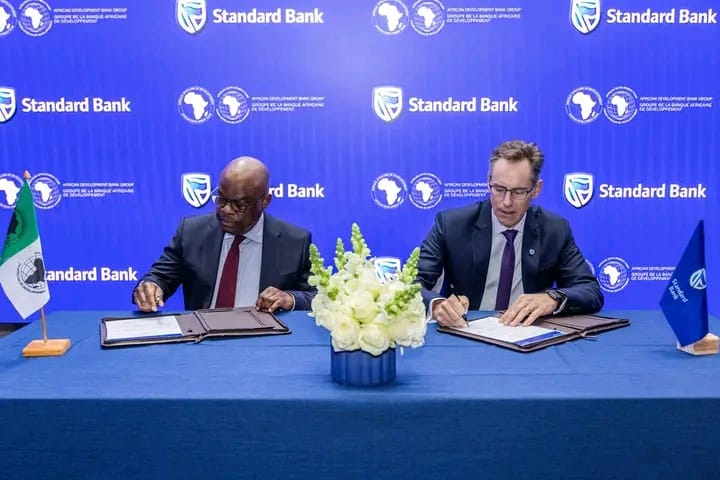

The African Development Bank (AfDB) and Standard Bank Group have signed a $332 million (ZAR 5.4 billion) financing agreement aimed at expanding access to credit for small and medium-sized enterprises (SMEs) in South Africa, with a particular focus on women-led businesses, as the partners seek to drive entrepreneurship, job creation and inclusive economic growth.
The financing, announced this week, was provided through a capital markets security issued by Standard Bank Group, Africa’s largest lender by total assets. The facility is structured as a Financial Loss Absorbing Capacity (FLAC) instrument and is the first development finance institution-backed social FLAC instrument to be listed on the Johannesburg Stock Exchange (JSE).
Under the agreement, Standard Bank will channel the full ZAR 5.4 billion toward expanding lending to South African SMEs, which are widely regarded as a key engine of employment and economic activity in the country’s economy.
In addition to the financing package, the AfDB’s Affirmative Finance Action for Women in Africa (AFAWA) programme will provide a $1 million technical assistance grant through the Women Entrepreneurs Finance Initiative (We-Fi). The funding is designed to help women-owned businesses overcome barriers to finance by supporting digital payment solutions, strengthening credit histories and providing enterprise and supplier development services.
Kennedy Mbekeani, the AfDB’s Director General for Southern Africa and Country Manager for South Africa, said the transaction reflects the Bank’s commitment to strengthening Africa’s financial sector while directing long-term capital toward SMEs and entrepreneurs that underpin economic growth.
Standard Bank said South Africa is home to approximately 3.2 million SMEs, which make a substantial contribution to employment and the country’s economic output. The bank said improving access to finance for small businesses remains essential to unlocking growth and supporting business expansion.
The agreement builds on an 18-year partnership between the AfDB and Standard Bank that began in 2008. It follows a ZAR 3.6 billion subordinated debt facility approved in 2024 and a $200 million risk participation agreement that expanded trade finance across the continent.
The latest financing is expected to strengthen Standard Bank’s SME lending capacity while supporting businesses operating in sectors including agriculture, manufacturing, wholesale and retail trade. The partners also expect the transaction to encourage broader adoption of international banking standards and improve access to sustainable financing.
Small and medium-sized enterprises account for the overwhelming majority of businesses in South Africa and play a central role in employment creation. However, many SMEs continue to face difficulties accessing affordable finance, particularly women-owned enterprises and businesses without established credit records.
The African Development Bank has made SME development and women’s economic empowerment key pillars of its private sector strategy across Africa. Through its AFAWA initiative, the Bank aims to reduce the financing gap facing women entrepreneurs by combining lending with technical assistance and capacity-building programs. The latest agreement with Standard Bank is expected to deepen financial inclusion while supporting South Africa’s broader economic recovery and long-term sustainable growth.
AfDB, Standard Bank sign $332 mln deal to boost SME financing in South Africa
The African Development Bank (AfDB) and Standard Bank Group have signed a $332 million (ZAR 5.4 billion) financing agreement aimed at expanding access to credit for small and medium-sized enterprises (SMEs) in South Africa, with a particular focus on women-led businesses, as the partners seek to drive entrepreneurship, job creation and inclusive economic growth.
The financing, announced this week, was provided through a capital markets security issued by Standard Bank Group, Africa’s largest lender by total assets. The facility is structured as a Financial Loss Absorbing Capacity (FLAC) instrument and is the first development finance institution-backed social FLAC instrument to be listed on the Johannesburg Stock Exchange (JSE).
Under the agreement, Standard Bank will channel the full ZAR 5.4 billion toward expanding lending to South African SMEs, which are widely regarded as a key engine of employment and economic activity in the country’s economy.
In addition to the financing package, the AfDB’s Affirmative Finance Action for Women in Africa (AFAWA) programme will provide a $1 million technical assistance grant through the Women Entrepreneurs Finance Initiative (We-Fi). The funding is designed to help women-owned businesses overcome barriers to finance by supporting digital payment solutions, strengthening credit histories and providing enterprise and supplier development services.
Kennedy Mbekeani, the AfDB’s Director General for Southern Africa and Country Manager for South Africa, said the transaction reflects the Bank’s commitment to strengthening Africa’s financial sector while directing long-term capital toward SMEs and entrepreneurs that underpin economic growth.
Standard Bank said South Africa is home to approximately 3.2 million SMEs, which make a substantial contribution to employment and the country’s economic output. The bank said improving access to finance for small businesses remains essential to unlocking growth and supporting business expansion.
The agreement builds on an 18-year partnership between the AfDB and Standard Bank that began in 2008. It follows a ZAR 3.6 billion subordinated debt facility approved in 2024 and a $200 million risk participation agreement that expanded trade finance across the continent.
The latest financing is expected to strengthen Standard Bank’s SME lending capacity while supporting businesses operating in sectors including agriculture, manufacturing, wholesale and retail trade. The partners also expect the transaction to encourage broader adoption of international banking standards and improve access to sustainable financing.
Small and medium-sized enterprises account for the overwhelming majority of businesses in South Africa and play a central role in employment creation. However, many SMEs continue to face difficulties accessing affordable finance, particularly women-owned enterprises and businesses without established credit records.
The African Development Bank has made SME development and women’s economic empowerment key pillars of its private sector strategy across Africa.
Through its AFAWA initiative, the Bank aims to reduce the financing gap facing women entrepreneurs by combining lending with technical assistance and capacity-building programs. The latest agreement with Standard Bank is expected to deepen financial inclusion while supporting South Africa’s broader economic recovery and long-term sustainable growth.


