
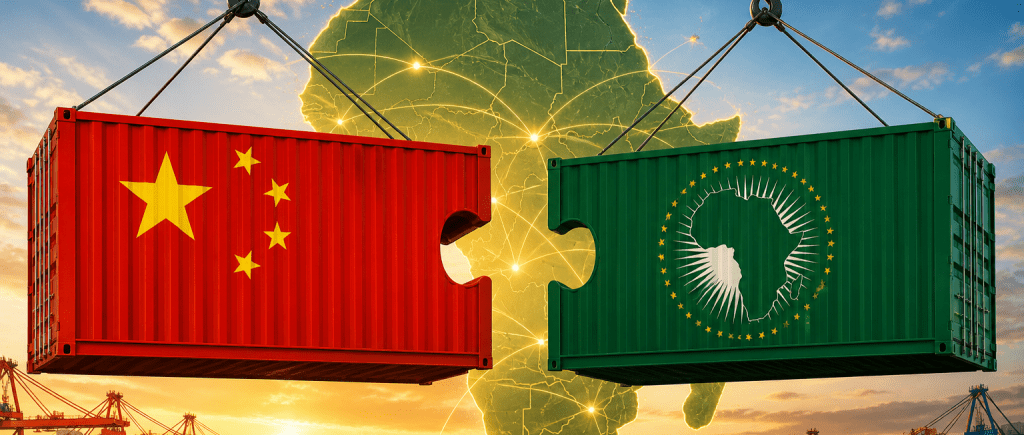

China-Africa trade reached a record 1.41 trillion yuan ($197 billion) in the first half of 2026, as Beijing’s zero-tariff policy for African countries strengthened exports from the continent and reinforced China’s broader economic engagement with Africa.
In a statement, Chinese Foreign Ministry spokesperson Lin Jian said two-way trade reached an all-time high during the January-June period and remained on course to set another annual record by the end of the year.
The latest figures were driven by a sharp increase in China’s imports from Africa after Beijing extended zero-tariff treatment to all African countries that maintain diplomatic ties with China.
During May and June, the first two months after the policy took effect, China’s imports from Africa rose 23.5% from a year earlier to 193.8 billion yuan (about $27 billion).
The policy has expanded market access for a wider range of African products, including dried chilies, coffee beans, cashew nuts and wild aquatic products, allowing exporters across the continent to benefit from unified regional market access.
Lin said about 75% of China’s exports to Africa consist of capital and intermediate goods, including machinery, industrial equipment, industrial components and production materials that support manufacturing and agricultural development across the continent.
Describing international trade as “a two-way street,” Lin said China remained committed to expanding high-standard opening-up through its zero-tariff policy despite rising protectionism and geopolitical uncertainty.
He added that the initiative had been widely welcomed by African countries and praised by the international community.
Economic Ties Drive Broader Engagement
The latest trade figures reinforce China’s position as Africa’s largest trading partner, reflecting a relationship that has expanded beyond merchandise trade to include infrastructure development, industrial investment, logistics and manufacturing cooperation.
China’s growing economic footprint in Africa is increasingly being accompanied by broader engagement in areas beyond trade and investment, according to a recent study released by Africa Narratives, titled “China’s Security Turn in Africa: From Economic Partner to Strategic Security Actor.”
The study argues that Beijing increasingly views security cooperation as an extension of its economic strategy, as expanding trade, infrastructure projects and investment expose Chinese interests to greater risks from terrorism, piracy and political instability.
According to the report, China has responded by strengthening cooperation in maritime security, police training, border management and institutional capacity building, while avoiding large-scale military deployments.
Instead, the study says Beijing has adopted what it describes as a “low political cost” approach centered on training, logistics support and technical assistance, allowing it to protect its growing commercial interests while maintaining its long-standing policy of non-interference.
The report concludes that as China-Africa trade and investment continue to expand, Beijing is likely to deepen cooperation aimed at safeguarding supply chains, strategic infrastructure and long-term economic interests across the continent.


