

Ethiopia and the World Bank have signed a major financing agreement worth $1 billion to support the country’s ongoing economic reforms and inclusive development agenda, the Ethiopian Ministry of Finance announced Friday.
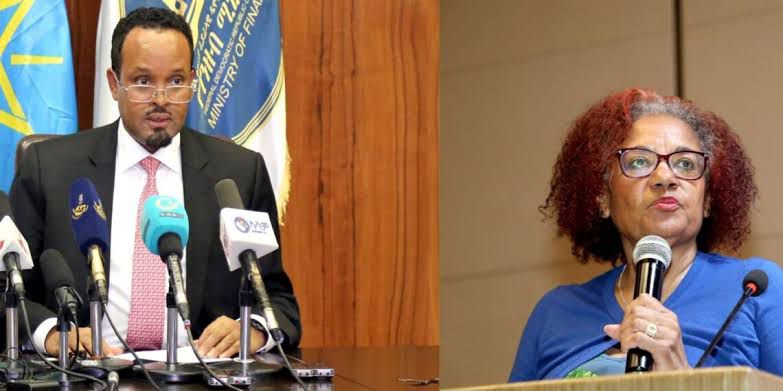
The agreement, which includes a mix of grants and concessional loans, was formalized in Addis Ababa by Finance Minister Ahmed Shide and Maryam Salim, the World Bank Country Director for Ethiopia, Eritrea, Sudan, and South Sudan.
According to the Ministry, the funds fall under the framework of the Second Sustainable and Inclusive Growth Development Policy Operation (DPO)—a strategic initiative that seeks to accelerate structural transformation while maintaining macroeconomic stability in one of Africa’s most populous nations.
“The program supports Ethiopia’s ambitious and comprehensive reform agenda,” the Ministry stated, adding that it reflects the World Bank’s ongoing confidence in the country’s long-term economic trajectory.
Key areas targeted by the DPO include strengthening Ethiopia’s financial sector, enhancing trade competitiveness, boosting domestic revenue mobilization, and improving governance through transparency and institutional efficiency. The initiative also places significant emphasis on protecting vulnerable populations by safeguarding access to essential social services such as health and education.
“These are integral pillars of Ethiopia’s macroeconomic and structural transformation,” the Ministry said in its statement. “The World Bank’s support reinforces our joint commitment to creating inclusive and sustainable economic growth.”
The Ministry further noted that this agreement reflects a “strong and enduring collaboration” between Ethiopia and the World Bank, particularly at a time when the country is navigating complex economic and geopolitical challenges.
While the statement did not provide a specific timeline for disbursement, government officials emphasized that the funds would be swiftly allocated toward priority reform areas, including fiscal consolidation and social protection. The financing is also expected to support Ethiopia’s broader development objectives as outlined in its Ten-Year Perspective Plan and Homegrown Economic Reform Agenda.
Maryam Salim, representing the World Bank, praised the Ethiopian government’s efforts to implement wide-ranging economic reforms in recent years, despite a challenging global environment and domestic pressures. She noted that the agreement aligns with the Bank’s strategic focus on fostering resilience, economic diversification, and inclusive development across the Horn of Africa.
This latest commitment follows earlier World Bank funding packages aimed at supporting recovery, resilience, and peacebuilding efforts in Ethiopia, especially in regions affected by conflict. In recent months, Ethiopia has faced mounting inflation, currency pressures, and external debt challenges, prompting renewed calls for reform and international cooperation.
The announcement comes at a critical moment for Ethiopia’s economy, which has shown signs of stabilization but remains vulnerable to external shocks, including fluctuations in global commodity prices and tightening international credit markets.
With the signing of this agreement, Ethiopia takes a step closer to consolidating its reform agenda, restoring investor confidence, and ensuring that development gains are both equitable and sustainable.


