
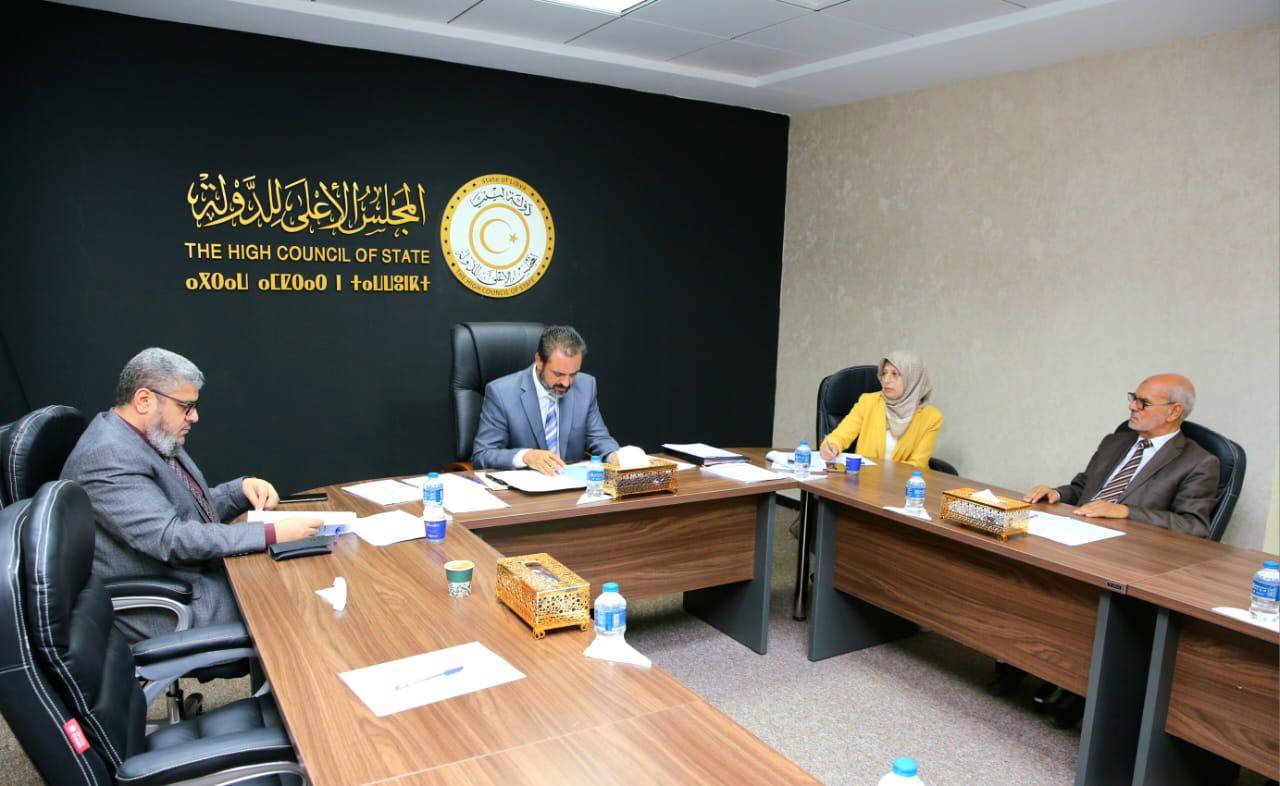

Recent moves by members of Libyan House of Representatives and the High Council of State to form a “new unified government” have raised concerns about whether these actions are an attempt to undermine the initiative launched by the acting United Nations envoy, Stephanie Khoury. The moves also raise the question of whether they are simply a way for these groups to assert their role in the ongoing political process.
Disputed Electoral Laws
These developments follow Khoury’s announcement two weeks prior of a technical committee comprised of Libyan experts to address contentious issues within the electoral laws and propose pathways for holding elections promptly. In what appeared to be a direct response, legislators from both councils swiftly convened a meeting in Morocco.
Mohamed Maazeb, a member of Libyan High Council of State, has suggested that the parliament’s statements and actions regarding forming a “new government” are an attempt to preempt the UN mission’s efforts to revive the political process and break the current stalemate. Speaking to “Asharq Al-Awsat,” he claimed that these actions are intended to hinder the UN mission’s plan to establish a committee to address disputed issues in the electoral laws. He added that the parliament and many of its supporters within the High Council of State are unhappy with this UN initiative, believing that the electoral laws approved more than a year ago are satisfactory and require no amendment.
Motivations Behind Government Formation
Maazeb further speculated that the motivation behind forming a new government is either to secure positions within it or to displace the current government led by Libyan Prime Minister Abdul Hamid Dbeibeh. He criticised the parliament for not learning from past experiences, where governments formed without local consensus or international support ended up being ineffective, operating in parallel, and unable to exert influence from the capital.
The Speaker of the Libyan House of Representatives, Aguila Saleh, has stated that progress towards a new government is being made in coordination with the High Council of State, vowing to select the head of the new government during a public parliamentary session.
However, Maazeb anticipates that the UN mission will capitalise on the objections of other political forces to the electoral laws and the existing divisions within the High Council of State. By doing so, the mission could emphasize that the parliament’s actions are unilateral and should be disregarded. He believes this tactic will receive backing from influential Western nations, effectively ending the government project before it even begins.
Maazeb has also urged the Libyan parliament to exercise restraint to prevent jeopardising the political process and fuelling accusations that members of both councils are creating crises to maintain their grip on power.
Libyan Parliamentary Moves
Saleh’s announcement regarding the upcoming meeting on the “new government” comes roughly two weeks after a consultative meeting in Bouznika, Morocco, involving members of parliament and the High Council of State. This meeting concluded with the formation of joint committees focused on various issues, including restructuring the executive branch and institutional and financial reforms.
Essam Al-Jihani, a member of the Libyan House of Representatives, indicated that the parliament’s leadership plans to hold a meeting in Qubba, eastern Libya, in the near future with members of the High Council of State to finalise steps towards forming the new government.
Al-Jihani acknowledged the need for caution regarding the formation of a “unified government” to secure international support, stressing the importance of a peaceful transfer of power without military intervention.
He also pointed out Prime Minister Dbeibeh’s repeated refusal to relinquish his position, insisting on handing over power only to an elected government. This suggests he would reject any solution that does not prioritise elections.
Some observers believe that Khoury’s initiative to form a committee to address disputed issues in the electoral laws, without involving the House of Representatives or the High Council of State, has exacerbated fears that these institutions might be sidelined, particularly given the divisions within the High Council of State over the past four months.
Competing Claims of Authority
Libyan politician and academic Ahmed Al-Aboud emphasises that the House of Representatives and the High Council of State have the “original jurisdiction” in forming the new government, as per the Skhirat political agreement. He does not believe the parliament’s current actions are a deliberate attempt to undermine the UN mission.
Al-Aboud said that the final statement from the Bouznika meeting welcomed collaboration with the UN mission. He also cited the challenges the mission faces regarding the renewal of its mandate in Libya, and the calls from China and Russia, permanent members of the UN Security Council, for a new envoy to be appointed if the mandate is extended.
Al-Aboud believes that the parliament’s efforts, along with its supporters from the High Council of State, to move forward with government formation is a way of asserting their authority. He added that it also signals to any future envoy that they are prepared to fulfil the election mandate and have no intention of obstructing any political agreement.
International Response
In December, the United States, France, Germany, Italy, and Britain welcomed the UN proposal to advance the political process, urging all parties to refrain from any parallel initiatives that could undermine the UN’s efforts.
The embassies of these five countries in Libya issued a joint statement, expressing strong support for efforts aimed at achieving a political agreement that addresses the institutional divisions and unifies the government.
The joint statement also emphasized the support of these five countries for a path towards free and fair presidential and parliamentary elections, aligning with the aspirations of the Libyan people and UN Security Council resolutions.
The five embassies expressed their readiness to support these efforts and urged all relevant Libyan parties to engage in the UN process with sincerity and in a spirit of consensus. They also called on all relevant parties to refrain from any parallel, uncoordinated initiatives that would undermine the UN-led efforts, reaffirming their commitment to preserving Libya’sindependence, sovereignty, and territorial integrity.
UN Plan for Libyan Elections
Stephanie Khoury stated in a briefing to the Security Council that she had presented a plan to overcome the current situation and hold elections, emphasizing that the current framework requires amendments to ensure peaceful and successful elections.
She added that the objectives of the plan included the unity of Libya and the preservation of national institutions. She also stated that the UN mission would work to establish a committee to present potential solutions for resolving outstanding issues in the electoral framework, to facilitate general elections and a unified government.
The European Union has welcomed the UN initiative, describing it as a timely and positive development and expressing its full support.
Libya has experienced significant instability since the NATO-backed events of 2011 and has been divided since 2014 between two competing administrations in the east and west.
Elections planned for December 2021 were cancelled due to various factors, including disagreements over candidate eligibility.
Khoury stated that holding elections is a reminder that the Libyan people want to exercise their right to choose their leaders. She also emphasized that unilateral actions taken by political elites have severely damaged Libya’s institutions, creating competing and parallel structures.


