
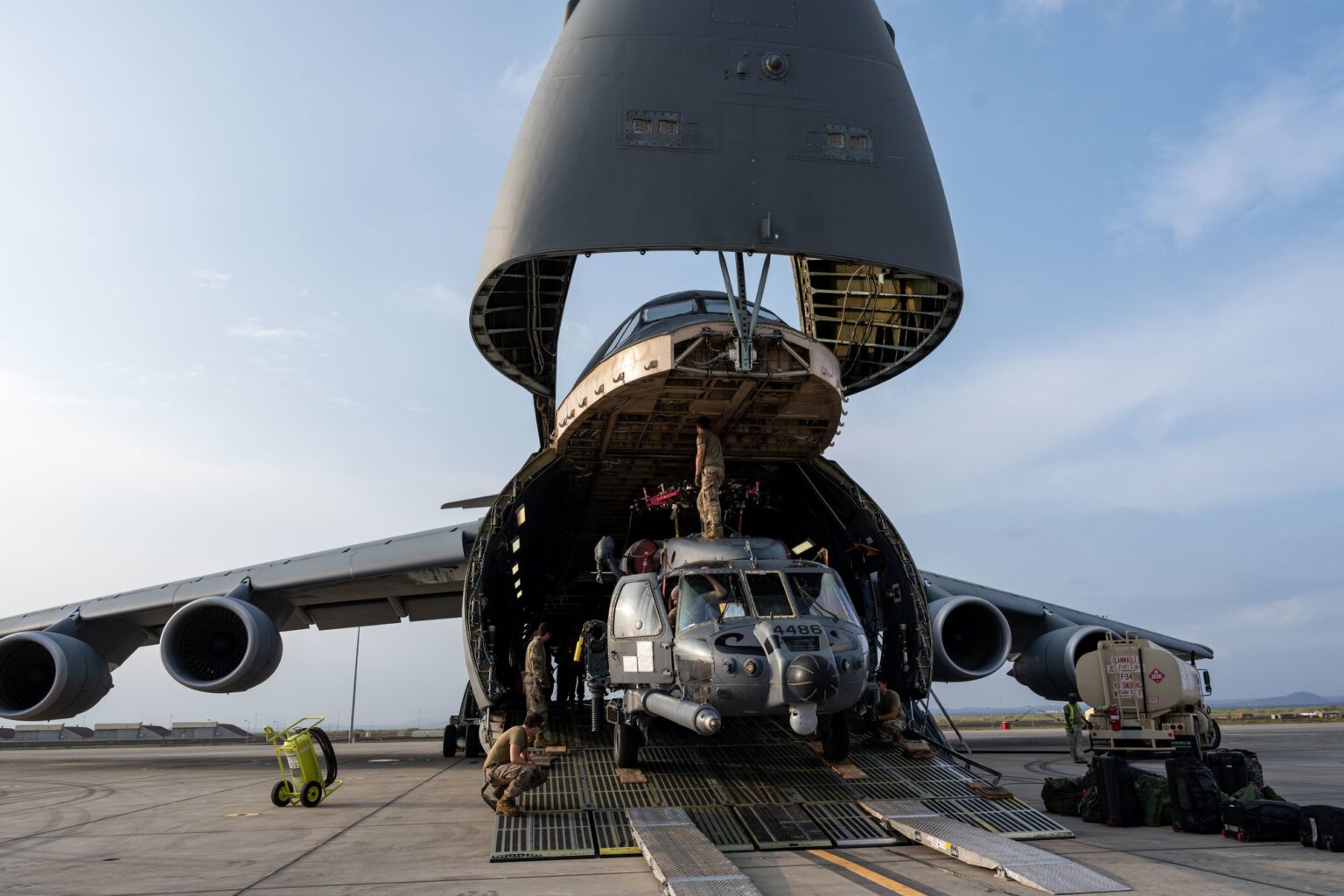

Iran’s Revolutionary Guards said on Sunday that the United States is building Horn of Africa bases, and others in Kenya, because its bases in the Gulf are within range of Iranian missiles and drones.
The claim, made by the Guards’ spokesman, Brigadier General Hossein Mohebbi, has not been confirmed by Washington or by any African government. It points to a region that already hosts the only permanent US base in Africa, and where governments have tried to stay out of the war between Iran and the United States and Israel that began on 28 February.
What did Iran’s Guards say about Horn of Africa bases?
Mohebbi was speaking at a meeting of the headquarters organising Iran’s annual “Decade of Insight and Resistance” commemorations, according to the Young Journalists Club, which is part of the state broadcaster IRIB, and the hardline daily Kayhan.
He said Washington could no longer use its bases in the region because they were within Iran’s reach, and that it was therefore setting up bases in more distant places, including the Horn of Africa and Kenya, out of fear of Iran, the reports said. He added that some US bases had been destroyed and others had been put out of action. He gave no locations, dates or evidence for the new Horn of Africa bases.
Mohebbi also said that before what Iranian officials call the “Ramadan war”, 285 vessels a day passed through the Strait of Hormuz, of which 232 were linked to the United States, and that today there were none. These figures could not be independently verified.
The Guards’ statements are claims by a party to the war. Iranian forces have repeatedly struck US air and naval bases in Saudi Arabia, Jordan, the United Arab Emirates, Kuwait and Bahrain since February, BBC reporting shows, but the extent of the damage has not been independently established. The US, for its part, is enforcing a naval blockade of Iran.
Which US bases already exist in the Horn of Africa?
The main existing site among US Horn of Africa bases is Camp Lemonnier in Djibouti, on the Bab el-Mandeb strait. It is the only permanent US military base on the continent and hosts the Combined Joint Task Force-Horn of Africa of US Africa Command (AFRICOM). Djibouti has leased it to the US since 2002; under a lease signed in 2014 the US pays about $63mn a year, SIPRI has reported, and the base holds about 4,000 US and allied personnel.
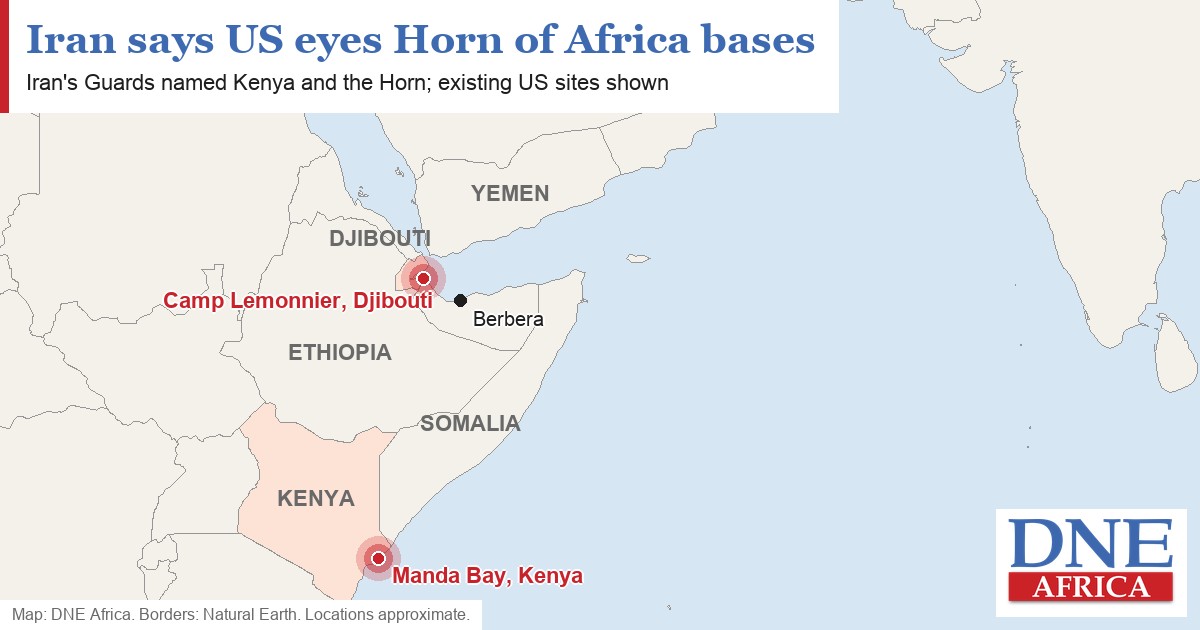
Djibouti also hosts Chinese, French, Japanese and Italian bases within a few miles of each other, the densest cluster of foreign military bases in the world, Al Jazeera reported in April. Stars and Stripes reported in September that Camp Lemonnier lies within range of Houthi ballistic missiles and drones from Yemen, across the strait, although the Houthis have not named it as a target.
In Kenya, US forces use Camp Simba at Manda Bay on the coast near Lamu. Al-Shabaab fighters attacked the airfield in January 2020, killing a US service member and two US contractors. Kenya signed a five-year defence co-operation agreement with the US in 2023, and Washington named it a major non-NATO ally in 2024, the first in sub-Saharan Africa.
Further north, the port of Berbera in Somaliland has been discussed in debates on future Horn of Africa bases for foreign forces. Somalia’s federal government says any foreign military facility on its territory needs its consent, and the US has reaffirmed Somalia’s territorial integrity.
What do new Horn of Africa bases mean for African states?
For host governments, talk of new Horn of Africa bases matters because Iran has threatened countries that host US forces. Analysts quoted by Garowe Online said in March that Camp Lemonnier could fall within reach of Iran’s longer-range missiles if the conflict widened.
A SIPRI background paper on foreign military presence in the Horn of Africa described a sharp rise in foreign bases and naval forces in the region, driven by Red Sea shipping, counter-piracy and counter-terrorism operations and Gulf rivalries. The Australian Institute of International Affairs noted in an analysis that Djibouti lies about 1,500 miles from Iran, but that Iranian drones had already reached targets as far away as the UAE. These are the institutions’ assessments.
The region is also at the centre of the Red Sea crisis. The Houthis, who are backed by Iran, this weekend declared Saudi Red Sea ports targets and the Saudi-led coalition has called Aden a red line, raising risks for shipping that serves Djibouti, Sudan, Eritrea and Egypt’s Suez Canal. Somalia, meanwhile, is fighting al-Shabaab as foreign troops draw down, as set out in our explainer on al-Shabaab in Somalia.
What happens next?
Neither the Pentagon nor AFRICOM had commented on Mohebbi’s remarks about Horn of Africa bases, and the governments of Kenya and Djibouti had not responded at the time of writing. Any new US deployment in Kenya would fall under the 2023 defence agreement, and one in Djibouti under its lease. Watch for statements from Nairobi, Djibouti and Mogadishu, and for any change in the Guards’ threats against countries that host US forces.
FAQ
What did Iran say about Horn of Africa bases?
The spokesman of Iran’s Revolutionary Guards, Hossein Mohebbi, said on 29 November that the US is building bases in the Horn of Africa and Kenya because its Gulf bases are within Iran’s range, Iranian media reported. He gave no evidence.
Does the US already have Horn of Africa bases?
Yes. Camp Lemonnier in Djibouti is the only permanent US base in Africa and hosts AFRICOM’s Horn of Africa task force. US forces also use Camp Simba at Manda Bay in Kenya.
Has the US confirmed new Horn of Africa bases?
No. No US, Kenyan or Djiboutian statement confirming new bases was available at the time of writing.
Why does the claim matter for Kenya and Djibouti?
Iran has threatened countries that host US forces during the war that began on 28 February, and analysts have said Camp Lemonnier could fall within range of Iran’s longer-range missiles.


