
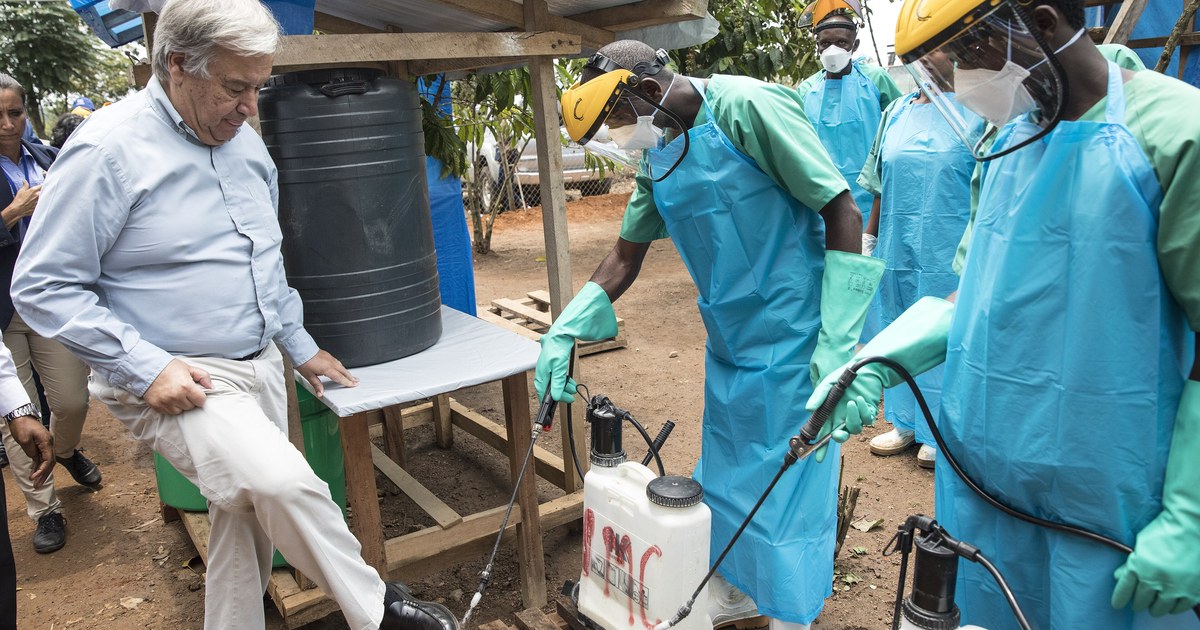

Congo Ebola deaths have passed 6,000, with 6,025 confirmed deaths and 12,254 confirmed cases, Congo’s health ministry said in a situation report covering the period to 27 November.
The outbreak is the deadliest in Congo’s history and the second deadliest on record. The report also shows contact tracing slipping further below target, with most new Congo Ebola deaths happening in the community rather than in treatment centres.
What do the latest Congo Ebola deaths figures show?
According to situation report number 197 of the Presidential Ebola Task Force and the National Institute of Public Health (INSP), published on 28 November, the overall case fatality rate stands at 49.2%. The figures are cumulative confirmed cases and deaths since the outbreak of the Bundibugyo species of Ebola was declared on 15 May.
On 27 November the ministry recorded 78 new confirmed cases, 10.3% fewer than the previous day: 43 in North Kivu, 32 in Ituri and three in Haut-Uele. Congo Ebola deaths that day numbered 47, 32 in the community and 15 in treatment centres. Of 566 samples analysed, 12.1% tested positive.
Three days earlier, in its report for 24 November, the ministry counted 12,021 cases and 5,904 deaths, as DNE Africa reported at the time. That means 233 new cases and 121 new Congo Ebola deaths in three days. The ministry counts 3,387 recoveries and 1,160 patients in isolation or treatment.
Where are Congo Ebola deaths concentrated?
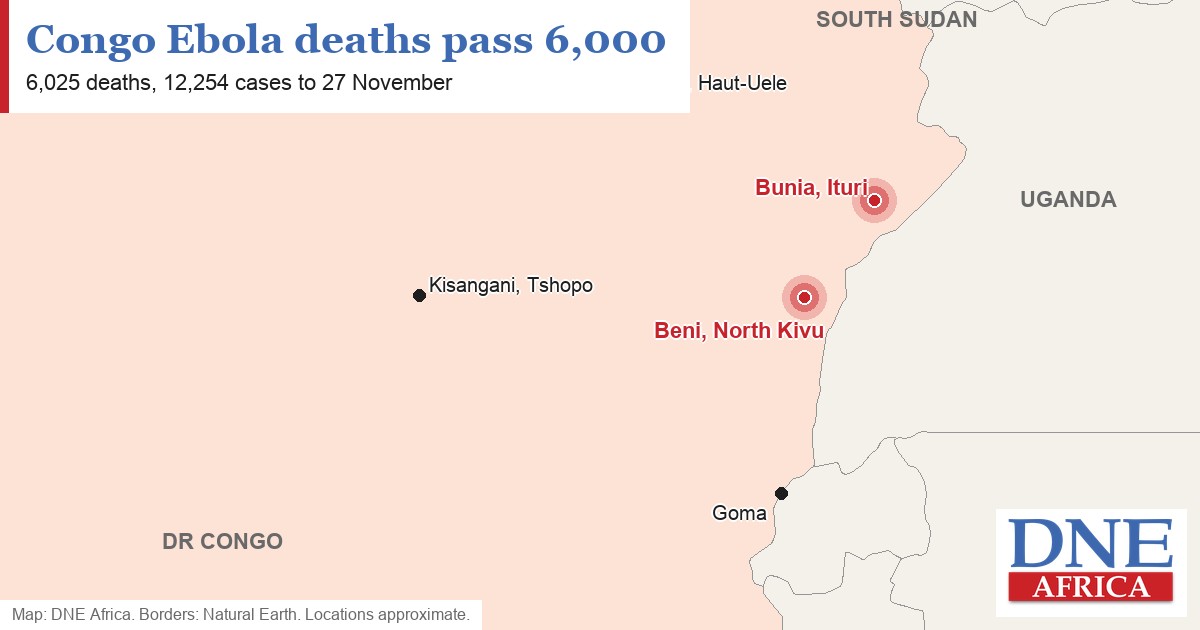
The virus has reached 69 of Congo’s 178 health zones in eight provinces. Ituri remains the epicentre, with 8,219 cases and 3,879 deaths, or 67.1% of all cases. North Kivu has 3,314 cases and 1,860 deaths, and its fatality rate of 56.1% is the highest of any province. It also accounted for 55.1% of the day’s new cases, led by the Beni health zone with 21.
Haut-Uele has 576 cases and 244 deaths, and Tshopo 117 cases and 35 deaths. Four other provinces together have fewer than 30 cases.
Why is the outbreak hard to contain?
The ministry said 77.6% of the 37,674 contacts under follow-up were seen on 27 November, down from 79.2% a day earlier and well below the 95% threshold. North Kivu had the lowest rate, at 71.7%.
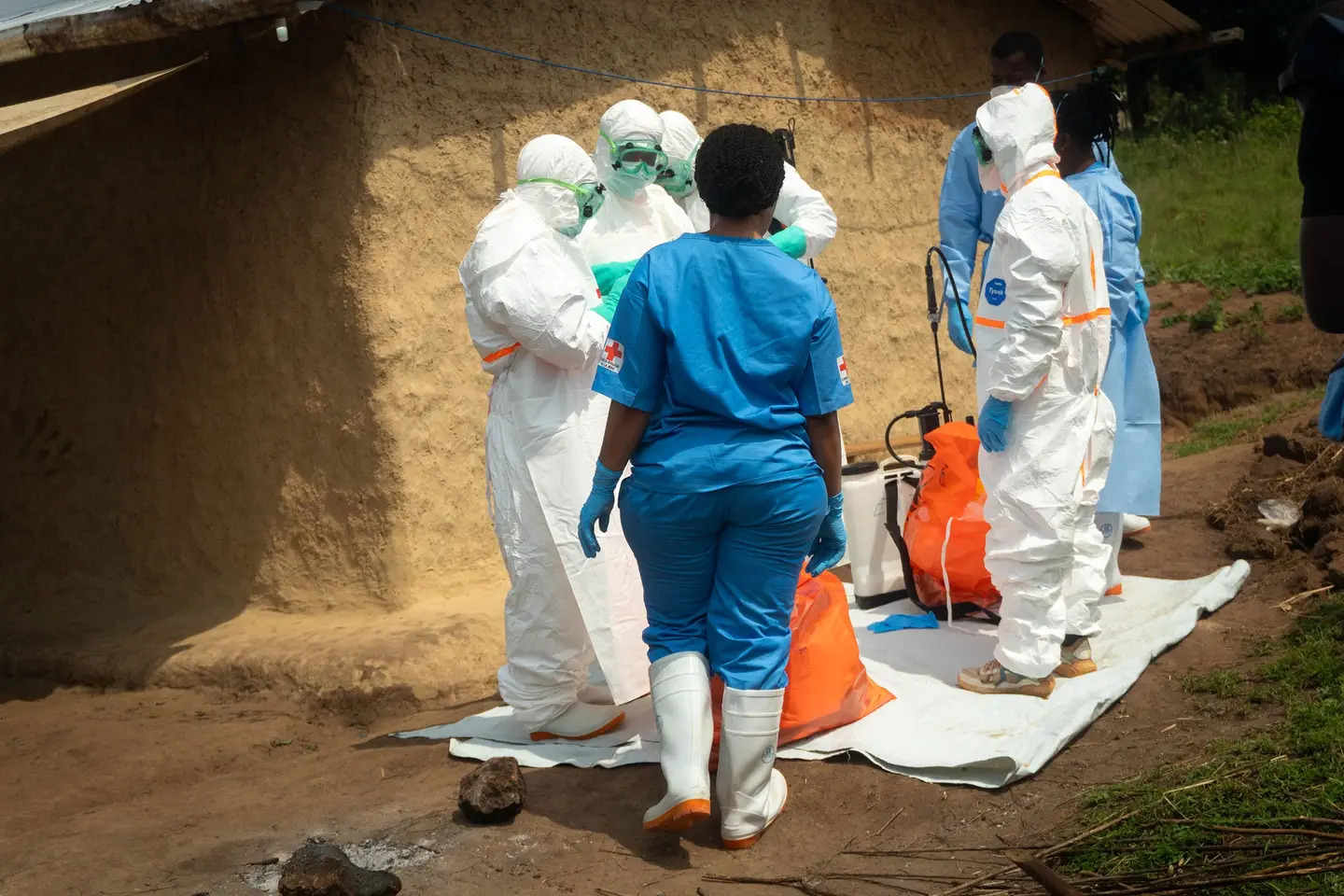
Safe burials are another gap. In Ituri, 59 of 81 burial alerts led to a safe burial, while 18 failed, the report said. In North Kivu, teams carried out 89 safe burials but recorded three failures because of community resistance and refusal of body bags.
The report lists persistent rumours at screening points, including claims that the water contains the virus, and fear of stigma after recovery. Two checkpoints in Ituri were temporarily closed because of insecurity. Armed groups have fought in Ituri and North Kivu for decades, and an Ebola team was trapped by fighting in Ituri earlier this month.
Actual Congo Ebola deaths may exceed the official count. Reuters reported on Sunday, citing its analysis of satellite imagery of two of the worst-hit areas, that the toll could be substantially higher, Al Jazeera reported. DNE Africa could not independently verify that analysis.
Can vaccines slow Congo Ebola deaths?
There is no approved vaccine or specific treatment for the Bundibugyo virus. The ministry reports vaccination with Ervebo, a vaccine licensed against the Zaire species of Ebola, for frontline workers and contacts while its effect against Bundibugyo is studied. By 27 November, 6,653 people had been vaccinated in North Kivu, 15,964 in Tshopo and 5,474 in Haut-Uele, according to the report.
A candidate vaccine developed by the University of Oxford and the Serum Institute of India is due to enter clinical trials in Congo on Monday 30 November. Gavi, the vaccine alliance, has agreed to buy up to 1.5mn doses if the trials succeed and regulators approve it. Uganda began a trial of a Moderna mRNA candidate on 27 November.
In Ituri, the provincial governor launched free health care in 14 health zones on 28 November, the report said. The World Health Organization kept the outbreak a public health emergency of international concern and named 15 countries at high risk.
What happens next?
The ministry publishes a daily situation report. The Oxford trial, the contact follow-up rate and the share of Congo Ebola deaths in the community are the things to watch. According to the World Health Organization, the 2014-16 west African epidemic killed 11,325 people.
FAQ
How many Congo Ebola deaths have been recorded?
Congo’s health ministry recorded 6,025 confirmed deaths and 12,254 confirmed cases by 27 November, a case fatality rate of 49.2%.
Which provinces have the most Congo Ebola deaths?
Ituri has the most, with 3,879 deaths, followed by North Kivu with 1,860. North Kivu has the highest fatality rate, at 56.1%.
Is there a vaccine against the Bundibugyo virus?
No vaccine is approved for Bundibugyo. An Oxford and Serum Institute of India candidate is due to enter trials in Congo on 30 November, and Uganda began a Moderna trial on 27 November.
Why are so many deaths outside treatment centres?
The ministry cites late care-seeking, rumours, fear of stigma and insecurity. On 27 November, 32 of 47 confirmed deaths happened in the community.


