
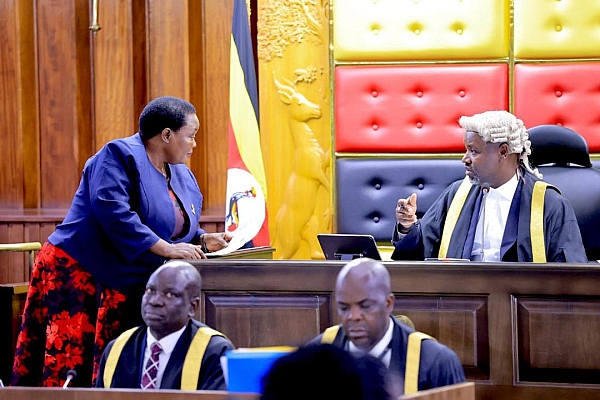

President Yoweri Museveni has asked shopkeepers to suspend the Kampala traders strike over textile taxes while the cabinet reviews the policy, Prime Minister Robinah Nabbanja told Uganda’s Parliament on 19 November.
The Kampala traders strike, which began on 17 November, shut shops in the capital’s main trading districts and turned a long-running dispute with the Uganda Revenue Authority (URA) over taxes on imported clothing into a test for the government.
What caused the Kampala traders strike?
Traders led by the Kampala City Traders Association (KACITA) and other groups closed their shops in protest at high taxes on textiles and garments, slow customs clearance and the way the URA enforces collection, according to a Parliament of Uganda statement. The Daily Monitor reported that business in downtown Kampala was paralysed, with traders also complaining about rents.
Traders have objected to the way textiles are taxed by weight, which they say is unfair and was introduced without enough explanation. Kampala traders closed their shops over taxes in previous years too, including a strike in 2024 that ended after talks with the government.
Nabbanja told MPs that two days of meetings between traders, sector ministries and the URA on 17 and 18 November found that “the tax policy on textiles and garments” was the central issue “from which others emanate”.
What has the government promised?
Because the tax is a policy matter that must go through cabinet and then Parliament, Museveni asked the traders to suspend the Kampala traders strike “until when we shall give them a clear answer after Cabinet meeting”, Nabbanja said. He directed her to present a cabinet paper so that the government could deal with the issue “conclusively”.
The meetings agreed that the tax on textiles and garments would be reviewed and aligned with the regimes of other East African Community (EAC) members. An inter-agency revenue harmonisation committee chaired by the prime minister, with the ministers of finance, trade and public service and the URA commissioner general, will handle wider grievances.
Nabbanja said she had directed the URA to release traders’ impounded goods quickly: traders who meet compliance requirements should pay the taxes due and receive their goods within three days. Museveni is due to meet the URA on 23 November, and the government has promised to meet traders on Tuesday, 24 November.
How has the Kampala traders strike affected revenue?
Nabbanja said the government had lost revenue because the current regime pushed some traders to under-declare goods or evade tax. Some, she said, offloaded goods in Kenya, paid taxes there and moved them into Uganda by bus as small cargo. The URA has deployed several enforcement teams in response, she said.
A second group, the Federation of Uganda Traders Association (FUTA), told Parliament’s trade committee on the same day that some containers had been held by the URA “for months, others for almost a year”, leaving traders paying rent, loans and storage while goods lost value. Committee chairman Boniface Okot asked FUTA to provide documents to support its accusations and promised to call a meeting with the URA. The URA’s response to the specific claims was not included in the statement.
Deputy Speaker Thomas Tayebwa asked Nabbanja to report back to the House on 25 November, after the meeting with traders. Whether the Kampala traders strike ends before then depends on KACITA’s members; the Monitor reported that traders were taking a “wait and see” stance after the talks.
The Kampala traders strike adds to pressure on the government’s revenue plans, which MPs have also questioned over the Umeme buyout.
FAQ
When did the Kampala traders strike start?
Traders closed their shops on Tuesday, 17 November 2026, according to the Parliament of Uganda.
What do shopkeepers want from the Kampala traders strike?
Lower and harmonised taxes on imported textiles and garments, faster customs clearance and an end to what they describe as heavy-handed URA enforcement.
Has the government changed the textile tax?
Not yet. The government said the tax will be reviewed and aligned with other EAC states through a cabinet paper and then Parliament.
What happens next?
Museveni meets the URA on 23 November and the government meets traders on 24 November; the prime minister reports to Parliament on 25 November.


