
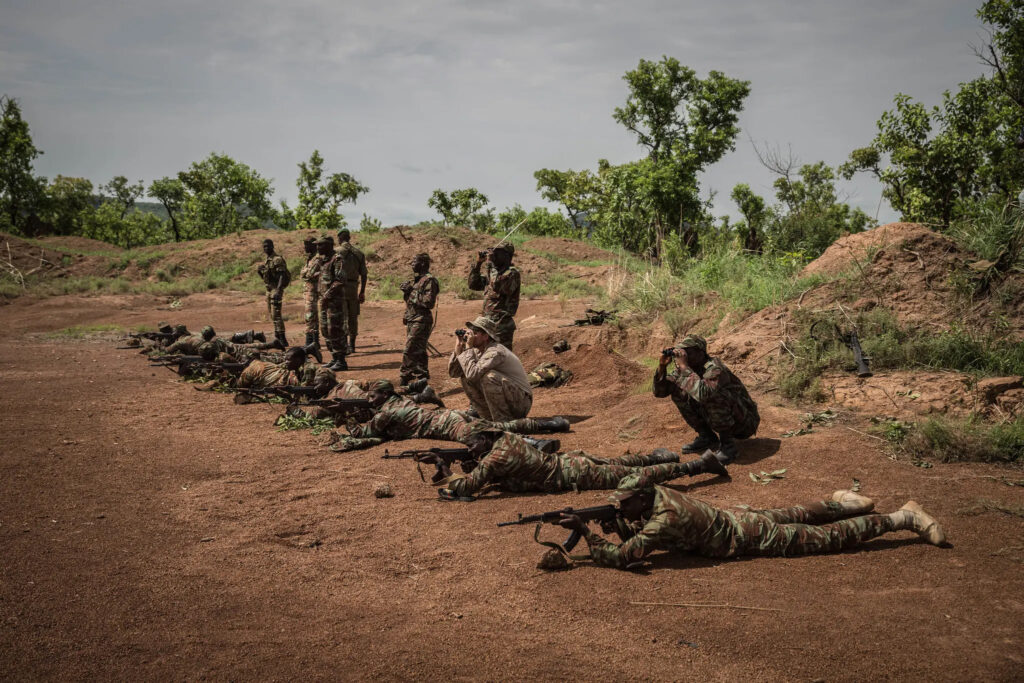

Benin, a small but once relatively peaceful West African nation, has recently found itself on the frontline of increasing cross-border terrorism. A violent ambush in the northern town of Malanville, situated near the Niger border, has once again thrust the country into the spotlight as a target of growing extremist threats. The attack, which took place on Tuesday, resulted in the tragic deaths of three Beninese soldiers and left four others severely injured, marking a significant escalation in the region’s security challenges.
The incident occurred while the soldiers were part of Operation Mirador, a military mission dedicated to securing Benin’s critical infrastructure, particularly its oil pipeline that stretches from the Agadem oil fields in southeastern Niger to Benin’s coastline. The soldiers were assigned to monitor and protect this crucial pipeline from potential attacks. According to a military source, the assailants, whose identity remains unknown, ambushed the soldiers in the town of Malanville, resulting in the fatalities and injuries. The wounded soldiers are receiving medical care, though the extent of their injuries has not been disclosed.
The attack in Malanville is the latest in a string of assaults on Benin’s security forces. In June, seven soldiers were killed in a similar ambush near the Pendjari National Park, which borders Burkina Faso. This growing trend of violent attacks, particularly in the northern regions, signals a disturbing shift in Benin’s security landscape. Once considered a safe haven in West Africa, the country is increasingly grappling with the spillover of terrorism from neighboring nations that have been embroiled in instability and extremist violence for years.
Benin’s northern border with Niger, Burkina Faso, and Mali has become a hotspot for terrorist activity. Extremist groups, particularly those aligned with ISIS and Al-Qaeda, have been exploiting the porous borders between these countries to infiltrate and launch attacks on Beninese soil. Authorities have attributed many of the recent attacks to these groups, who are believed to be using Benin as a new area for recruitment and training. The Malanville attack, in particular, is seen as a direct consequence of this growing regional insecurity, as extremist factions continue to push further southward into less militarized areas.
The Malanville ambush highlights not only the deadly nature of the terrorist threat but also the vulnerability of Benin’s critical infrastructure. The oil pipeline, which is vital for both the economy and the country’s energy security, has become a prime target for militant groups seeking to disrupt the nation’s development and extract resources. The attacks also serve as a grim reminder of the challenges faced by security forces in protecting the country’s borders and maintaining public safety in an era of transnational terrorism.
Despite the growing threat, official statements from the Beninese government remain limited, and the response to the escalating violence has been largely focused on military operations. However, the increasing frequency of these attacks calls for a more comprehensive approach, one that not only strengthens border security but also tackles the root causes of extremism in the region. As extremist groups continue to target vulnerable areas in Benin, it is becoming increasingly clear that the country needs to adopt a more robust counterterrorism strategy that includes international cooperation, intelligence-sharing, and the strengthening of local military and law enforcement capabilities.
The June attack in Pendjari and the recent Malanville assault signal a disturbing trend: Benin is no longer just a transit point for extremist groups but is now actively being targeted as a theater for violent operations. These attacks undermine the country’s stability and threaten to destabilize the broader West African region, which has already been grappling with terrorism and insurgencies for years. In light of this growing threat, the Beninese government must take urgent and decisive action to fortify its defenses, protect its citizens, and curb the spread of extremist violence within its borders.
The increasing insecurity in northern Benin poses a significant challenge not only for the country’s government but also for its regional partners. Neighboring nations like Niger and Burkina Faso have been struggling with their own security crises, making coordinated regional efforts essential. For Benin, the path forward requires a strengthened commitment to regional cooperation, better border management, and a comprehensive counterterrorism strategy that can effectively address both the immediate threats and the deeper structural issues driving extremism in the region.
As Benin faces these mounting challenges, the international community, particularly its West African neighbors and international allies, must also play a crucial role in supporting the country’s efforts to combat terrorism and safeguard its national interests. The Malanville attack is a stark reminder that terrorism knows no borders, and it is only through collective action that the growing threat in the region can be effectively mitigated.


