
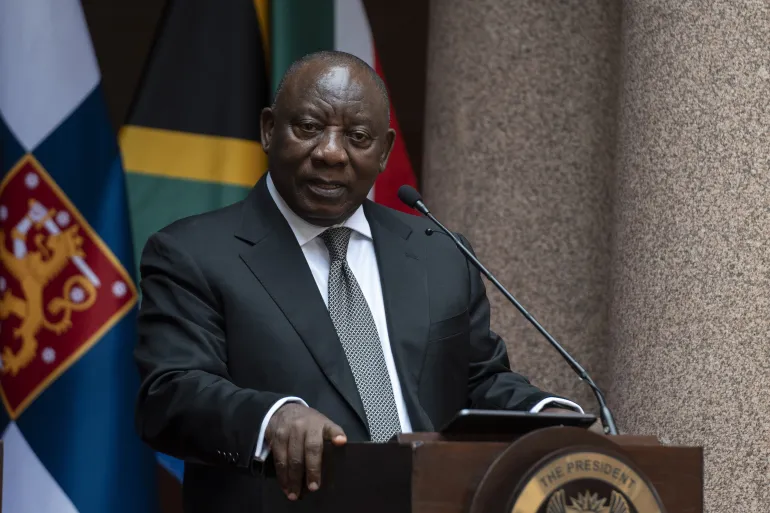

South Africa has assumed interim leadership of the Southern African Development Community (SADC) after Madagascar formally withdrew from the bloc’s rotating chairmanship due to a domestic political transition. President Cyril Ramaphosa will serve as acting chair until August 2026, when a new leader is appointed at the next annual summit.
The decision was adopted during an extraordinary virtual summit of SADC heads of state and government on November 7, convened to address the leadership gap created by Madagascar’s sudden exit. In a statement issued after the meeting, the regional bloc confirmed that Ramaphosa would temporarily steer the organisation “to ensure institutional continuity and uphold regional cooperation.”
Political Transition in Madagascar
Madagascar had assumed the SADC presidency during the August 17 summit in Antananarivo, but political developments in October forced the country to relinquish the post. On October 14, the Constitutional Court dissolved the sitting government following months of unrest and disputes over constitutional legitimacy.
Three days later, Colonel Michael Randrianirina, who led the military-backed transitional movement, was sworn in as head of the “Republic of Re-foundation.” He announced a 29-member cabinet headed by a civilian prime minister and pledged to rebuild institutions, restore public trust, and stabilise the economy.
Citing these sweeping changes, Madagascar’s authorities informed the SADC secretariat on November 1 of their decision to step down from the chairmanship to “focus on national reconstruction.”
SADC Leadership Transition
In line with the organisation’s charter, the deputy chair — in this case, South Africa — automatically assumes the presidency if the incumbent member is unable to fulfil its duties. The SADC secretariat has been tasked with coordinating consultations to nominate the next official chair by November 30.
During the virtual summit, Zimbabwean President Emmerson Mnangagwa proposed hosting several key SADC meetings in Harare to maintain the bloc’s schedule and regional engagement. Leaders from across southern Africa praised Ramaphosa for his “commitment to stability and cooperation,” acknowledging South Africa’s leadership role within the region.
Regional Priorities and Policy Focus
In his acceptance remarks, President Ramaphosa reaffirmed SADC’s commitment to advancing regional industrialisation, food security, and energy transition, building on the theme of the previous summit in Madagascar — “Promoting industrialisation, agricultural transformation and energy transition for a more resilient SADC.”
He also pledged to strengthen the organisation’s peace and security mechanisms amid ongoing instability in parts of Mozambique and the Democratic Republic of the Congo, where SADC troops remain deployed under joint regional operations.
Analysts say South Africa’s assumption of leadership could help inject renewed diplomatic weight into the bloc at a time of growing political volatility in the region.
“The Ramaphosa administration is likely to focus on reinforcing regional governance standards and ensuring that political transitions — like the one in Madagascar — remain constitutional and inclusive,” said a political analyst in Gaborone.
With Ramaphosa now at the helm, SADC faces the dual challenge of supporting democratic transitions while advancing its economic integration agenda across one of Africa’s most dynamic yet fragile regions.


