
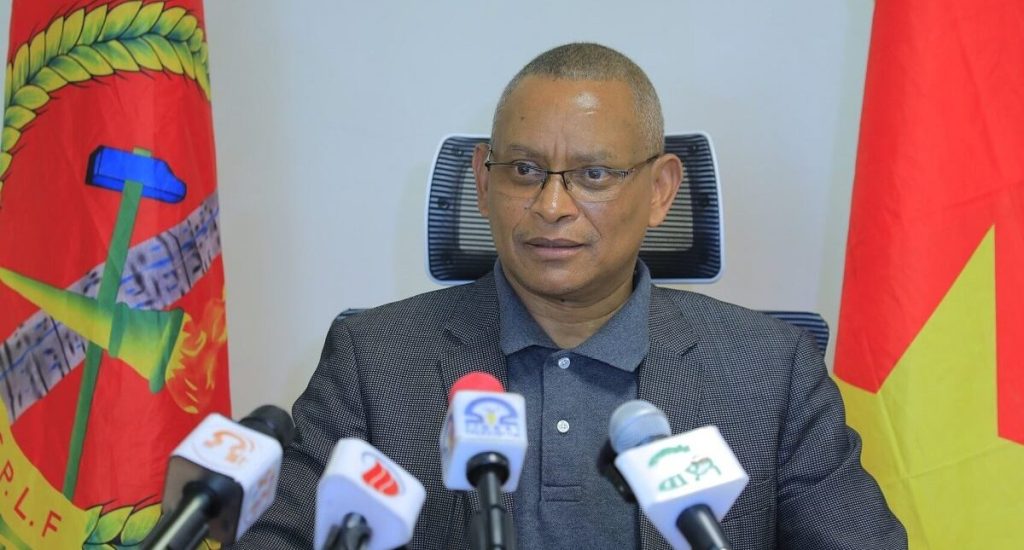

Ethiopia’s fragile 2022 Pretoria peace agreement is under severe strain, with both sides accusing each other of grave violations. The Tigray People’s Liberation Front (TPLF) has formally accused the Federal Government of Ethiopia of a drone strike in the Tigray-Afar border area, causing casualties and property destruction, and supporting an armed group operating from Afar. Simultaneously, the Afar Regional Administration has condemned the TPLF for allegedly crossing into its territory, seizing villages, and attacking civilians with heavy weapons. These escalating accusations highlight deepening mistrust and raise fears of a wider resumption of hostilities in northern Ethiopia, a region still recovering from a devastating two-year war.
What Are the TPLF’s Accusations Against the Federal Government of Ethiopia?
In a letter dated November 7, 2025, addressed to the UN Secretary-General and copied to the African Union, TPLF Chairman Debretsion G/Michael accused the Federal Government of Ethiopia of serious violations of the Cessation of Hostilities Agreement (CoHA) that underpins the Pretoria Agreement.
The key allegations from the TPLF include:
- Public Disavowal of Agreement: Prime Minister Abiy Ahmed reportedly publicly disavowed the Pretoria Agreement and disparaged the TPLF in his recent address to the Ethiopian Parliament, contradicting the spirit of peaceful dialogue.
- Support for Hostile Group: An armed group operating from the Afar Region, allegedly supported by the Federal Government, launched hostilities in Southern Tigray last weekend during a working visit by Lieutenant General Tadesse Worede, President of the Interim Regional Administration of Tigray. This attack reportedly aimed to disrupt the visit and endangered the delegation, resulting in casualties. The armed group has since declared open conflict with Tigray and publicly appealed for Federal Government support.
- Federal Drone Strike: At approximately 3:30 a.m. on November 7, 2025, federal forces allegedly carried out a drone strike on Tigray forces in the Tigray-Afar border area, causing casualties and property destruction. The TPLF labels this a “clear and alarming breach” of the CoHA.
- Non-implementation of Key Provisions: The TPLF reiterates that despite exercising “maximum restraint” amid “repeated provocations,” the Federal Government has failed to implement key provisions of the Pretoria Agreement. This includes claims of continued “daily death and suffering” for people in Western Tigray due to “invading forces” and “settlers” that forcibly occupy the area.
The TPLF has called upon the UN, AU, and the international community to exert diplomatic pressure on the Federal Government to cease hostilities, honor its obligations, and re-engage in good-faith dialogue.
What Has the Afar Regional Administration Accused the TPLF Of?
Contrasting the TPLF’s claims, the Afar Regional Administration has formally accused TPLF forces of directly breaching the November 2022 Pretoria peace agreement.
Afar authorities stated late Wednesday that TPLF fighters:
- Forced Entry and Village Seizure: “Entered Afar territory by force today,” crossing the border and seizing several villages.
- Civilian Attacks: Accused the TPLF of “controlling six villages and bombing civilians with mortars,” specifically attacking the Megale district in the northwest of the region with “heavy weapons fire on civilian herders.”
- “Acts of Terror”: Afar authorities condemned these actions as “acts of terror” and warned of defensive action if the TPLF does not immediately cease its operations.
Afar officials assert that this renewed fighting “openly destroys the Pretoria peace agreement,” raising fears of a broader resumption of hostilities.
What is the Background of the Ethiopia-Tigray Conflict and the Peace Agreement?
The current tensions stem from a brutal two-year war (2020-2022) in northern Ethiopia, primarily fought in the Tigray region between the TPLF, Ethiopia’s federal army, and allied regional forces, including Afar. The conflict left at least 600,000 people dead, according to the African Union, and caused widespread destruction and humanitarian crises.
The war formally ended with the Pretoria Peace Agreement, signed in November 2022 between Ethiopia’s federal government and Tigrayan leaders. The accord aimed to disarm fighters, restore services, and facilitate the return of displaced persons, but its implementation has been plagued by challenges and mutual recriminations.
The TPLF, which governed Ethiopia from 1991 to 2018, was officially removed from the country’s list of political parties in May 2025 by the federal government, signaling deepening mistrust.
How Do Internal Divisions Within Tigray Complicate the Situation?
The reported hostilities are further complicated by internal political and military divisions within the Tigray region itself.
- Tigray Peace Force (TPF): A new splinter armed group, the “Tigray Peace Force (TPF),” has emerged, backed by the federal government and operating along the Afar–Tigray border. The TPF openly opposes the TPLF leadership, claiming to operate in “a free land.”
- TPLF’s Response to TPF: Lt. Gen. Tadesse Worede, Interim President of the Tigray Regional State, rejected the TPF’s claim, stating, “the free land is not inside Tigray; the free land is inside the Afar Regional State.” He called for peaceful resolution of differences but cautioned that “any provocation coming from the Afar Region will be considered to be from the Afar Government or the Federal Government, and will not be considered as being carried out by Tegaru.”
This internal rift adds another layer of complexity, with accusations of external meddling and the risk of drawing in federal and regional actors, further escalating tensions in Ethiopia’s already volatile northern landscape.


