
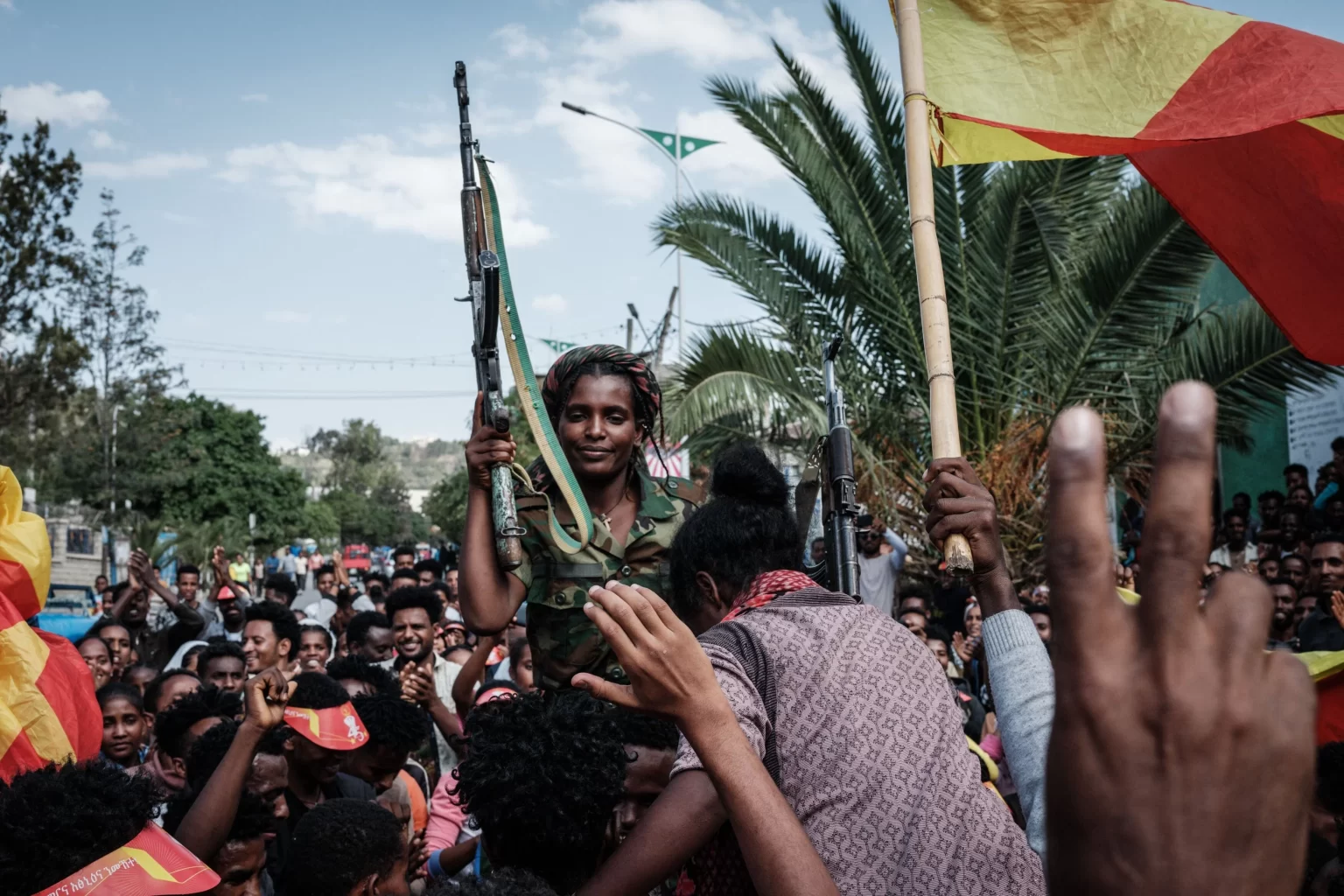

Ethiopia’s northern regions are once again on edge as the Afar Regional Administration accuses the Tigray People’s Liberation Front (TPLF) of violating the 2022 Pretoria peace agreement. TPLF forces allegedly crossed into Afar territory, seized villages, and attacked civilians with heavy weapons, raising alarms about the stability of the fragile peace that ended a devastating two-year war. This escalation highlights ongoing mistrust between regional powers and the federal government, potentially unraveling hard-won gains in one of Africa’s most volatile hotspots.
The Latest: Afar’s TPLF Accusations of a Peace Deal Breach
The Afar Regional Administration has formally accused forces from neighboring Tigray, which is governed by the TPLF, of directly breaching the November 2022 peace deal that concluded two years of brutal conflict in northern Ethiopia.
Afar authorities stated late Wednesday that TPLF fighters “entered Afar territory by force today,” crossing the border and seizing several villages. The TPLF was accused of “controlling six villages and bombing civilians with mortars.” Specifically, Tigrayan forces allegedly attacked the Megale district in the northwest of the region with “heavy weapons fire on civilian herders.”
Afar authorities, who did not provide details on casualties, condemned the acts as “acts of terror.” They warned that if the TPLF “does not immediately cease its actions, the Afar Regional Administration will assume its defensive duty to protect itself against any external attack.”
The renewed fighting, according to Afar officials, “openly destroys the Pretoria peace agreement,” referring to the deal signed in November 2022. This accusation comes amid broader fears that such incidents could spark a wider resumption of hostilities, undermining efforts to rebuild in a region still scarred by war.
Context: The Devastating Tigray War and Its Aftermath
These current tensions stem from the brutal 2020–2022 war in northern Ethiopia, which was primarily fought in the Tigray region and involved multiple Ethiopian factions.
The conflict pitted the TPLF against Ethiopia’s federal army and forces from allied Ethiopian regions, including Afar. The two-year war left at least 600,000 people dead, according to the African Union. The fighting caused widespread destruction, displacement, and humanitarian crises, drawing international condemnation and calls for accountability.
The conflict was formally ended by the Pretoria Peace Agreement between Ethiopia’s federal government and Tigrayan leaders. Signed in South Africa’s capital, the accord aimed to disarm fighters, restore services, and facilitate the return of displaced people, but implementation has been fraught with challenges and mutual recriminations.
While the peace has largely held, tensions between the federal government in Addis Ababa and the TPLF have deepened. The TPLF, which governed Ethiopia from 1991 to 2018, was officially removed from the country’s list of political parties in May amid growing mistrust from the federal government.
TPLF’s Counter-Accusations Against Addis Ababa
The TPLF has consistently maintained that the Ethiopian government is failing to implement the Pretoria agreement, prolonging the suffering of the people of Tigray.
In late October, the TPLF accused the government of prolonging the suffering of Tigrayans by failing to implement the accord, claiming the delay is due to the “destructive stance of the Ethiopian government.”
The party stated that the people of Western Tigray have been enduring “daily death and suffering for five years” at the hands of “invading forces” that forcibly occupy the area.
The TPLF called on the government to remove “invaders as well as the settlers” from the region to allow the return of displaced people, stating their security must be guaranteed.
The TPLF alleged the federal government is “busy creating political intrigue through the death and suffering of our people,” claiming this facilitates a “strategy of deception” by armed groups occupying Western Tigray.
The TPLF also condemned a “group of national betrayal” within Tigray, accusing it of acting as a “loyal servant of the Ethiopian government” and being a “tool of the genocidaires.”
The party urged the international community, mediating countries, and international institutions to monitor the implementation of the Pretoria Agreement and work to stop what it described as an ongoing “silent genocide.”
These counter-claims underscore the deep-seated grievances over territorial control and resource allocation, which continue to fuel instability despite the formal ceasefire.
The Division: TPLF vs. Tigray Peace Force
The reported hostilities in Afar are also set against the backdrop of internal political and military divisions within the Tigray region, complicating efforts to maintain unity and peace.
A new splinter armed group, the “Tigray Peace Force (TPF),” has emerged, reportedly backed by the federal government and operating along the Afar–Tigray border. The TPF opposes the TPLF leadership.
TPF leaders claim they are operating in what they describe as “a free land.”
Lt. Gen. Tadesse Werede, Interim President of the Tigray Regional State, rejected that claim, stating earlier this month, “the free land is not inside Tigray; the free land is inside the Afar Regional State.”
Tadesse called for differences with the group to be resolved peacefully, emphasizing that “Tigray’s problem must be solved by Tigrayans within Tigray.” He also cautioned that “any provocation coming from the Afar Region will be considered to be from the Afar Government or the Federal Government, and will not be considered as being carried out by Tegaru.”
This internal rift within Tigray adds another layer of complexity, as factions vie for influence amid accusations of external meddling, potentially drawing in federal and regional actors and risking further escalation in Ethiopia’s already tense northern landscape.


