
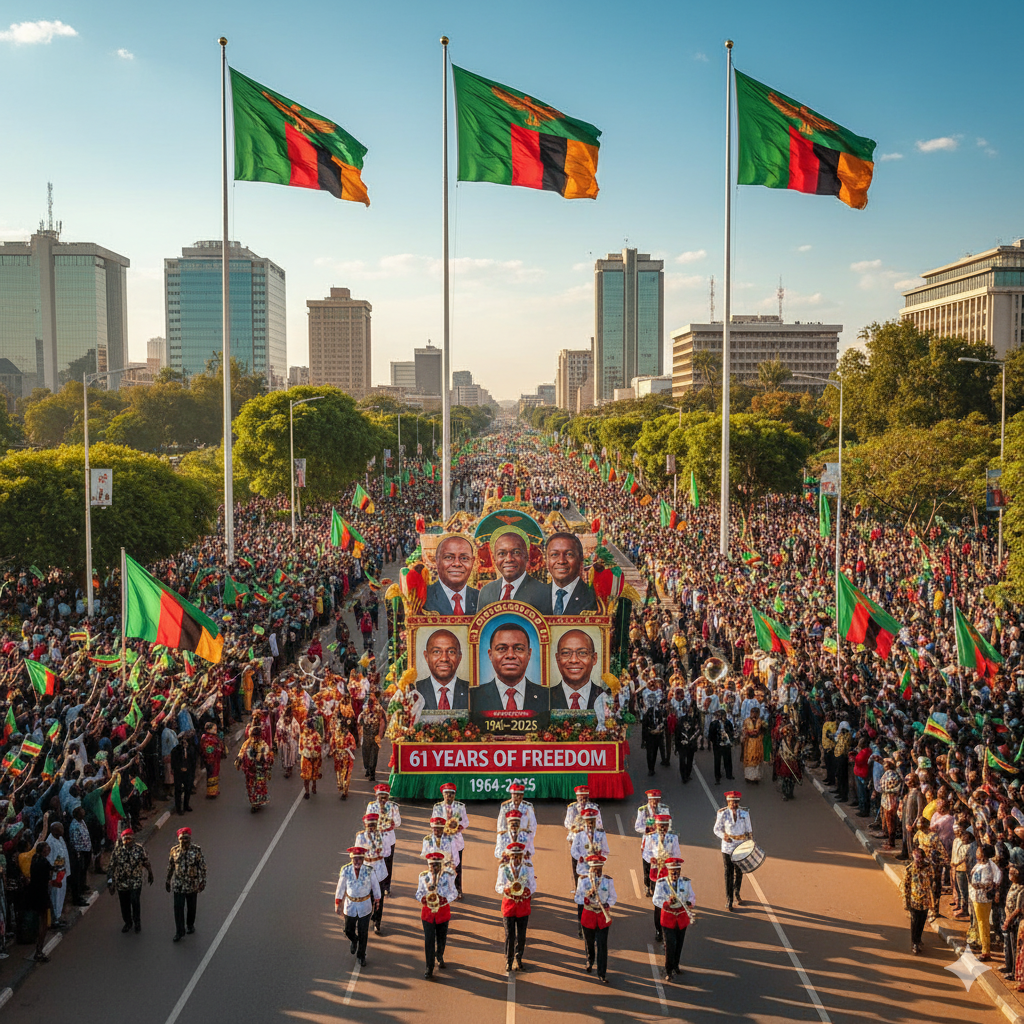

Today, 24 October 2025, marks 61 years since Zambia gained independence from British colonial rule. The nation’s journey to freedom on 24 October 1964 was fundamentally shaped by growing African nationalism and significant opposition to the Federation of Rhodesia and Nyasaland. This struggle involved widespread political activism and civil disobedience, prominently led by Kenneth Kaunda, who would become Zambia’s first president.
Zambia Colonial Era: From Company Rule to Federation
- 1888–1924: British South Africa Company (BSAC) Control. Cecil Rhodes’s British South Africa Company gained mineral rights and established control over the region, then known as Northern Rhodesia.
- 1924: British Protectorate. Administration was transferred from the BSAC to the British Colonial Office, officially designating Northern Rhodesia as a British protectorate.
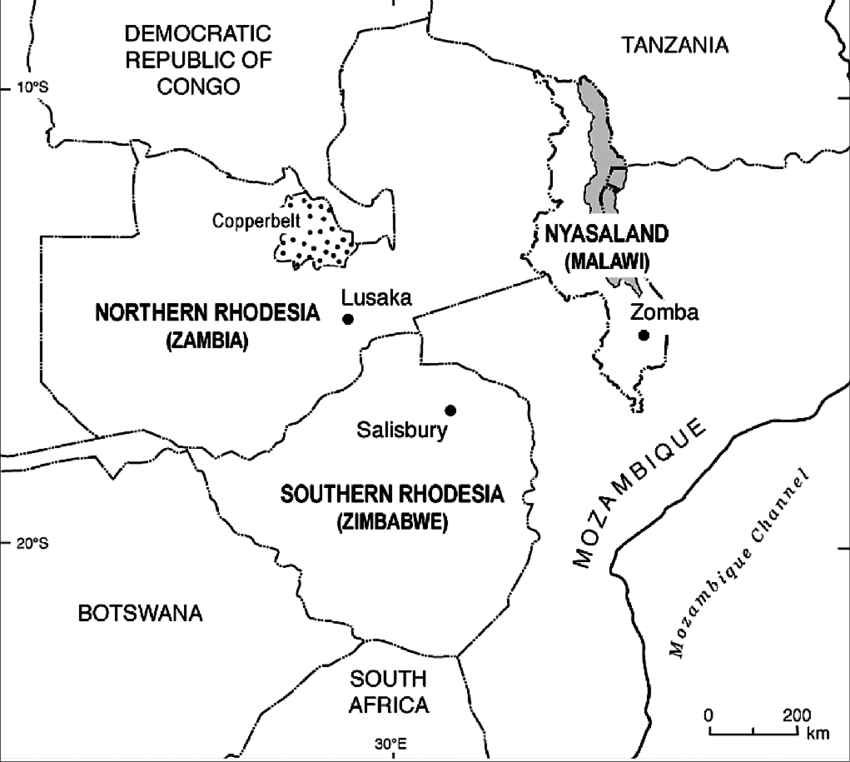
- 1953: Imposition of the Federation. Against strong African opposition, the British government created the Federation of Rhodesia and Nyasaland. This entity combined Northern Rhodesia, Southern Rhodesia (now Zimbabwe), and Nyasaland (now Malawi) and was largely dominated by white minority rule based in Southern Rhodesia.
The Rise of the Nationalist Movement
Initial resistance to colonial rule in Northern Rhodesia, from the 1920s to the 1940s, focused on improving social and economic conditions for Africans through various civic and professional groups. This laid the groundwork for later political organising.
- Post-World War II Disillusionment: The return of African veterans, who had fought for the British Empire, significantly contributed to rising nationalism. Many resented the perceived lack of gratitude and opportunities offered by their colonial masters.
- Early 1950s: Formation of the ANC. Kenneth Kaunda became a key figure in the Northern Rhodesian African National Congress (ANC) under Harry Nkumbula’s leadership.
- The Anti-Federation Struggle (1953–1958): The imposition of the Federation in 1953, seen as a means to extend white minority rule, prompted widespread protests. African nationalists organised boycotts, strikes, and pickets against discriminatory policies. The colonial government responded with arrests and repressive actions.
- 1958: Division within the ANC. Tensions emerged as more radical members, led by Kaunda, grew dissatisfied with Nkumbula’s moderate approach. Kaunda and his supporters broke away to form the Zambia African National Congress (ZANC).
- 1959: ZANC Banned. The colonial government quickly banned the ZANC in March 1959, leading to Kaunda’s nine-month imprisonment.
- 1960: Birth of UNIP. Following Kaunda’s imprisonment, other nationalists formed the United National Independence Party (UNIP). Upon his release, Kaunda was elected its president, becoming the dominant leader of the independence movement.
- 1961: “Cha-cha-cha” Campaign. After studying Mohandas Gandhi’s nonviolent methods in India, Kaunda led the “Cha-cha-cha” campaign of civil disobedience. This included boycotts, pickets, and roadblocks in the northern and eastern parts of the country. This largely nonviolent campaign ultimately compelled Britain to revise the constitution and move towards majority rule.
- International Support: UNIP received active support from other independent African leaders like Kwame Nkrumah of Ghana and Julius Nyerere of Tanganyika (later Tanzania), as well as the international peace movement.
Zambia Road to Independence and Early Nationhood
- 1962 Elections: Elections held under the revised constitution resulted in an African majority in the legislature. Nkumbula’s ANC formed a coalition government with Kaunda’s UNIP.
- 1963: Federation Dissolved. With continued pressure from African nationalists and Britain’s recognition of decolonisation’s inevitability, the Federation of Rhodesia and Nyasaland was formally dissolved on 31 December 1963.
- January 1964: Universal Adult Suffrage Elections. Northern Rhodesia held its first elections based on universal adult suffrage. UNIP won a decisive majority, and Kenneth Kaunda was elected prime minister.
- 24 October 1964: Independence Day. Northern Rhodesia was officially declared an independent republic and renamed Zambia, with Kenneth Kaunda becoming its first president.
Initial Challenges and First Decades
At independence, Zambia faced significant challenges, including a shortage of educated citizens to run the government and an economy heavily reliant on foreign expertise and copper exports. Despite its mineral wealth, it was among the poorest nations. Kaunda’s government adopted an ideology of “African socialism,” promoting nationalisation and centralised planning. Zambia also became a one-party state from 1972 until 1991, with UNIP as the sole legal party.
Pan-Africanist Solidarity and International Backing
Zambia’s independence was significantly shaped by pan-Africanist solidarity and anti-colonial movements across Africa and beyond. Egypt was a prominent supporter, alongside other African and international powers.
Zambia African Supporters
- Egypt: Under President Gamal Abdel Nasser, Egypt was a foremost supporter of Zambia’s independence and other African liberation movements. It was among the first countries to officially recognise Zambia’s independence in 1964 and the first Arab country to establish an embassy in Lusaka. Cairo served as a critical base for African nationalists, with Nasser hosting Kaunda on several occasions. Egypt also provided financial and material aid, alongside media support through outlets like the “Voice of Africa” radio station.
- Ghana: Under President Kwame Nkrumah, Ghana was a powerful voice for pan-Africanism, providing diplomatic support and acting as a hub for nationalist leaders.
- Tanganyika (later Tanzania): Led by Julius Nyerere, Tanganyika served as a crucial rear base for many southern African liberation movements. It hosted the headquarters of the Organisation of African Unity (OAU) Liberation Committee and facilitated material and diplomatic support.
- OAU Liberation Committee: Founded in 1963, this committee was instrumental in coordinating and funding liberation movements across the continent, including Zambia’s.
International Supporters:
- China: As part of its broader engagement in Africa, China provided military training and supplies to certain liberation groups.
- Yugoslavia: Under Josip Broz Tito, Yugoslavia was a leading member of the Non-Aligned Movement and offereddiplomatic backing, financial assistance, and training facilities to numerous African nationalists.
- The Soviet Union: The USSR provided military and logistical aid to various nationalist groups in Southern Africa, often as part of its Cold War strategy.
- International Peace Movement: Gandhian and pacifist groups in Europe and the United States offered moral support and solidarity to Kenneth Kaunda’s nonviolent resistance movement.
Zambia’s enduring freedom, progress, and national pride, celebrated 61 years on, reflect a determined internal struggle bolstered by significant continental and global support.


