
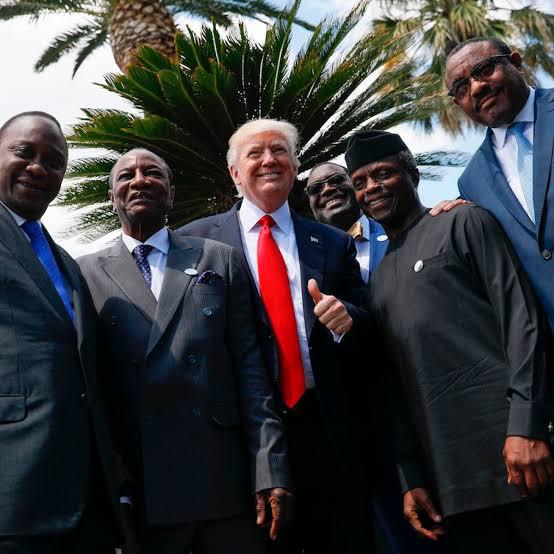

A senior White House official announced that U.S. President Donald Trump will host a summit on July 9 with five African heads of state to explore new trade and investment opportunities across the continent. The meeting, to be held in the U.S. capital, is part of a broader shift in U.S. foreign policy towards a trade-driven engagement model with Africa.
According to the official, the invited leaders include the Presidents of Gabon, Guinea-Bissau, Liberia, Mauritania—Africa’s sole Arab representative at the summit—and one more yet to be confirmed. The program will feature a roundtable discussion on unlocking commercial potential in African markets, followed by an official luncheon in honor of the visiting dignitaries.
President Trump’s decision to convene the summit reflects what the White House describes as his strong belief in Africa’s promise as a strategic economic partner, offering mutual benefits for both the American people and the continent’s emerging economies.
The summit comes in the wake of a significant policy shift by the Trump administration, which has moved to reduce U.S. foreign aid to Africa as part of a broader realignment of international priorities. Emphasizing the “America First” doctrine that underpinned his re-election campaign, President Trump has sought to replace traditional aid programs with a model that prioritizes trade, entrepreneurship, and private-sector engagement.
Earlier this week, U.S. Secretary of State Marco Rubio confirmed that the United States would move away from charitable aid frameworks, opting instead to work with nations that demonstrate tangible development potential and a commitment to self-sufficiency.
In May, senior Africa policy official Troy Vitrell announced that new commercial deal frameworks were being shared with U.S. envoys across Africa. These strategies are intended to guide the next phase of U.S.-Africa relations, focusing on mutually beneficial partnerships rather than aid dependency.
The upcoming summit will be the first of its kind under President Trump’s new administration. It is expected to set the tone for a recalibrated U.S. approach to Africa—one that positions trade and investment as central pillars of cooperation going forward.


