

There will be no Iran talks with the US until Tehran’s seven conditions are met, parliament speaker Mohammad Bagher Ghalibaf said on Tuesday, a day after the Revolutionary Guards claimed three tankers hit mines in the Strait of Hormuz.
The remarks harden Tehran’s stance on Iran talks as Washington tightens its naval blockade and sanctions, and as Qatar tries to mediate in a war now close to nine months old. For African economies the stakes run through oil prices and shipping: Brent crude has fallen to near a three-month low despite the tanker claims.
What did Ghalibaf say about Iran talks?
“There will be no action or negotiations until Iran’s seven conditions are met,” Ghalibaf told an open session of parliament, according to the Tasnim news agency, as quoted by Interfax. He said Iran was ready to respond decisively and to “change the geography” of the fighting if the US made a mistake. The quotes were reported in Persian and translated.
He was responding to recent threats from US President Donald Trump and Treasury Secretary Scott Bessent, and said Iran’s position was “firm and unchangeable”, the state-run Mehr news agency reported. Ghalibaf, Iran’s lead negotiator, first set out the conditions in October.
Iranian officials have not published an official list. According to reports in Iranian and Russian media, the conditions include an end to fighting on all fronts, including Lebanon, the lifting of sanctions and of the US naval blockade, the release of frozen Iranian assets and compensation for war damage.
What did the IRGC claim in the Strait of Hormuz?
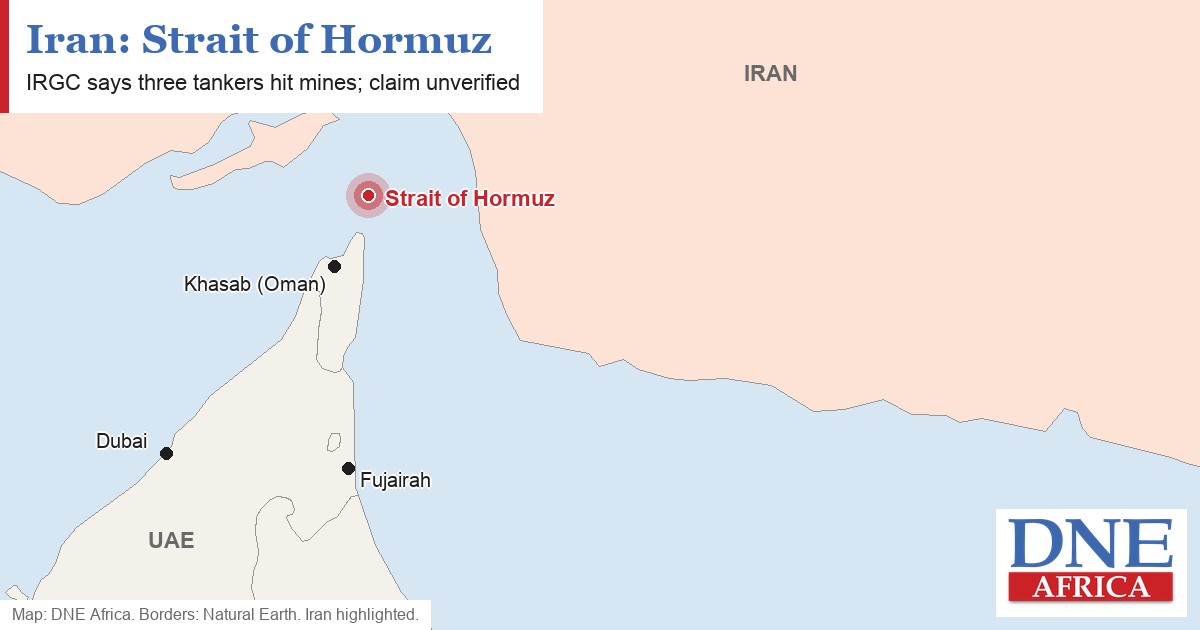
The navy of the Islamic Revolutionary Guard Corps (IRGC) said on Monday that three oil tankers it described as violating maritime restrictions had struck mines and caught fire, one near the southern coast and two east of the strait, according to a statement carried by Iranian state media and reported by Iran International. It said the ships were under US air escort and warned that vessels ignoring its instructions would be treated as “cooperating with invading forces”.
The claim could not be independently verified. The IRGC did not name the vessels, and Western maritime agencies have repeatedly questioned similar accounts: the Joint Maritime Information Center said in October that there was “no substantiation” to an earlier IRGC claim of mine strikes, gCaptain reported, and US Central Command has denied others.
Separately, the US is investigating whether Iran was behind cyberattacks on up to 50 ships, including oil, gas and chemical tankers, some of which received bomb threats, The Wall Street Journal reported, according to BBC Arabic. US officials have not ruled out Russian involvement, and the report gave no conclusive evidence. Iran has not commented on the report.
How are the Iran talks being pursued?
US Vice President JD Vance met Qatar’s prime minister to discuss negotiations with Iran, Axios reported, according to Bloomberg. Washington wants concessions on Iran’s nuclear programme, while Tehran wants the blockade lifted, sanctions eased and its assets released before fully reopening Hormuz.
Pressure around the Iran talks continues on both sides. The US Treasury on Monday sanctioned Iran’s shadow banking network, and Trump has warned that tankers running the blockade will be sunk, part of a deepening row over the blockade. Foreign Minister Abbas Araghchi told the state agency IRNA on Monday that a US land blockade of Iran would be “almost impossible”.
What does it mean for Africa?
Oil prices have so far shrugged off the latest claims and the stalled Iran talks. Brent traded at about $89 a barrel on Tuesday after falling more than 3 per cent on Monday on hopes for diplomacy, and the International Energy Agency expects the market to move into surplus this quarter, Bloomberg reported. Lower prices ease import bills for fuel importers such as Kenya and Egypt but squeeze revenue for exporters such as Nigeria, Angola and Libya, where the Sharara field lost 350,000 barrels a day this week.
Egypt is also seeking supply outside the Gulf route, and is studying a 10mn-barrel oil deal with Iraq. Any wider attack on shipping would add to pressure on routes through the Red Sea and the Suez Canal. The next test for Iran talks is whether Qatar’s mediation produces a meeting; OPEC+ is due to review output on 29 November, Invezz reported.
FAQ
What are Iran’s seven conditions for talks?
Iran has not published an official list. Iranian and Russian media report they include ending fighting on all fronts, lifting sanctions and the US naval blockade, releasing frozen assets and paying war compensation.
Did tankers hit mines in the Strait of Hormuz?
The IRGC says three tankers struck mines on Monday. The claim has not been independently verified, and the vessels were not named.
Are Iran talks with the US happening?
Qatar is mediating, and the US vice president met Qatar’s prime minister to discuss negotiations, but Ghalibaf says there will be no talks until Iran’s conditions are met.
How do Iran talks affect oil prices for Africa?
Brent was near $89 a barrel on Tuesday, close to a three-month low, which lowers costs for fuel importers but reduces income for African oil exporters.


