
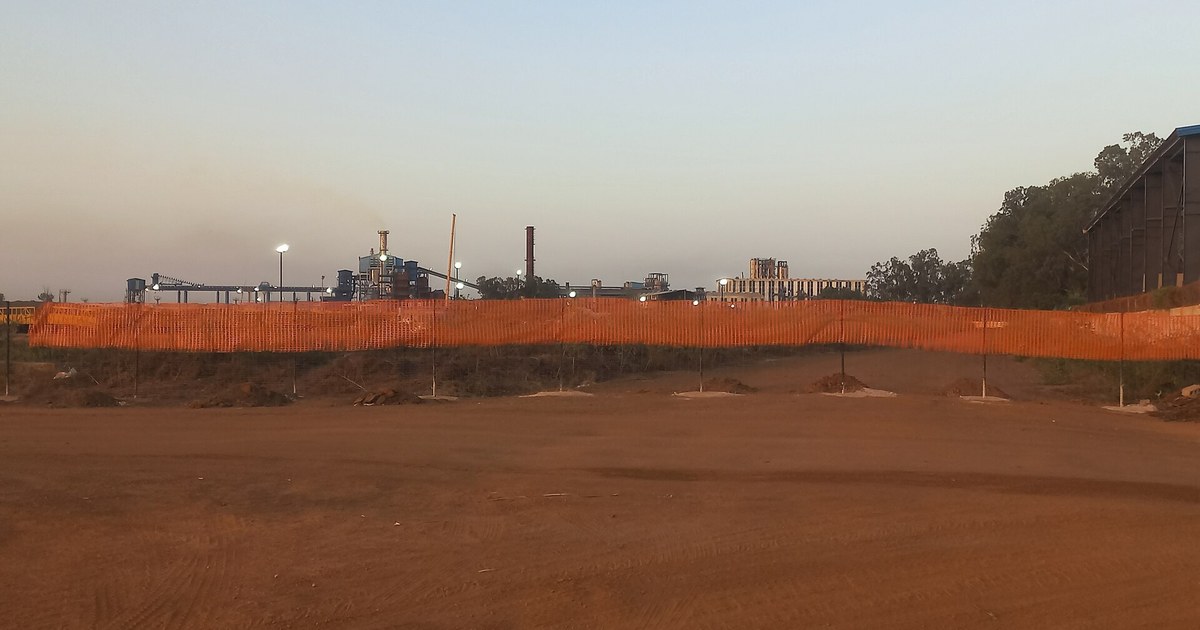

Senegal has suspended permits for sugar imports since 20 November as the Compagnie Sucrière Sénégalaise (CSS) restarts production at Richard-Toll, the Ministry of Industry and Commerce said, halting Senegal sugar imports for the second time in a year.
The measure favours local output over imported sugar in a staple that households and food processors buy daily, and tests whether the country’s only industrial producer can meet national demand. It follows the government’s reopening of the market in July after a shortage.
What has Senegal decided on sugar imports?
The ministry stopped issuing Declarations of Import of Food Products (DIPA) for sugar from 20 November, following the start of production at the CSS, it said in a statement reported on Monday. The aim is to help sell national production and reduce Senegal’s dependence on imports.
The ministry placed the decision within its import-substitution policy, already applied to bananas, potatoes and onions, and said it would support the CSS in raising volumes, with the goal of food sovereignty and eventual self-sufficiency in sugar.
To head off fears of a shortage, the ministry said supply from the Richard-Toll plant and existing stocks was enough to cover national demand, and that sugar on sale met quality standards.
Why do Senegal sugar imports keep stopping and starting?
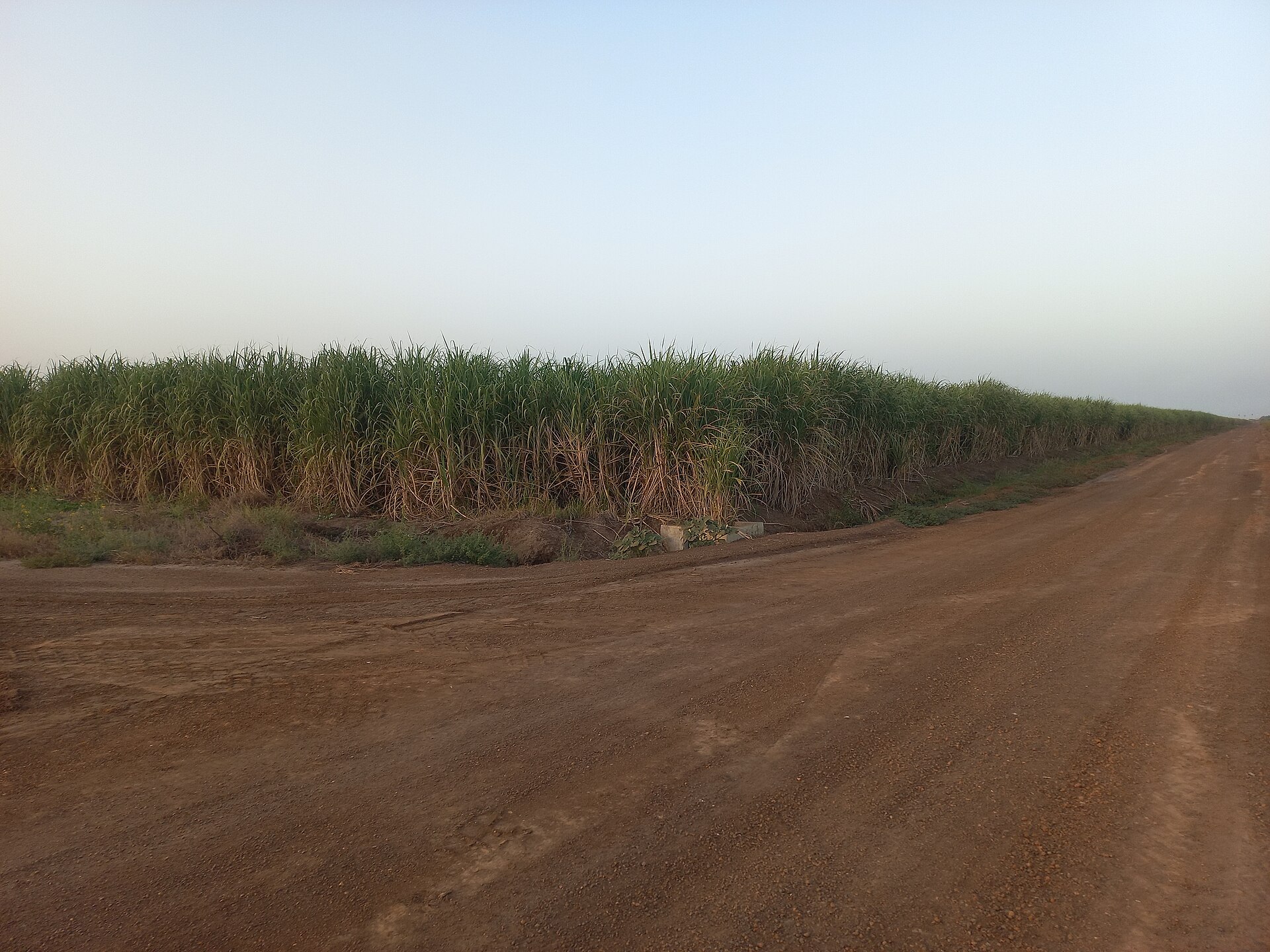
On Senegal sugar imports, the government has alternated between protecting the CSS and opening the market when local stocks run low. Imports were suspended from 15 December 2025 to protect the company’s output, then reopened on 15 July 2026 ahead of the Magal of Touba and Gamou religious festivals, when demand rises, APA reported at the time.
The ministry said then that falling CSS stocks, combined with average national consumption of about 25,000 tonnes of sugar a month, made extra supply necessary. The CSS disputed this, saying it held 50,000 tonnes in stock. The government later announced that imports would be suspended again from November for eight to nine months, once the company’s factory resumed work, Le Soleil reported.
The same approach has been used for other staples: Senegal suspended rice imports in July to speed up sales of the local harvest. The trade measures come as the government faces pressure on public finances, with parliament rejecting the 2027 budget this month.
What is the CSS?
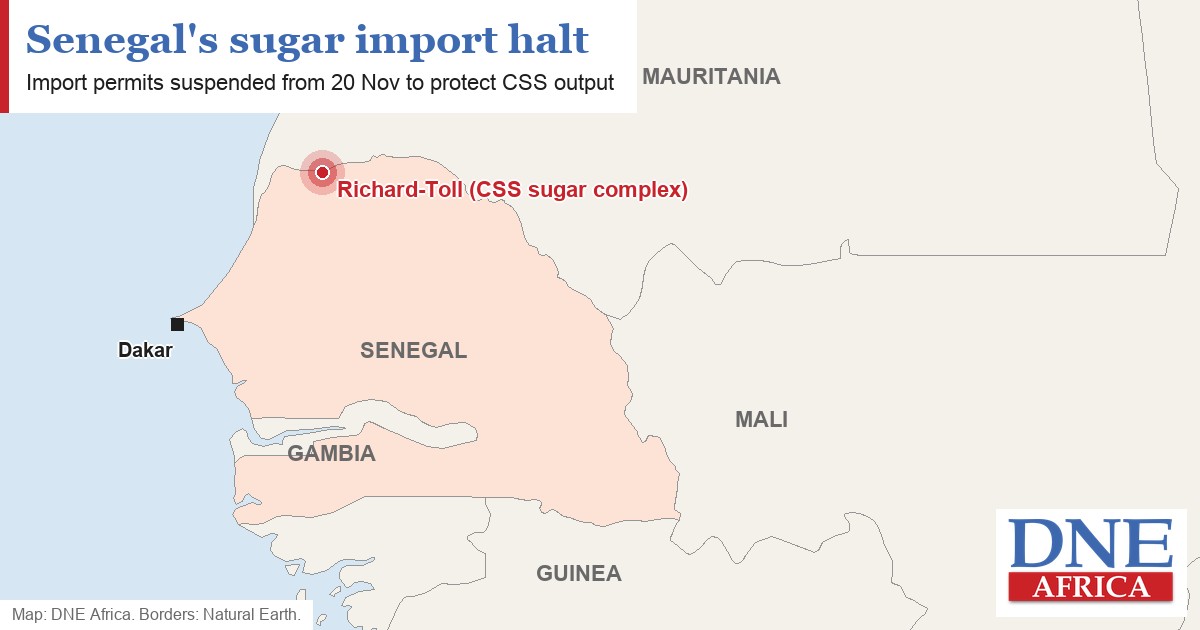
The Compagnie Sucrière Sénégalaise, based at Richard-Toll on the Senegal river near the Mauritanian border, grows cane and refines sugar and is the country’s only industrial producer. It has long argued that imports undercut its production, while importers and traders have warned of shortages and higher prices when the market closes.
Whether the halt on Senegal sugar imports holds depends on how much the CSS produces this season. If stocks fall short, as in mid-2026, the government may have to reopen the market before the religious festivals of 2027, when demand for sugar rises. Traders will watch retail prices in Dakar and other cities for the first signs of tight supply.
FAQ
Why has Senegal stopped sugar imports?
The Ministry of Industry and Commerce suspended sugar import permits from 20 November to help the Compagnie Sucrière Sénégalaise sell its new production and reduce dependence on imports.
Will there be a sugar shortage in Senegal?
The ministry said production at Richard-Toll and existing stocks were enough to meet national demand. Imports were reopened in July 2026 after stocks fell.
How much sugar does Senegal consume?
About 25,000 tonnes a month, according to the ministry’s figure cited in July 2026.
How long will Senegal sugar imports stay suspended?
The ministry has not given an end date in its latest statement; it had earlier said a suspension from November would last eight to nine months.


