
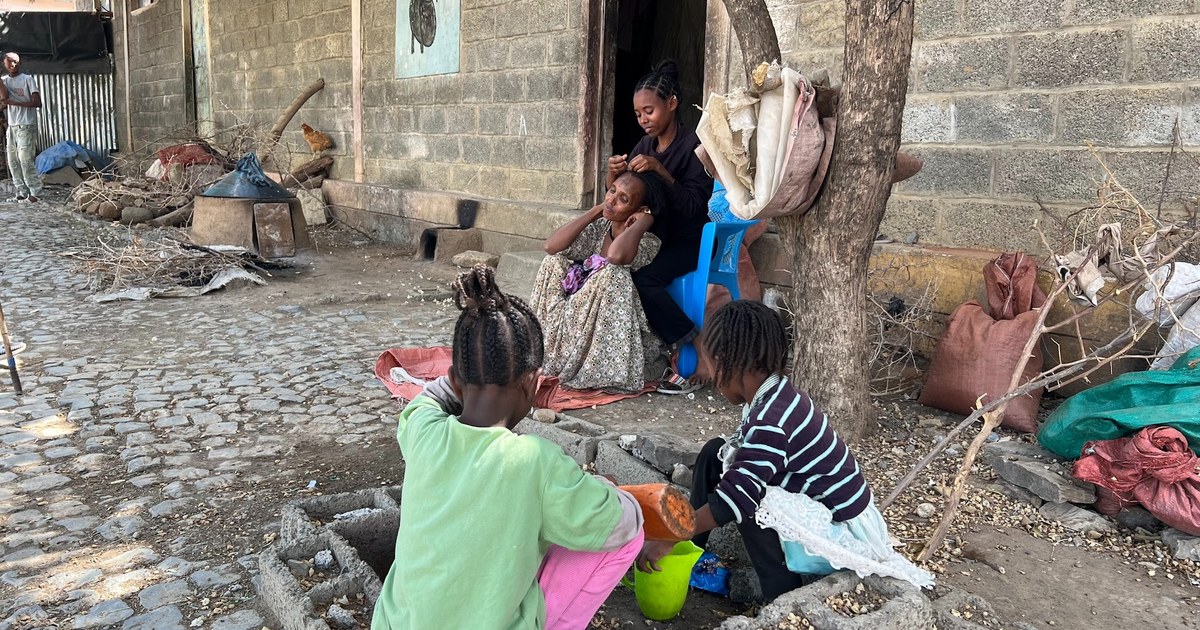

People displaced from Western Tigray have spent six years in tents and school buildings and say they will not return without security guarantees, according to interviews published by the Tigrayan advocacy group Omna Tigray.
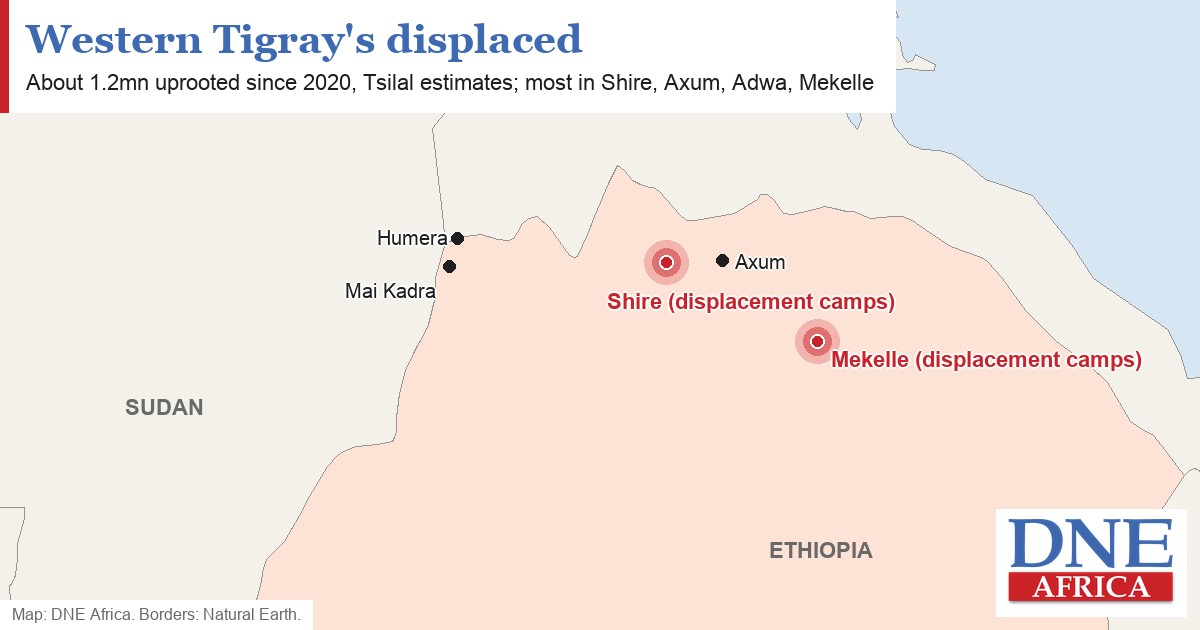
About 1.2 million people remain uprooted from Western Tigray since November 2020, according to Tsilal-Civil Society of Western Tigray, a group representing the displaced. The territory is claimed by both the Tigray and Amhara regions and has been run by Amhara authorities since the war began. Its future, and the return of those who fled, is one of the main unresolved issues of the 2022 Pretoria peace agreement.
What do the Western Tigray displaced say?
The report, published on 21 November by an Omna Tigray contributor, is based on interviews in displacement sites in Mekelle. Mulu, 35, who fled her village in December 2020, said her brother was shot dead in his field. “I cannot go back when the people who killed my brother are still there. They are in power. If I go back, they will kill me too,” she said. Her five-year-old daughter was born in the camp.
Berhan, 50, who fled Ruwassa and has lived for six years in a former primary school shared by dozens of families, said relatives told her that her house had been stripped of its corrugated-iron roof. “Telling us to just ‘go back’ without guarantees is dangerous,” she said.
Gidena, 45, once a farmer, said food aid had fallen from 15kg to 12kg per person and that October’s ration had not arrived. “The one and only solution is returning to our land,” she said, but added that the forces in control of the area must first leave. DNE Africa could not independently verify the individual accounts.
How many people are displaced from Western Tigray?
Most of the Western Tigray displaced live in Shire, Axum, Adwa and Mekelle or with host communities elsewhere in Tigray, said Misgina Zerue, Tsilal’s manager. About 80,000 who fled to Sudan remain in camps at Hasheba, Um Rakuba and Tunaydbah, he said, as quoted by Omna Tigray.
Tsilal said Western Tigray “remains under the active control of illegal militias and external forces”, that homes and land were destroyed or occupied by settlers, and that local administration and public services had not been restored. These are the group’s assessments.
What do human rights groups and the authorities say?
In April 2022 Amnesty International and Human Rights Watch published “We Will Erase You from This Land“, which concluded that Amhara regional officials, special forces and militias, including Fano, with the complicity of federal forces, had carried out a campaign of ethnic cleansing against Tigrayans in Western Tigray from November 2020, including killings, sexual violence, looting and forced expulsions. Amhara regional officials dismissed the findings, and the groups said they received no response from the federal government to requests for access.
Amhara officials and many Amhara residents consider the area, which they call Welkait, historically part of Amhara, and say Amhara people were themselves displaced and abused under earlier Tigrayan rule. The Pretoria agreement between the federal government and the Tigray People’s Liberation Front in November 2022 committed the parties to the return of displaced people and to settling contested areas under the constitution, but large-scale returns to Western Tigray never took place before the agreement broke down this year.
What would a return require?
Tsilal wants all forces it describes as illegal withdrawn and joint federal and Tigray security forces to control the area, a legal process to settle land disputes and reverse occupations, and rebuilt health and education services while emergency aid continues. The displaced interviewed by Omna Tigray said safety, which they call wuhisina in Tigrinya, was their one condition.
How does the renewed war in Tigray affect the displaced?
The camps where the Western Tigray displaced live are again in a war zone. Fighting between the federal government and the Tigray People’s Liberation Front (TPLF) resumed in September, two years after the Pretoria agreement ended the 2020-2022 war. Federal troops and Tigrayan forces have since fought with artillery and drones in the North Western Zone, and residents who had returned to villages near Badme on the Eritrean border fled again to Shire, the town that already hosts many of the displaced.
A drone strike near Badme wounded four civilians on 16 November, and a military command post banned gatherings of more than four people. Tigray now has rival authorities: a federal trustee administration says the region is stable, while the TPLF-led regional government in Mekelle accuses federal forces of attacking towns with jets and drones and says more than 600 Tigrayans are held without charge in Afar. Neither side’s claims could be independently verified.
What is the wider situation in Ethiopia?
Tigray is one of several fronts. In the Amhara region, the federal army has fought Fano militias since 2023; a Fano command this week alleged that Gondar, near Western Tigray, is being used to move weapons to Sudan’s RSF militia, a claim it did not substantiate. In Oromia, the Ethiopian Human Rights Commission said an attack in Shirka district in October killed 48 people, which the Oromo Liberation Army has said targeted “part-time combatants”.
An October study by African Narratives, a pan-African think tank, argued that Ethiopia is moving into a multi-front war in Tigray, Amhara, Afar and Oromia. It said the Pretoria agreement paused the fighting but left the status of disputed territories and the return of the displaced unresolved, and that seven armed groups, including the TPLF and the Amhara Fano National Movement, announced an alliance against the federal government in September. The study noted a central contradiction in that coalition: its members hold sharply opposed positions on contested land, of which Western Tigray is the most prominent, so military gains could set up future clashes among the allies themselves. These are the think tank’s assessments.
Relations with Eritrea have also collapsed: Ethiopia shut its embassy in Asmara on 1 October and Eritrea cut diplomatic ties, according to the study, amid a dispute over Ethiopia’s push for access to the Red Sea. Later that month US Secretary of State Marco Rubio urged Prime Minister Abiy Ahmed to avoid cross-border incursions. Sudan’s government, for its part, accuses Ethiopia of allowing drones to be launched from its territory, which Addis Ababa has denied. With so many fronts open, a settlement for Western Tigray, the condition the displaced set for going home, looks further away than at any time since 2022.
FAQ
How many people are displaced from Western Tigray?
About 1.2 million, according to Tsilal-Civil Society of Western Tigray, including about 80,000 in refugee camps in Sudan.
Why don’t the Western Tigray displaced go home?
Those interviewed by Omna Tigray say the forces controlling the area are those who drove them out and that they fear for their safety without guarantees.
Who controls Western Tigray?
The area has been administered by Amhara authorities since November 2020. Both Tigray and Amhara claim it, and its status is to be settled under the 2022 Pretoria agreement.
How does the renewed war in Tigray affect returns?
Fighting between federal forces and the TPLF resumed in September, including near Badme and Shire, making the return of the Western Tigray displaced harder and putting more strain on aid.
What is Omna Tigray?
A Tigrayan advocacy organisation that documents the effects of the war on Tigrayans and publishes first-person accounts.


