
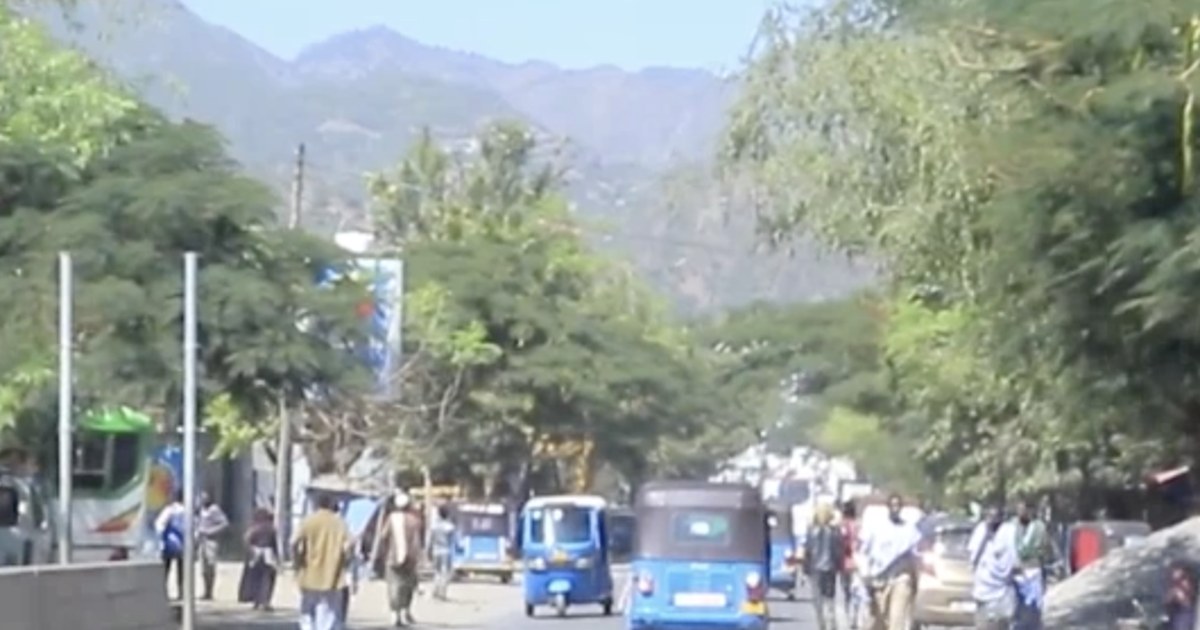

Amnesty International said the Alamata shelling by Ethiopia’s army and the allied Tigray Peace Forces, which it said killed at least 14 civilians in the southern Tigray city on 26-28 September, must be investigated as possible war crimes.
The findings on the Alamata shelling, published late on Monday, are the first detailed account by an international rights group of civilian deaths in the renewed fighting in northern Ethiopia, where access for journalists and monitors is limited. Amnesty also accused forces of the Tigray People’s Liberation Front (TPLF) of putting civilians at risk, a finding the TPLF rejected. The Ethiopian National Defense Force (ENDF) and the Tigray Peace Forces (TPF) had not responded by the time of publication, the group said.
What did Amnesty find about the Alamata shelling?
Amnesty said it investigated four artillery strikes on Alamata, a city of about 80,000 people, and independently verified the deaths of 14 civilians. Its researchers interviewed 28 people, including survivors, relatives, witnesses and medical staff, and its Evidence Lab analysed eight videos, 17 photographs and satellite imagery, according to the statement.
“For three consecutive days, the ENDF and TPF repeatedly shelled Alamata in total disregard of the lives of its 80,000 inhabitants,” said Yasmine Ahmed, Amnesty’s senior director for regional human rights impact. “Indiscriminate attacks violate the rules of international humanitarian law, and these strikes must be investigated as war crimes.”
The deadliest strike Amnesty documented hit five houses in a residential area known as the condominium area, in Kebele 04, at dawn on 27 September, killing seven people and injuring four, according to three witnesses. The dead included a 26-year-old mother, her eight-year-old son and her brother, and four members of a neighbouring family, Amnesty said. A day earlier, a shell hit a bar at the entrance to a market as people gathered for Demera, the eve of the Orthodox Meskel holiday, killing at least three people, the group said.
A medical worker told Amnesty that almost all casualties of the Alamata shelling were civilians, most with shrapnel wounds. Residents and a hospital source told the BBC at the time that more than 50 people were killed; that figure has not been independently verified.
Who does Amnesty hold responsible?
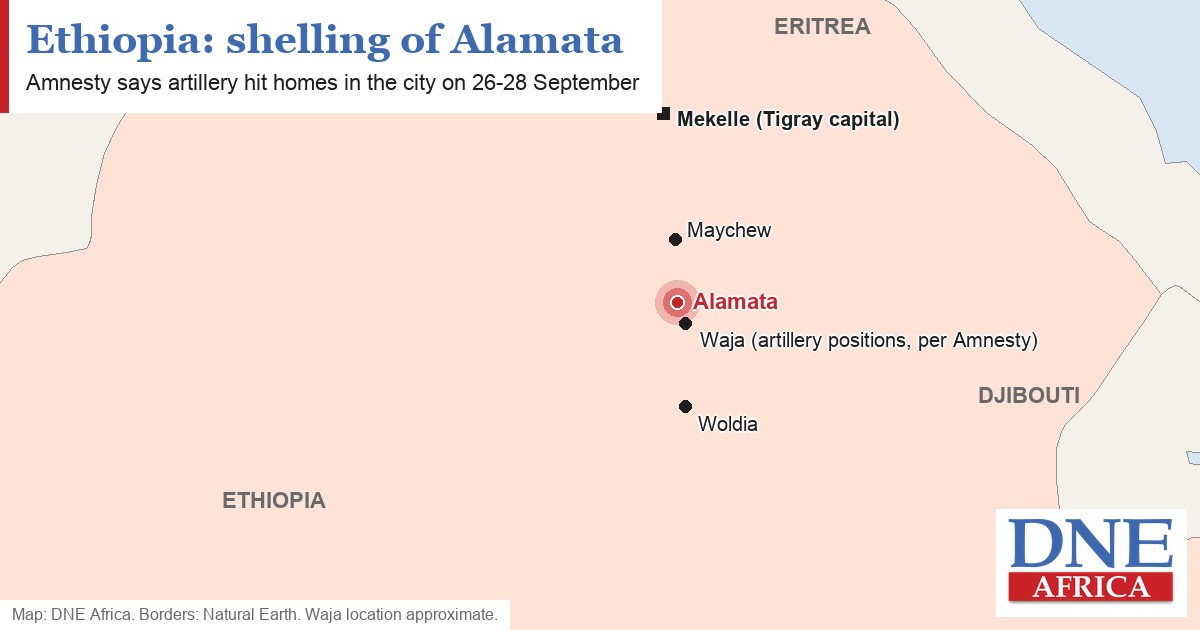
Amnesty identified the Waja and Timuga area, about 13 kilometres south of the city, as the main position from which the ENDF and TPF fired, citing residents and two sources with knowledge of military movements. Federal forces and the TPF took Alamata, a supply hub for troops, food and fuel, from the TPLF on 28 September.
Witnesses said TPLF fighters based themselves in populated areas, including schools and a hotel, Amnesty said. It added that this “does not absolve the ENDF and its allies” of their obligations, and that it was “highly unlikely” the Alamata shelling came from TPLF positions inside the city.
In a letter to Amnesty on 18 November, the TPLF said it “categorically reject[ed]” the allegations against its forces, calling them unfounded and asking for “further independent, impartial, and comprehensive investigation”. Amnesty said it wrote to the ENDF, the TPF and the TPLF on 27 October and shared its findings with the ENDF and TPF on 17 November. The federal government and the army had not commented on the Alamata shelling findings by Tuesday morning, BBC Amharic reported, adding that it had asked the army for a response.
What is the background to the fighting in Tigray?
Fighting between the ENDF and its allies and the TPLF and its allies, including Amhara Fano forces, began on 21 September across southern Tigray, western Afar and Amhara’s Wag Hemra zone, Amnesty said. Days earlier the TPLF and six other groups formed an alliance that said it aimed to replace Prime Minister Abiy Ahmed’s government, Al Jazeera reported; the army said it would act with restraint.
Fighting has since included a drone strike near Badme, and Tigrayan officials accuse federal authorities of detaining hundreds of Tigrayans at Awash Arba.
What happens next?
Amnesty called on the UN Human Rights Council to set up an independent mechanism to investigate crimes under international law in Ethiopia, and urged the authorities to give monitors, journalists and aid groups unhindered access. Whether the government responds to the findings on the Alamata shelling, and whether the council acts, will shape how far the claims are tested.
FAQ
What happened in the Alamata shelling?
Amnesty International says artillery fired by Ethiopia’s army and the allied Tigray Peace Forces hit homes and a bar in Alamata on 26-28 September, killing at least 14 civilians it could verify.
Has the Ethiopian government responded to Amnesty?
Amnesty said the army and the Tigray Peace Forces had not responded to its findings on the Alamata shelling by publication, and BBC Amharic reported no comment from the government by Tuesday morning.
What does the TPLF say about the Alamata shelling report?
The TPLF rejected Amnesty’s finding that it placed fighters in schools and residential areas, calling the allegations unfounded and asking for an independent investigation.
Where is Alamata?
Alamata is a city of about 80,000 people in southern Tigray, on the main road between Mekelle and Woldia, near the boundary with the Amhara region.


