
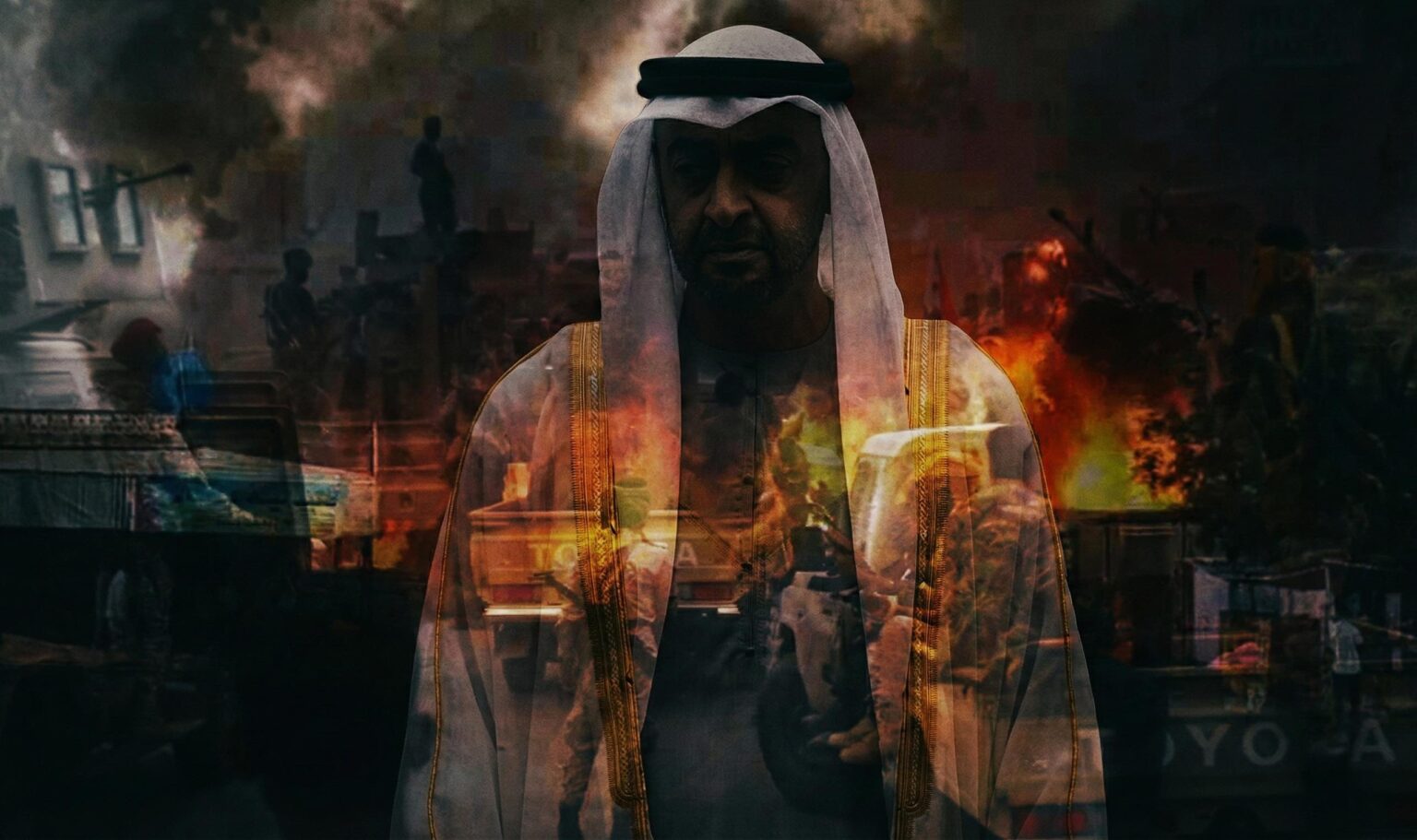

History will not record this as a misunderstanding; it will remember it as a betrayal. Behind polished skylines, luxury summits, and a carefully curated image of modernity, Abu Dhabi has been waging a quiet but ruthless campaign—one aimed not at external enemies, but at the very heart of the Arab world. What was once framed as “brotherhood” has, over time, curdled into hostility, sabotage, and an open alignment with forces long hostile to Arab and Muslim interests. This is not mere rhetoric; it is documented history.

The Grudge That Never Died: Saudi Arabia
Leaked WikiLeaks cables reveal what official smiles tried to conceal. In a document dated July 31, 2006, Mohammed bin Zayed (MBZ), then Crown Prince of Abu Dhabi, was quoted as saying: “The UAE has fought 57 wars against the Saudis, and the Saudis are not my dear friends.”
Other cables acknowledge that long-standing disputes of the past continue to cast a shadow over the present relationship between the UAE and Saudi Arabia. This resentment was not fleeting; it was ideological, personal, and deeply ingrained. In April 2008, MBZ told the US Navy’s Chief of Naval Operations that the UAE was optimistic despite being in a region dominated by “backwardness,” explicitly citing Saudi Arabia as an example. His brother, Abdullah bin Zayed, the current Foreign Minister, went further—actively inciting Washington against the Kingdom and expressing disdain for Saudi leadership, according to a June 2008 leaked document.
At the heart of this bitterness lay a fabricated grievance: the false belief that King Faisal forced Sheikh Zayed into humiliating border concessions. This narrative collapses under historical scrutiny and is contradicted by preserved recordings and official meeting minutes. Yet, facts mattered little; the myth became fuel.
Jealousy, Inferiority, and the Politics of Envy
What Abu Dhabi could never accept was not borders—it was stature. Saudi Arabia carries a weight no amount of money can buy: the Two Holy Mosques, the Kaaba, and a spiritual authority that resonates across the global Ummah. Add to that its vast geography, immense natural resources, and the transformative momentum unleashed by Vision 2030 under Crown Prince Mohammed bin Salman.
As Saudi Arabia surged forward economically and socially, Abu Dhabi watched investments, tourism, and global attention drift away from what it once marketed as unrivaled. What followed was not healthy competition, but a toxic strategy of revenge.
The Strategic Miscalculation
Rather than confront its insecurities honestly, Abu Dhabi chose the shortest perceived route to power: positioning itself as a “Trojan horse” in the Arab world. This was not pragmatism; it was a historic miscalculation. In seeking protection and leverage from external powers facing their own internal and external pressures, Abu Dhabi embraced a liability rather than a savior.
Sabotage Across the Arab Map
The damage did not stop at rhetoric. It spread like wildfire across the region:
- Yemen: Abu Dhabi actively undermined efforts to preserve unity, sabotaging Saudi-led initiatives and empowering militias that fractured the country. Beyond political interference, Emirati forces established parallel security structures, ran secret prisons documented by human rights organizations, and backed secessionist movements. By controlling ports and strategic islands, Abu Dhabi transformed a humanitarian tragedy into a geopolitical chessboard.
- Libya: Abu Dhabi armed and financed factions against the internationally recognized government, deepening a national wound that refuses to heal.
- Sudan: In coordination with external interests, Abu Dhabi backed the Rapid Support Forces (RSF), fueling chaos and mass atrocities. A UN expert report confirmed an air bridge transporting weapons via Chad, with aircraft deliberately switching off transponders. Gold smuggling networks and financial lifelines ensured the militia’s survival as Sudan collapsed into one of the world’s worst humanitarian disasters.
- Tunisia: Wealth was weaponized to influence political figures and security structures, aiming to reverse the gains of the Arab Spring and engineer submission under the banner of “order.”
- Egypt: Under the guise of investment, Abu Dhabi infiltrated strategic sectors—ports, banks, and real estate—seeking economic control. Most dangerously, it supported the Grand Ethiopian Renaissance Dam, a move widely viewed as a strategic threat to Egypt’s water security. Supporting the dam while claiming fraternity exposed a willingness to endanger millions of Egyptians for regional leverage.
- Somalia: By bypassing the federal government and dealing directly with regional entities, Abu Dhabi deepened fragmentation. These actions are documented in official reports, including the Dutch Transnational Institute’s study, “The Emerging Semi-Imperial Role of the United Arab Emirates in Africa.”
Complicity and Global Targeting
The moral collapse reached its nadir in Gaza. Multiple reports suggest that Abu Dhabi remained not merely silent, but complicit—from alleged espionage to providing intelligence on resistance movements. Israeli media reports and leaked documents have further alleged that regional bases were utilized to support operations during the conflict.
Even Muslim minorities in the West were not spared. A detailed New Yorker investigation exposed Abu Dhabi’s role in funding smear campaigns against Islamic institutions through a Swiss firm, Alp Services, weaponizing academia and media to criminalize Muslim identity in service of a specific political narrative.
The Verdict of History
Arab nations have largely responded with restraint, wisdom, and patience, hoping these delusions of grandeur would fade. They did not. Abu Dhabi chose arrogance over accountability, and intrigue over integrity.
The consequences are now unfolding. When history delivers its final judgment, no skyscraper, no lobbying firm, and no propaganda machine will be able to rewrite this chapter.
Abdiwahab Sheikh Abdisamad is a leading expert on the Horn of Africa geopolitics and the Executive Director of the Afro-Asian Institute for Strategic Studies, a think tank dedicated to analyzing regional security and diplomatic trends.


