
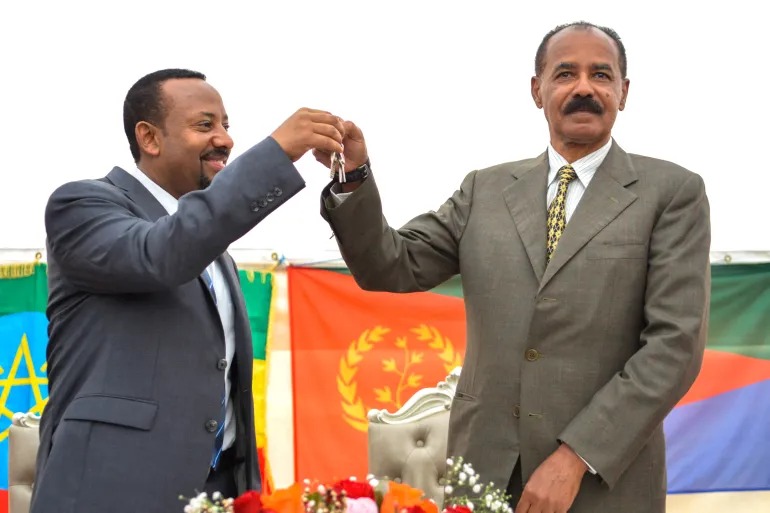

Tensions have escalated between Eritrea and Ethiopia after Eritrean President Isaias Afwerki accused the Ethiopian government of incitement and regional destabilisation. The remarks came in response to a letter sent by Addis Ababa to the United Nations, in which it claimed Eritrea was fueling conflicts in the Horn of Africa.
In a televised interview aired on Eritrea’s state broadcaster, Afwerki dismissed the Ethiopian letter as “childish,” claiming it reflected a broader campaign by Ethiopia’s ruling Prosperity Party to deflect attention from what he described as “preparations for war.”
Afwerki said that initial optimism following the appointment of Ethiopian Prime Minister Abiy Ahmed had quickly faded, citing what he referred to as Addis Ababa’s “reckless policies” towards its neighbours. He further warned that recent Ethiopian rhetoric amounts to a “declaration of war,” despite Eritrea’s stated desire to maintain “strong bilateral relations” with Ethiopia.
The Eritrean leader also criticised Ethiopia’s recent statements regarding access to seaports, calling them a “dangerous adventure driven by external powers.” He disclosed that Ethiopia had previously proposed shifting all its imports through Eritrea’s Assab Port instead of Djibouti, a proposal Eritrea ultimately rejected, citing principles of good neighbourliness.
Afwerki went on to describe Ethiopia’s pursuit of port access and naval bases in Somaliland and other regions as part of “provocative and divisive policies,” and argued that such ambitions do not reflect “authentic Ethiopian national interests.”
While asserting that Eritrea harbours no regional ambitions and seeks no confrontation, Afwerki warned that his country remains ready to defend itself in the event of aggression. He claimed that Ethiopia is actively preparing for a major offensive by acquiring drones, missiles, and tanks, and urged the Ethiopian government to prioritise resolving its internal crises instead of being “dragged into a futile war.”
The latest flare-up in rhetoric underscores the deterioration of relations between the once-allied neighbours, who signed a historic peace agreement in 2018 after decades of hostility. However, regional analysts have warned that the fragile peace may be unravelling amid growing mistrust and strategic rivalry in the Horn of Africa.


