
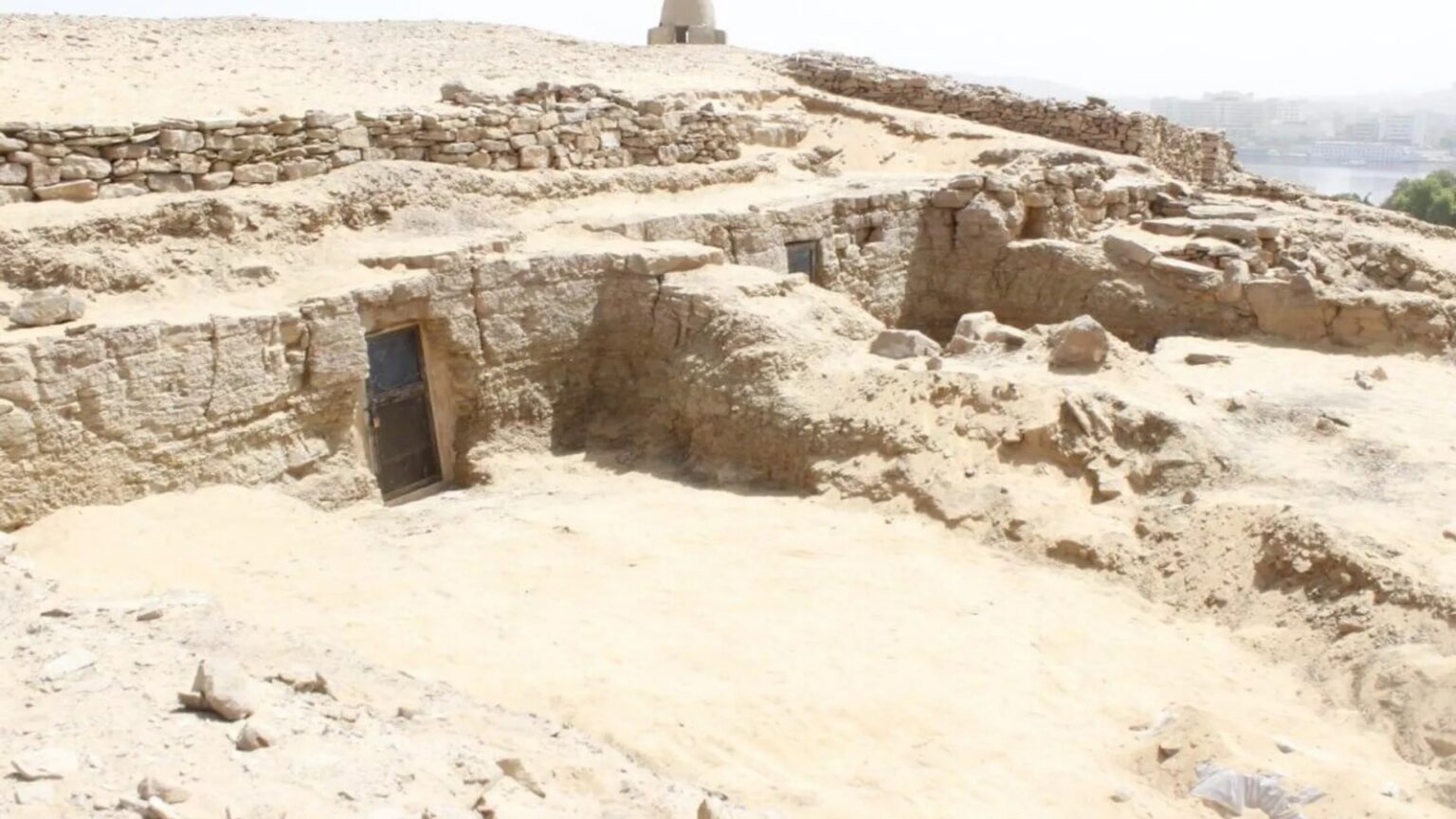

Egyptian archaeologists have uncovered three ancient tombs estimated to be around 4,000 years old in southern Egypt, with evidence suggesting they were reused across multiple historical periods, the Ministry of Tourism and Antiquities announced on Saturday.
The tombs were found in the Dome of the Wind necropolis near the city of Aswan, a historically rich region known for its cemeteries dating back to the Old Kingdom (2686–2181 BC) and beyond.
The discovery, part of ongoing excavations in the area, sheds light on how burial practices and architectural styles evolved over time, particularly during transitional eras in ancient Egyptian history.
According to the ministry, the tombs include:
Tomb 1, which features an outdoor courtyard, two symbolic “false doors,” offering tables, fragments of pottery, and remains of badly preserved wooden coffins. It also contains hieratic inscriptions—a cursive writing system used during the Old Kingdom.
Tomb 2, built in a style typical of the late Old Kingdom, was found to contain Middle Kingdom pottery, suggesting it was repurposed centuries later.
Tomb 3, described as having a unique design, includes well-preserved ceramic vessels and skeletal remains, including those of children, believed to date back to the Old Kingdom.
“This discovery confirms that the Dome of the Wind necropolis is one of the most significant archaeological sites in southern Egypt,” the ministry said in a statement. “It enhances our understanding of the chronology, architecture, and burial customs during Egypt’s transitional periods.”
Archaeological finds in Aswan have grown in recent years as Egypt ramps up efforts to promote cultural heritage and revive tourism, a key sector of the national economy. The reuse of tombs across dynasties reflects the continuous occupation and ritual significance of burial grounds in ancient Egyptian society.


