
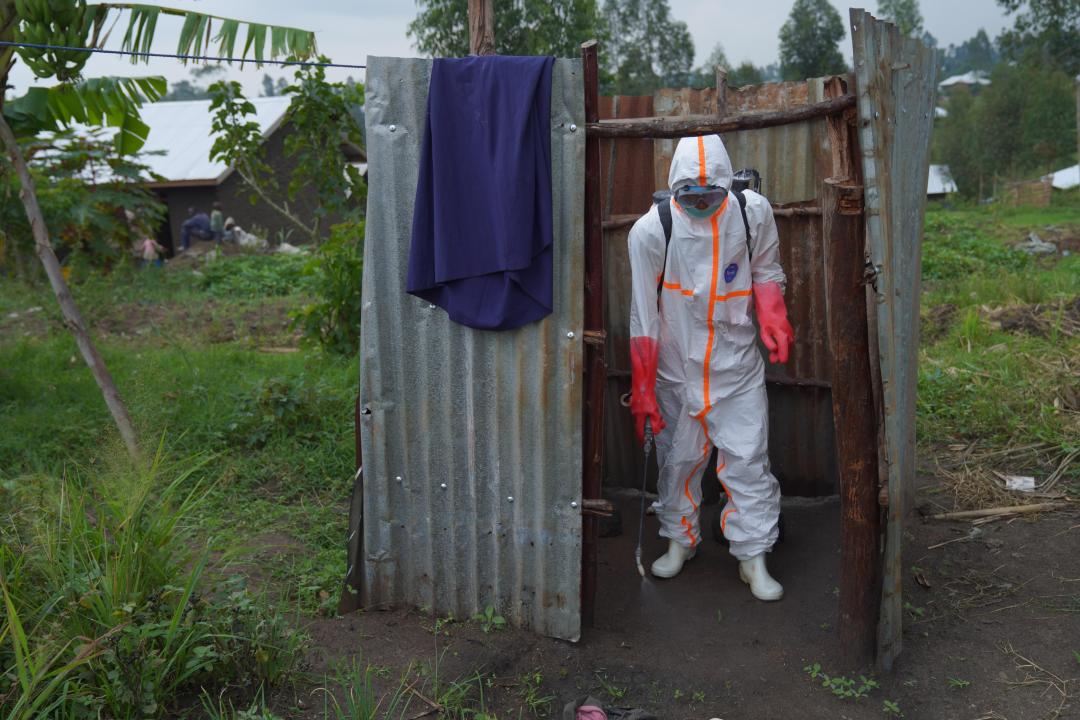

Congo’s Ebola outbreak has spread to a sixth province, with a death recorded in the previously unaffected Bas-Uele province, raising fresh concerns over the rapid expansion of the outbreak and the growing difficulty of containing it.
The man died in Buta, the capital of Bas-Uele, after traveling there from Isiro in neighboring Haut-Uele province, Africa Centres for Disease Control and Prevention Director-General Jean Kaseya said Thursday.
The outbreak, driven by the rare Bundibugyo virus, has killed more than 2,100 people among over 4,500 reported cases, according to the latest government figures. The death toll has risen nearly three times faster than during the 2014-2016 Ebola epidemic in West Africa, the deadliest Ebola outbreak on record.
The World Health Organization (WHO) warned Wednesday that the outbreak in eastern Congo was on track to surpass the previous record for the speed of fatalities.
Health authorities are struggling to keep pace with transmission, with between 60% and 70% of new cases reportedly being detected outside monitored contacts. Contact tracing, a key tool for containing Ebola, is failing to keep up with the spread.
“We are chasing the virus; the virus is ahead of us,” WHO Regional Director for Africa Dr. Mohamed Yakub Janabi said this week.
Kaseya said Thursday that contact tracing in Congo had effectively become “useless,” underscoring the growing alarm among health authorities over the outbreak’s trajectory.
The crisis is unfolding amid severe logistical and security challenges. Bas-Uele, a vast northeastern province bordering the Central African Republic, has poor road and communications networks, while conflict-related displacement and population movements linked to gold mining make it difficult to track potential cases and contacts.
At the same time, health workers at the Nizi Treatment Center in Ituri province went on strike Thursday over unpaid salaries, temporarily shutting the facility. Workers said they had not been paid for three months.
Kaseya urged the Congolese government to immediately settle the outstanding salaries, warning that health workers must be supported as the country battles the expanding outbreak.
The outbreak was officially declared on May 15, but WHO sequencing has shown that it began months earlier, in February, suggesting the virus had been spreading undetected for a prolonged period.
The situation is further complicated by threats from armed groups, community distrust and misinformation, while some health workers have also faced difficult working conditions.
The current outbreak has affected six of Congo’s 26 provinces, with authorities warning that continued transmission and population movements could further widen its geographic reach.
Ebola is highly contagious and can spread through contact with bodily fluids, including blood, vomit and semen, as well as contaminated materials such as clothing and bedding. The disease can cause severe illness and death.


