
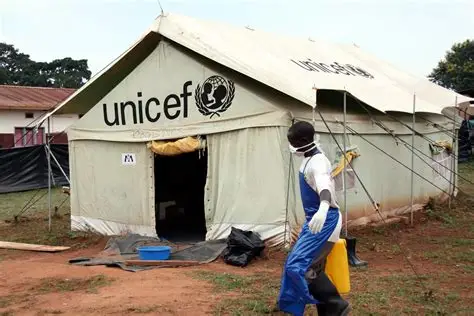

Cholera is spreading rapidly across West and Central Africa, with active outbreaks in six countries threatening millions of children as seasonal rains, flooding, displacement and cross-border movement accelerate transmission, UNICEF said.
The outbreaks are concentrated along two major transmission corridors: the Lake Chad Basin, where Chad, Cameroon and Nigeria are affected, and the Congo River Basin, linking the Democratic Republic of the Congo (DRC), Republic of Congo and Central African Republic.
Flooding along the two corridors is contaminating water sources, damaging sanitation infrastructure and limiting access to vulnerable communities, the UN children’s agency said.
Nigeria is experiencing the region’s largest outbreak, with more than 50,000 cases and 338 deaths recorded since Jan. 1, driven largely by a major outbreak in Borno state.
The DRC has reported more than 30,400 cases and nearly 700 deaths, the highest death toll among the affected countries.
Children are bearing a disproportionate share of the burden. In Central African Republic, children under 10 account for 44% of reported cases, while nearly two-thirds of infections in Chad are among children under 15. In Cameroon, the median age of patients is 10.
“This outbreak is no longer confined by borders,” Gilles Fagninou, UNICEF’s regional director for West and Central Africa, warned on Tuesday.
“It is moving along shared rivers, trade routes and population movements, putting millions of children at risk,” he added.
In the same connection, Fagninou said the spread of cholera highlighted the continued lack of access to safe water for millions of children and called for urgent investment and stronger regional cooperation to contain the disease.
UNICEF is seeking an additional $15 million to scale up its response over the next six months.
The agency and its partners are working with national and local authorities to expand access to safe water and sanitation, strengthen disease surveillance, provide essential health supplies and support oral cholera vaccination campaigns.
UNICEF is also coordinating with the World Health Organization (WHO) and the Africa Centres for Disease Control and Prevention (Africa CDC) along key transmission routes.
Cholera is a preventable and treatable waterborne disease, but can become fatal rapidly when patients do not receive timely treatment and access to safe water and sanitation remains limited.


