
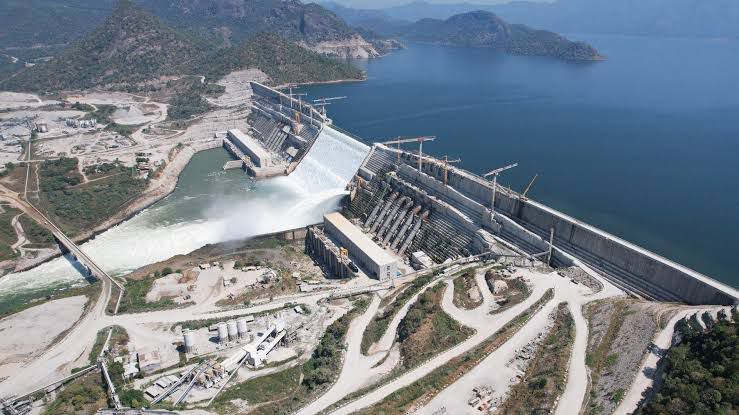

Egypt’s Minister of Water Resources and Irrigation, Hani Sewilam, has strongly rejected Ethiopia’s continued unilateral actions concerning the Grand Ethiopian Renaissance Dam (GERD), accusing Addis Ababa of seeking “hydraulic hegemony” rather than equitable partnership over the Nile River.
Speaking Thursday during a briefing with newly appointed Egyptian ambassadors before their foreign postings, Sewilam asserted that “Cairo absolutely rejects the continuation of Ethiopia’s policy of imposing a fait accompli through unilateral measures related to the Nile.” His remarks come just hours after Ethiopian Prime Minister Abiy Ahmed announced that the GERD would be officially inaugurated in September.
Sewilam stressed that Egypt has “demonstrated sincere political will” to reach a binding legal agreement on the dam, a stance it has maintained consistently throughout years of negotiations. “These efforts have been met by a clear absence of political will from the Ethiopian side,” he added.
The Egyptian minister described GERD as an “illegal” and “unilateral” construction project that violates international law, especially in the absence of a binding agreement with downstream countries, Egypt and Sudan. He warned that repeated Ethiopian statements about the dam’s completion are premature and misleading, given the lack of consent from the two riparian nations most impacted by the project.
“Ethiopia continues to promote the narrative of the dam’s completion despite the absence of any legal consensus or resolution of the substantive concerns raised by Egypt and Sudan,” Sewilam said.
He also criticized recent Ethiopian calls to resume negotiations, calling them “superficial gestures” aimed merely at improving Addis Ababa’s international image. “These are not serious efforts to resolve the issue, but rather tactical moves to deflect international criticism,” he said.
Earlier in the day, Ethiopian Prime Minister Abiy Ahmed told the country’s parliament that the dam is now structurally complete and will be inaugurated in September following the rainy season. He extended invitations to both Egypt and Sudan to attend the official opening, while also claiming there were “attempts to obstruct” the event. However, he maintained that Ethiopia remains open to dialogue.
Despite that rhetoric, Ethiopia has repeatedly refused to sign a binding agreement on the dam’s filling and operation, which Egypt considers essential to safeguarding its vital share of Nile waters. Egypt fears that the GERD could significantly disrupt its water supply — a lifeline for over 100 million people — especially in drought years.
Built at a cost of $4.2 billion, the GERD is located near the border with Sudan and has already begun partial power generation since February 2022. Yet, the lack of a legal agreement continues to be a major source of regional tension.
The trilateral negotiations between Egypt, Sudan, and Ethiopia — often mediated by the African Union — have stalled multiple times over disagreements on legal obligations, dispute resolution mechanisms, and emergency protocols during periods of drought.
With Abiy’s planned inauguration just months away, Cairo’s message remains unchanged: without a legally binding agreement, the GERD represents not a symbol of cooperation, but a flashpoint of growing regional friction.


