

Adolescent pregnancy accounts for one in six pregnancies in African countries able to report data, while one health facility in eight offers youth services, the Africa Centres for Disease Control and Prevention (Africa CDC) said on Sunday.
The report, launched in Addis Ababa, draws on returns from the health ministries of all 55 African Union member states. It concludes that the gap is one of delivery, money and data, not of policy, as external health aid falls.
What does the report say about adolescent pregnancy in Africa?
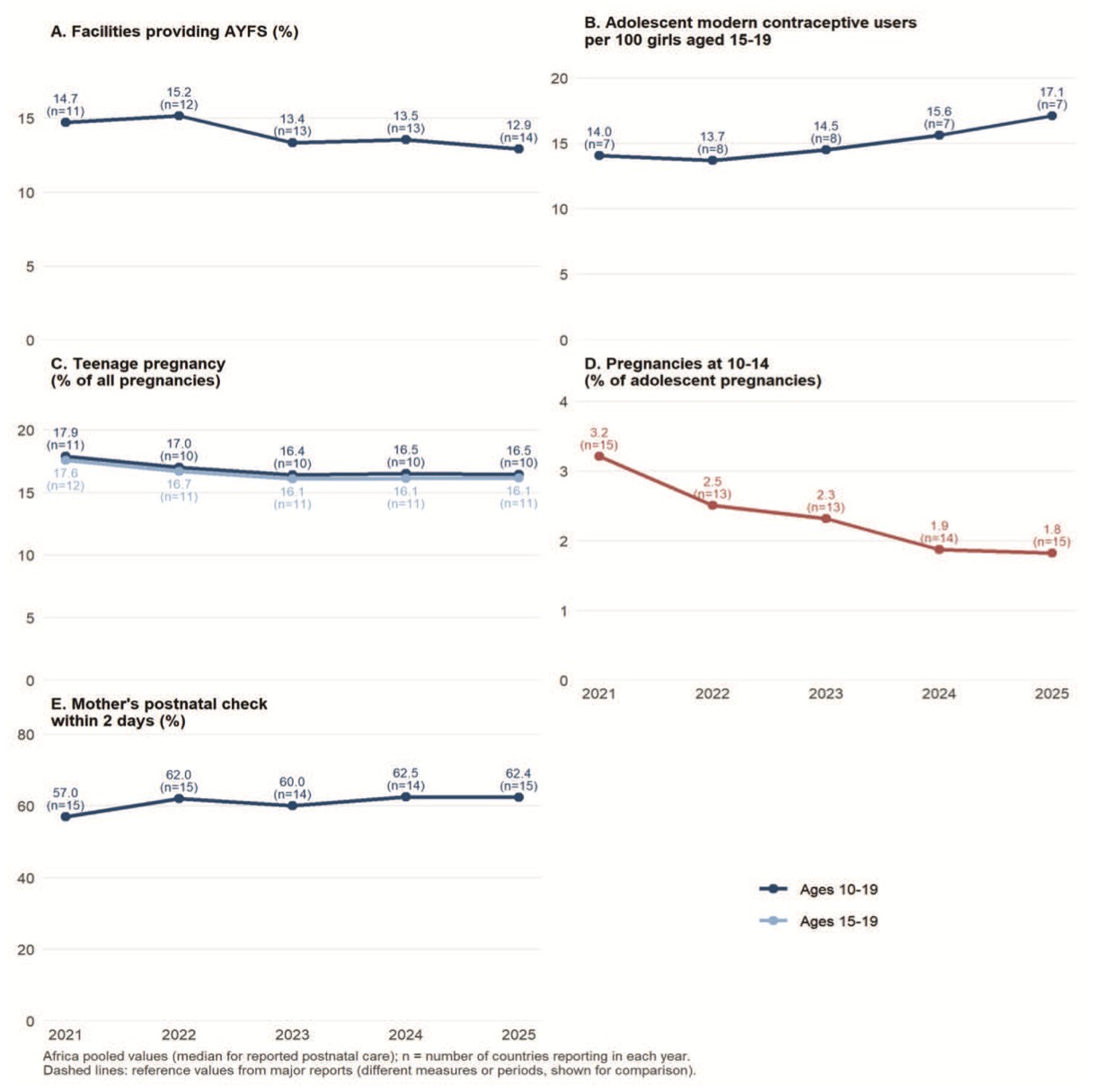
Pregnancies among girls aged 10 to 19 made up 16.5% of all pregnancies in 2025, based on 12 countries with usable data, according to Seen, Served and Counted: The State of Adolescent Health in African Union Member States. The share was 17.9% in 2021.
The regional range is wide: 24.2% in Southern Africa, almost one in four, against 9.5% in Central Africa, a figure that rests on a single country. Health facilities recorded 132.9 pregnancies per 1,000 girls aged 15 to 19. No North African country reported comparable data.
Girls aged 10 to 14 accounted for 1.8% of recorded cases of adolescent pregnancy, well below the World Health Organization’s estimate that 5.2% of adolescent births in sub-Saharan Africa are to girls of that age. The authors said such pregnancies, often linked to child marriage or abuse, were probably concealed or not recorded by age.
Why are services not reaching young people?
Adolescent and youth sexual and reproductive health features in the national policies of 43 of 52 responding countries, or 83%. Yet only 12.9% of health facilities offered youth-friendly services in 2025, compared with 14.7% in 2021, and coverage within countries moved by a median of 0.1 percentage points.
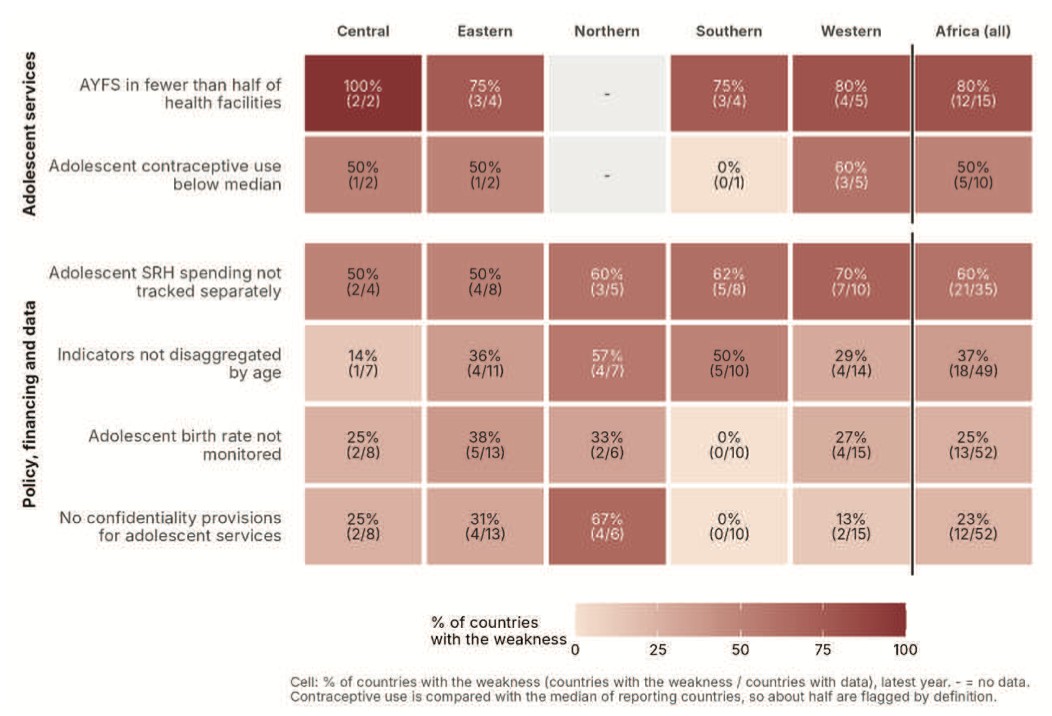
Twelve of 52 countries reported no confidentiality protections for adolescents who seek care, most often in Northern Africa, and 21 of 35 could not say what they spend on adolescent sexual and reproductive health.
Governments named insufficient funding (73%), too few trained health workers (71%) and weak data systems (63%) as the main barriers.
“What we cannot measure, we cannot manage, and what we cannot show, we cannot finance,” Jean Kaseya, director-general of Africa CDC, said in a statement from the agency.
Tanzania’s President Samia Suluhu Hassan, the African Union’s champion for maternal and child health, wrote in the foreword: “I do not believe our youngest girls are safer than we thought. I believe they are hidden.”
How reliable are the figures?
All data were reported by governments and could not be independently verified, the report said. Population figures from eight countries, including Nigeria and Ethiopia, appeared to count boys as well as girls and were set aside, and most indicators rest on between seven and 15 countries.
The analysis found no statistically significant link between any service or policy and adolescent pregnancy rates, which the authors attributed to the small number of countries with complete data.
There are gains. Users of modern contraception rose from 14.0 to 17.1 per 100 girls aged 15 to 19 between 2021 and 2025, with increases in seven of nine countries.
What is the wider context?
About one in four Africans is aged 10 to 19. African Union states account for about 69% of the world’s maternal deaths, the report said, citing WHO estimates for 2023, and adolescent mothers face higher risks of complications such as eclampsia and infection, according to the WHO.
Adolescent pregnancy varies sharply between countries. The report cites World Bank data for 2023 showing about 163 births per 1,000 girls aged 15 to 19 in the Central African Republic, against 4.3 in Tunisia. Programmes that keep girls in class, such as Chad’s school modernisation project, are among the measures it recommends, and risks in pregnancy remain a concern in countries such as Uganda.
What happens next?
To reduce adolescent pregnancy, the report recommends youth-friendly standards in all primary care facilities, with a suggested target of half of facilities by 2030; the removal of consent and confidentiality barriers; wider access to contraception; treating every pregnancy at ages 10 to 14 as a child protection case; a budget line for adolescent health; and data broken down by age and sex.
It was launched at a youth and women’s summit before the Conference on Public Health in Africa. The findings follow a WHO warning that African health systems lag on climate readiness.
FAQ
How common is adolescent pregnancy in Africa?
Girls aged 10 to 19 accounted for 16.5% of all pregnancies in 2025 in the 12 countries with usable data, Africa CDC said. In Southern Africa the share was 24.2%.
Is adolescent pregnancy falling?
Only slowly. The share was 17.9% in 2021 and 16.5% in 2025, according to the report, which cautions that the set of reporting countries changed from year to year.
How many health facilities offer services that could prevent adolescent pregnancy?
Youth-friendly services were offered in 12.9% of facilities in 2025, based on 14 countries. In 12 of 15 countries with data, fewer than half of facilities offered them.
Who produced the report?
Africa CDC’s reproductive, maternal, newborn, child and adolescent health division and the secretariat of the African Union champion for maternal and child health, using a questionnaire completed in 2026 by 55 health ministries.


