
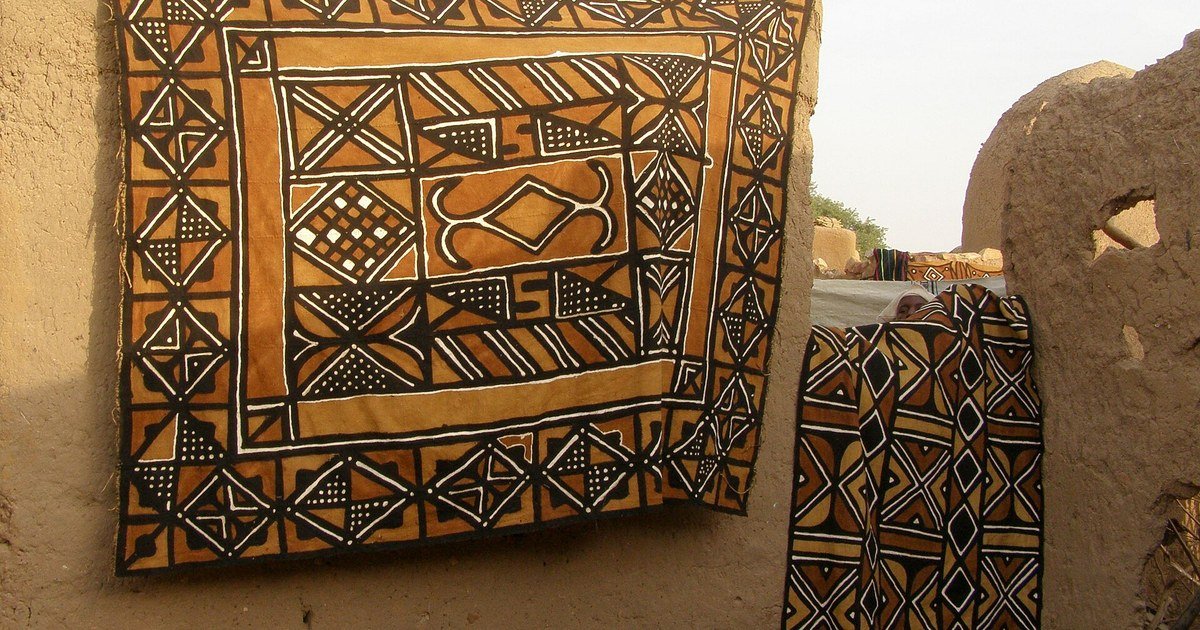

Mali’s bogolan mud cloth, the hand-dyed cotton painted with fermented river mud, is now a protected geographical indication registered by the African Intellectual Property Organization (OAPI).
The label, published in OAPI’s bulletin of 14 April 2026, ties the name “Bogolan” to cloth made in 36 Malian districts and Bamako, giving a craft once worn by hunters and brides legal protection as stamped and industrial versions spread.
What does the protected status cover?
According to the OAPI geographical indications bulletin, the registration covers dyed and decorated cloth of 100% cotton, made into wrappers, suits and other garments, as well as leather, fibre and wood treated with n’galama, the plant dye used in the process, all made “from traditional manufacturing techniques”. The application was filed on 22 September 2024 and registered under the 2015 act of the Bangui Agreement, OAPI’s founding treaty.
The bulletin also fixes the palette of bogolan mud cloth: black (finma), white (jèma), red ochre (blemma), brown (kôlôji) and yellow ochre (nèrèma), with shades that depend on the raw materials. The protected area runs from Kayes in the west through Koulikoro, Sikasso and Ségou to Mopti, Bandiagara and Djenné, plus the District of Bamako.
How is bogolan mud cloth made?
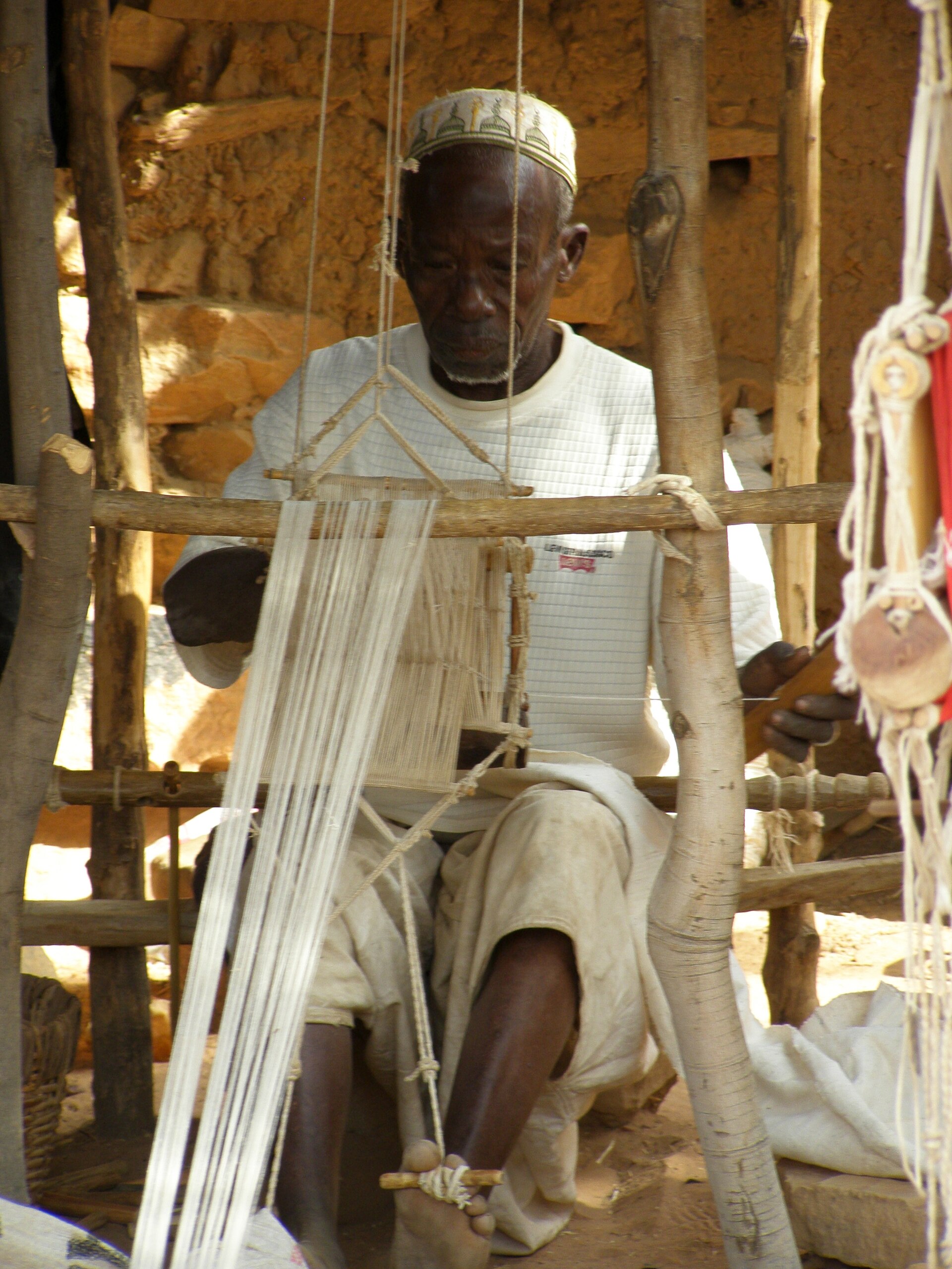
The Bamana (Bambara) name is usually glossed as cloth “made with mud”, and the work has traditionally been split between men and women. “Woven by men, it was embellished by women artists through a complex additive process,” the textile specialist Christine Giuntini wrote in HALI, the textile magazine. Men weave narrow cotton strips that are sewn together at the edges; women then treat the cloth with a leaf dye and paint it with river mud rich in tannin.
The mud is fermented before use. When it dries, its reaction with the leaf mordant “fixes a rich brown colour to the cotton”, Giuntini wrote. Makers in Ségou told Bird Story Agency in July 2026 that a single cloth takes from one day to a full week, and that they work mostly in the dry season because the fabric must dry several times.
An oral tradition recounted by the makers holds that the technique began by accident, when a hunter’s cotton garment was stained with mud that reacted with ngalama. Museums hold examples from the late 19th and early 20th centuries, including pieces at the Brooklyn Museum and the Metropolitan Museum of Art.
What did the patterns mean?
Bogolan mud cloth “was traditionally used to make tunics for male hunters and wrappers for females to mark the most important milestones in their lives”, according to HALI. The Fashion History Timeline of the Fashion Institute of Technology in New York lists those milestones as puberty, marriage, motherhood and death.
London’s Horniman Museum, drawing on the work of the art historian Victoria Rovine, counts about thirty Bamana ideograms in the repertoire, built from dots, dashes and geometric shapes. Baba Fallo Keita, a former staff member of the National Museum of Mali, told Bird Story Agency that before the 1970s bogolan was mainly women’s clothing whose symbols each had a specific meaning.
How did Bamako turn bogolan mud cloth into fashion?
In the 1970s Keita and fellow students at the Institut National des Arts in Bamako began adding colours to the cloth, and five friends formed the Kasobané collective to work with it, he told the agency. The designer Chris Seydou (1949-1994) then carried the look into fashion, designing his own fabrics in the 1980s from simplified bogolan patterns, according to the Fashion History Timeline. The Horniman notes that the National Museum of Mali devotes a section of its textiles gallery to him.
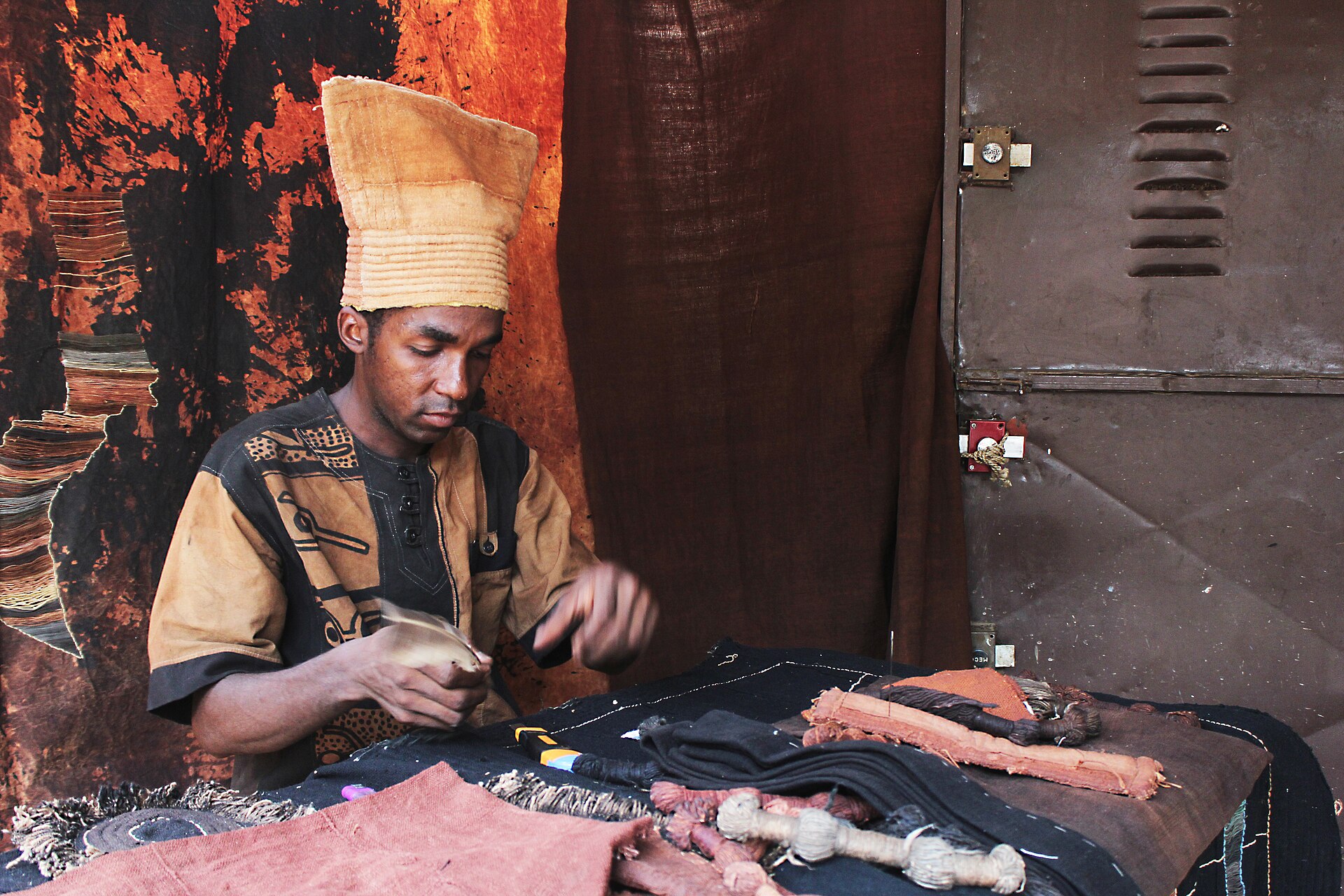
As demand grew, makers found quicker methods. In cities bogolan mud cloth is now often stamped rather than painted by hand, and the Horniman holds a piece it describes as made with industrial techniques rather than with clay and ngalama leaves. Abroad, bogolan mud cloth has become popular for fashion and homewares, HALI noted, and not every piece sold under the name is made the old way. Workshops such as Farafina Tignè, which Bird Story Agency reported employs more than 100 people with shops in Bamako, San, Mopti and Ségou, sell the hand-made product.
The OAPI registration reserves the name for cloth made in the listed area by the methods it describes. Nigeria’s adire indigo cloth followed a similar path from household craft to urban fashion trade. UNESCO raised a similar worry about commerce when it listed Tunisian harissa.
FAQ
What is bogolan mud cloth?
Bogolan mud cloth is a Malian cotton textile, woven in narrow strips, treated with a leaf dye and painted with fermented river mud to create dark grounds and pale geometric motifs.
When did bogolan get protected status?
OAPI published the registration of “Bogolan” as a protected geographical indication in its bulletin of 14 April 2026, after an application filed on 22 September 2024.
Who makes bogolan mud cloth in Mali?
Traditionally men wove the cloth and women painted it. Today both men and women make it, from village dyers to Bamako workshops and designers.
Is all mudcloth sold abroad made in Mali?
Not necessarily. Museums hold pieces made with industrial techniques. The OAPI registration reserves the Bogolan name for cloth made in the listed Malian areas by traditional methods.


