

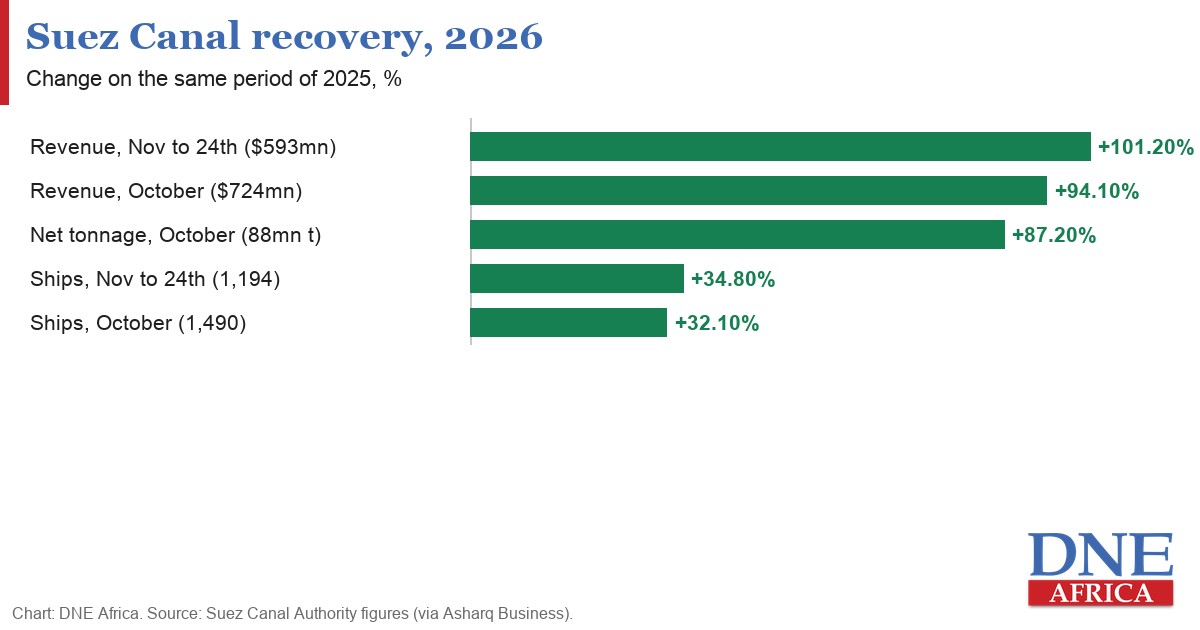
Egypt’s Suez Canal revenue more than doubled in the first weeks of November to $593mn, from $295mn in the same period of 2025, as major shipping lines returned to the waterway, the Suez Canal Authority said.
The 101.2% rise extends a recovery in one of Egypt’s main sources of foreign currency, though traffic is still about half its level before Red Sea shipping was disrupted in late 2023, and the war between Saudi Arabia and the Houthis is moving closer to the route.
How much did Suez Canal revenue rise in November?
Lieutenant General Osama Rabie, chairman of the Suez Canal Authority, said 1,194 ships crossed the canal from the start of November, up 34.8% from 886 a year earlier, according to figures reported by Asharq Business on 24 November. Net tonnage rose to 72mn tonnes from about 37mn tonnes.
The figures follow a strong October. Suez Canal revenue rose 94% year on year that month to $724mn, from $373mn, with 1,490 ships carrying 88mn net tonnes, against 1,128 ships and 47mn tonnes in October 2025. All three were the highest monthly figures since the Red Sea crisis began.
On the back of the recovery, the authority raised its revenue target for 2026 to $6.6bn from $6.2bn. It aims for $7.6bn in 2027, $10.3bn in 2029 and $12bn by 2030. The canal earned $4.6bn in the 2025/26 fiscal year to June, up 23%, Mr Rabie said earlier this year.
Why are shipping lines returning to the Suez Canal?
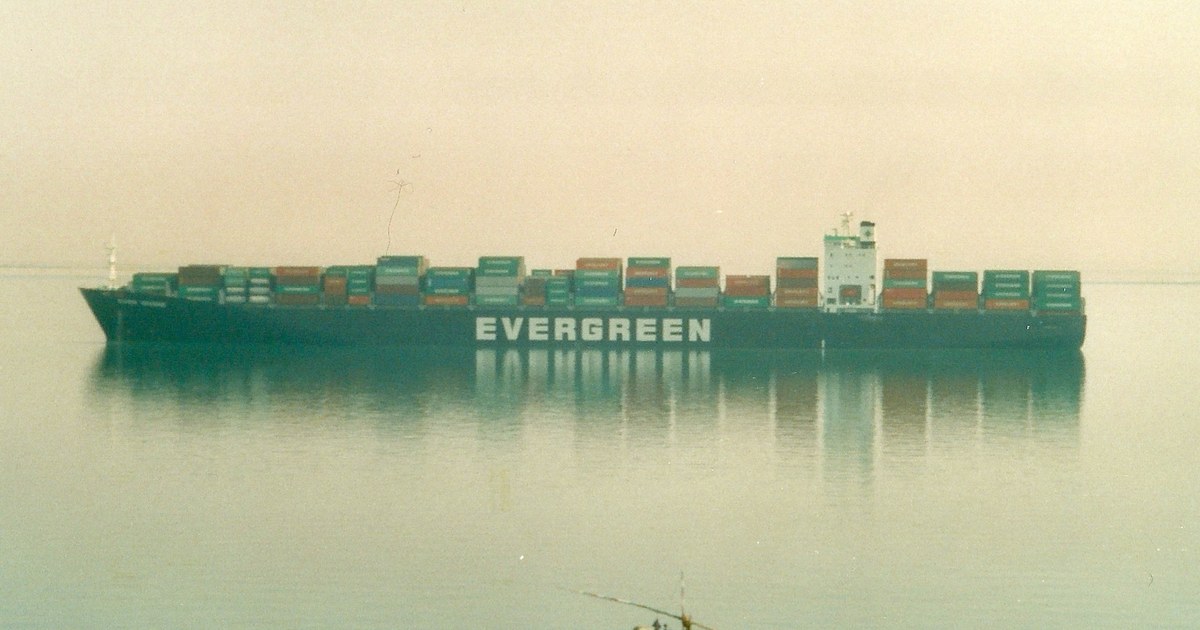
From late 2023 Houthi attacks on merchant ships in the Red Sea pushed most container lines to sail around the Cape of Good Hope, cutting canal traffic and revenue sharply. Lines have been coming back in recent months: Evergreen and Ocean Network Express have resumed transits, and Hapag-Lloyd, which returned in August, had sent 30 ships through by November, according to the authority.
The canal has also cut fees to win back traffic. It has extended discounts for oil and gas tankers and car carriers until mid-2027, Asharq Business reported. Shipping disruption around the Strait of Hormuz during the war with Iran has also reshaped trade routes this year.
The recovery is still partial. Mr Rabie has said the canal handled 70 to 80 ships a day before the Red Sea crisis, against about 35 now.
What does Suez Canal revenue mean for Egypt’s economy?
Transit fees are, with tourism, remittances and gas exports, one of Egypt’s main sources of dollars. Higher Suez Canal revenue adds to Egypt’s foreign currency inflows. Egypt’s economic growth accelerated to 4.9%, helped by industry and the canal’s recovery, according to official figures reported by Asharq Business.
What are the risks to the recovery?
The main risk is the Red Sea itself. On 24 November the Houthis warned that Jeddah and every Saudi Red Sea port would be targets if Yemen’s Hodeidah port were struck, and told shipping companies to move vessels away. On 25 November they claimed a strike on Saudi Arabia’s Ras Tanura refinery, which the Saudi-led coalition said it repelled.
Egypt and Sudan said this week they reject the militarisation of the Red Sea. The authority says the return of traffic to pre-crisis levels depends on security in the region.
FAQ
How much is Suez Canal revenue in November 2026?
$593mn from the start of the month to the figures published on 24 November, up 101.2% from $295mn a year earlier, according to the Suez Canal Authority.
How many ships crossed the Suez Canal in November?
1,194 ships from the start of November, up 34.8% from 886 in the same period of 2025.
What is the Suez Canal revenue target for 2026?
The authority raised its target to $6.6bn from $6.2bn, and aims for $12bn by 2030.
Has Suez Canal traffic returned to normal?
Not yet. About 35 ships a day cross now, against 70 to 80 before the Red Sea crisis, according to the authority’s chairman.


