
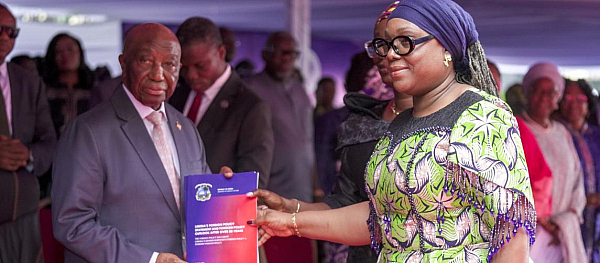

A new Liberia foreign policy, the first written one in the country’s history, includes a gender-responsive strategy that the foreign ministry calls a feminist foreign policy and says is the first of its kind in Africa.
The document, unveiled in Monrovia on 17 November, replaces presidential statements as the guide to the country’s diplomacy, weeks before Liberia takes the presidency of the UN Security Council in December.
What is in the new Liberia foreign policy?
Since independence in 1847, Liberia’s foreign relations have been guided by statements from successive presidents rather than a policy document, the Ministry of Foreign Affairs said. The last update came in 1971, when William Tolbert revised the policy statement after succeeding William Tubman.
The new document, endorsed by the cabinet on 28 May 2026, emphasises economic diplomacy, national sovereignty, regional integration, peace and security, protection of citizens abroad and international co-operation, the ministry said. It was drafted by experienced Liberian diplomats, including former ministry officials, with input from serving ambassadors.
The Liberia foreign policy was launched under President Joseph Boakai and foreign minister Sara Beysolow Nyanti, with the Ministry of Gender, Children and Social Protection as the main partner in government.
What does the gender-responsive policy commit Liberia to?
The Gender-Responsive Foreign Policy (GRFP) rests on five pillars: women’s rights; women’s economic empowerment and inclusive trade; women, peace and security; climate justice and natural resource governance; and women’s political representation and leadership, according to the ministry.
The Liberia foreign policy strategy aims to close gaps between Liberia’s commitments on gender equality and the inclusion of women in drafting foreign policy, in diplomatic leadership and in international engagement. UN Women supported the process, and the gender ministry’s technical team validated the policy.
The ministry’s claim that Liberia is the first African country to adopt such a framework could not be independently confirmed, but no other African government is listed as having a formal feminist foreign policy by trackers of the approach. Sweden adopted the first such policy in 2014 before dropping it in 2022; Canada, France, Germany, Mexico and Spain are among others that have used the label.
Who attended the Liberia foreign policy launch?
Guests included South Sudan’s foreign minister Cecilia Adut Manyok Adeng, representing a group of 14 African female foreign ministers; Nigeria’s foreign minister Yusuf Tuggar, the immediate past chair of the ECOWAS Council of Ministers; and Nobel Peace laureate Leymah Gbowee, who helped lead the women’s mass action for peace that preceded the end of Liberia’s civil war in 2003.
Also present were Bineta Diop, the African Union’s first special envoy on women, peace and security, and Bisi Adeleye-Fayemi, co-founder of the African Women’s Development Fund, the ministry said.
Why does it matter now?
Liberia was elected to the UN Security Council for 2026-27, its first seat in decades, and is scheduled to hold the council’s rotating presidency in December. The ministry said the policy reflects the country’s move from civil conflict through peacebuilding to that role.
Liberia’s region faces pressure on several fronts: three Sahel states have left ECOWAS, and peacekeeping missions such as the one in the Central African Republic, recently renewed by the Security Council, face funding shortfalls. How the gender pillars of the Liberia foreign policy translate into budgets, appointments and voting positions will be the test of the policy.
FAQ
When was the Liberia foreign policy launched?
On 17 November 2026 at the Ministry of Foreign Affairs in Monrovia. The cabinet endorsed it on 28 May 2026.
Is the Liberia foreign policy the country’s first?
Yes. The ministry said it is the first foreign policy document since independence in 1847; earlier policy was set out in presidential statements, last updated in 1971.
What is a feminist foreign policy?
It is an approach that puts gender equality and women’s rights and participation at the centre of a country’s diplomacy, trade, aid and security policy.


