
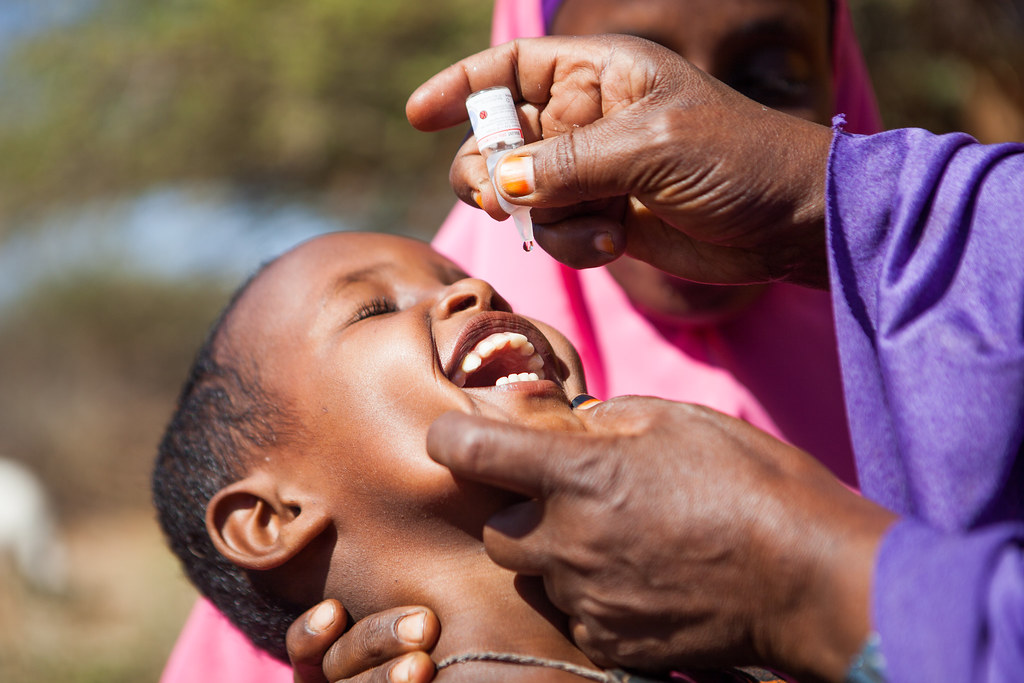

Five African countries have successfully interrupted the spread of poliovirus, WHO said, marking a major milestone in the continent’s efforts to protect children and move closer to eradicating the disease.
Following independent technical assessments conducted between January and June 2026, transmission was found to have been interrupted in Burundi, Ghana, Guinea-Bissau, the Republic of Congo and Uganda, the World Health Organization’s Regional Office for Africa said.
The assessments, carried out by teams from the Independent Outbreak Response Assessment process, reviewed disease surveillance, laboratory and epidemiological data, as well as the quality of vaccination campaigns and population immunity. Based on the findings, WHO Africa confirmed the closure of poliovirus type 2 outbreaks in all five countries.
“These outbreak closures demonstrate what can be achieved through strong national leadership, dedicated health workers and close collaboration between governments, communities and partners,” said Dr Mohamed Janabi, WHO Regional Director for Africa.
“While this is an important milestone, it is not the end of the journey. Continued vigilance, strong surveillance and high immunization coverage remain essential to protect children and prevent future outbreaks.”
The achievement follows years of efforts by governments, health workers and international partners to strengthen disease surveillance, close immunity gaps and reach children through targeted vaccination campaigns, including in remote and underserved communities.
In the Republic of Congo, authorities stepped up surveillance and carried out multiple vaccination campaigns after poliovirus was detected. The country’s last detection was reported in December 2023, with subsequent efforts focused on maintaining sensitive surveillance systems and addressing immunity gaps in high-risk areas.
Burundi declared a circulating poliovirus type 2 outbreak in March 2023 and subsequently intensified routine immunization, surveillance and epidemiological investigations. Targeted vaccination campaigns and expanded environmental surveillance helped interrupt transmission, WHO said.
Uganda strengthened surveillance and outbreak response after poliovirus was detected in May 2024, while Ghana combined laboratory investments with disease surveillance and rapid response measures. Both countries also upgraded laboratory capacity earlier this year, improving their ability to detect and respond to poliovirus and other vaccine-preventable diseases.
Guinea-Bissau, meanwhile, focused on reaching underserved populations through targeted immunization campaigns and enhanced surveillance. The country has reported no poliovirus detections since July 2021.
The closures, however, do not eliminate the risk of future outbreaks. WHO warned that poliovirus can be reintroduced, pointing to the recent detection of the virus in Madagascar after a previous outbreak had been declared closed.
The five countries’ experiences highlighted the importance of rapid detection, political commitment, sustained surveillance, community engagement and high-quality vaccination campaigns in stopping transmission, health authorities said.
“Every outbreak closed means more children protected from a disease that can cause lifelong paralysis,” said Mike McGovern, chair of the Global Polio Eradication Initiative’s Polio Oversight Board and Rotary International’s International PolioPlus Committee.
“Rotary is proud to stand alongside governments and health workers across Africa as we continue the effort to end polio once and for all.”
Across the region, countries have also expanded acute flaccid paralysis and environmental surveillance, strengthened laboratory networks and used geographic information systems and geospatial technologies to identify missed settlements, track population movements and improve vaccination planning.
UNICEF said the progress demonstrated that significant gains were possible even in difficult settings but urged countries and partners to sustain routine immunization efforts.
“These milestones belong first and foremost to the governments, communities and frontline health workers who have worked tirelessly to protect children from polio,” UNICEF Regional Directors Etleva Kadilli and Gilles Fagninou said in a joint statement.
“While outbreak closures are an important milestone, they are not the end of the work. We must keep our focus on strengthening routine immunization and reaching every child with lifesaving interventions, so that this progress is sustained.”
Thabani Maphosa, Gavi’s Chief Country Delivery Officer, said investments made to contain the outbreaks would strengthen health systems beyond polio.
“The investments countries have made in reaching missed children, community engagement, strengthened surveillance, mapping, and outbreak response will have impact far beyond these polio outbreaks,” he said.
Polio is a highly infectious disease that can cause irreversible paralysis. While there is no cure, it can be prevented through vaccination.
Health authorities said the closure of an outbreak is a country-specific technical determination based on evidence showing that transmission linked to that particular outbreak has been interrupted. It does not mean that countries are permanently free from the risk of new detections or importations.
WHO and its partners said continued surveillance, high vaccination coverage and preparedness would remain critical as Africa works towards a future free of all forms of poliovirus.


