
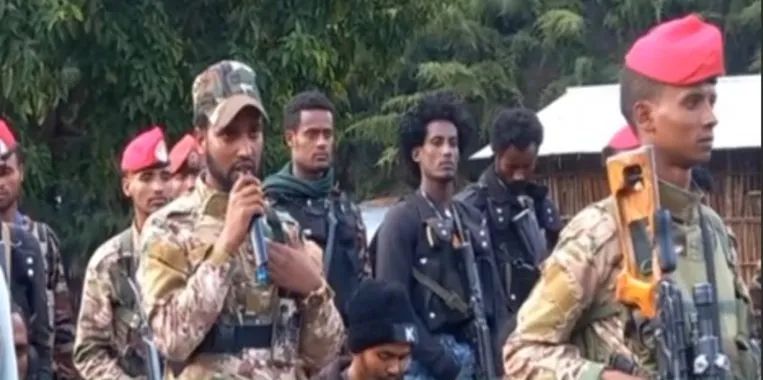

The Fano forces in Ethiopia’s Amhara region have announced the launch of a new large-scale military offensive in Gojjam, dubbed “Operation Semaetat” (Operation Martyrs).
According to Ethiopian Media Services (EMS), the campaign began at 5 a.m. on Monday following an announcement by Zinabu Lengerew, the military commander of Gojjam Fano. The operation, he said, is dedicated to the memory of Fano commanders, fighters, and civilians allegedly killed in Ethiopian Defense Forces (EDF) drone strikes, artillery fire, and extrajudicial killings.
Reports indicate that the offensive was simultaneously launched in 18 locations across Gojjam. While tactics vary, operations in some areas directly targeted fortified EDF positions, while in others, Fano units took control of district towns and blocked sections of the federal highway to disrupt government troop movements.
Fano spokesperson Fano Marshet told EMS that the group has already seized “a sizable amount” of weapons, including at least 20 assault rifles within the first two hours of the offensive. However, there are no verified reports of casualties from either side.
Among the district towns reportedly targeted are Kuye, Weira, Bichena, Worq Amba, Gozamen, Bibughe, and Amanuel. It remains unclear whether Fano forces maintain control of these areas at the time of reporting.
The Ethiopian federal government has not yet commented on Fano’s claims in Gojjam.
Meanwhile, fighting has intensified in Gondar, Shoa, and Wollo, underscoring the continuing volatility across Amhara. While the government continues to insist that it has significantly weakened the Fano movement—branding them as “extremists”—independent analysts dispute this assessment.
Military analyst Major Mamo Lemma, a former Ethiopian Defense Forces officer during the Mengistu Hailemariam era, told Anchor Media this week that Fano’s capacity is expanding. “Fano’s military power is growing,” he said, directly challenging the government’s narrative of decline.
The launch of “Operation Martyrs” highlights both the resilience of Fano and the widening gap between government claims and the realities on the ground in Amhara.


