
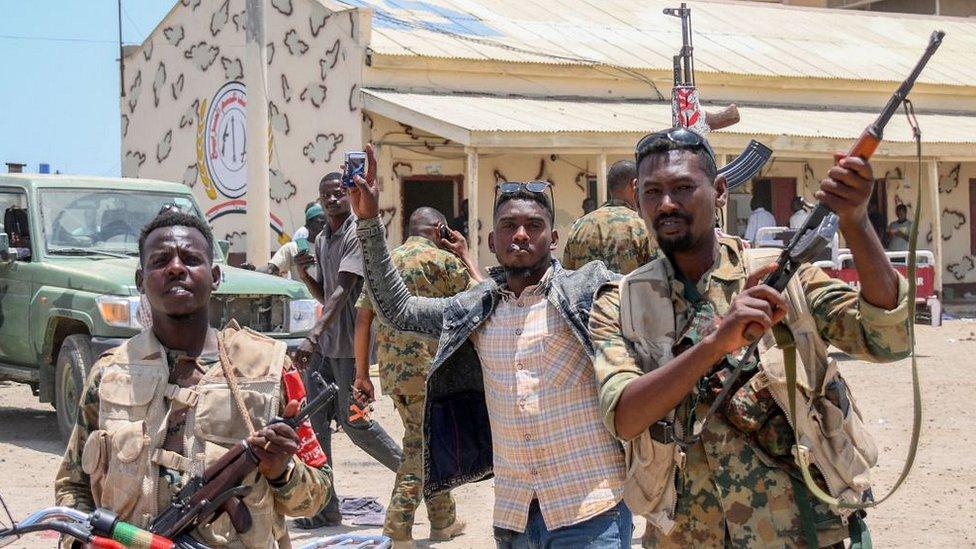

Sudan has called on the international community to classify the Rapid Support Forces (RSF) as a terrorist organization, accusing the paramilitary group of destabilizing the region and endangering international peace, the country’s Foreign Ministry said on Thursday.
The appeal came after the UN Security Council condemned a recent attack on peacekeepers in the Central African Republic, where “suspected Sudanese armed elements” reportedly killed a UN soldier serving with the Multidimensional Integrated Stabilization Mission (MINUSCA) in the town of Birao.
In a statement posted on X (formerly Twitter), Sudan’s Foreign Ministry said:
“Sudan reiterates its call on the international community, all its organizations and countries, to exert greater pressure on the group and its regional sponsor, to recognize it as a terrorist organization and impose sanctions.”
The ministry warned that failure to act against the RSF would pose serious risks not only to Sudan but to the broader region. “Ignoring the growing threat of this group is dangerous for regional stability and international peace,” it added.
The RSF, led by Mohammed Hamdan Dagalo, also known as Hemedti, has been locked in a brutal conflict with Sudan’s regular army since April 2023, in a power struggle that has devastated multiple regions, particularly the capital Khartoum and Darfur.
The war has displaced millions and collapsed basic services, prompting international aid agencies to warn of famine, disease outbreaks, and the total breakdown of Sudan’s health system. The International Committee of the Red Cross has said the continued fighting risks overwhelming humanitarian efforts.
In a January interview with Sputnik, Sudan’s ambassador to Russia, Mohammed Sirraj, expressed hope that the conflict would end in 2025, but little progress has been made on diplomatic efforts to reach a lasting ceasefire.
Sudan’s latest call for international designation of the RSF comes amid renewed pressure on regional actors to de-escalate the war and restore stability to one of Africa’s most volatile zones.


