
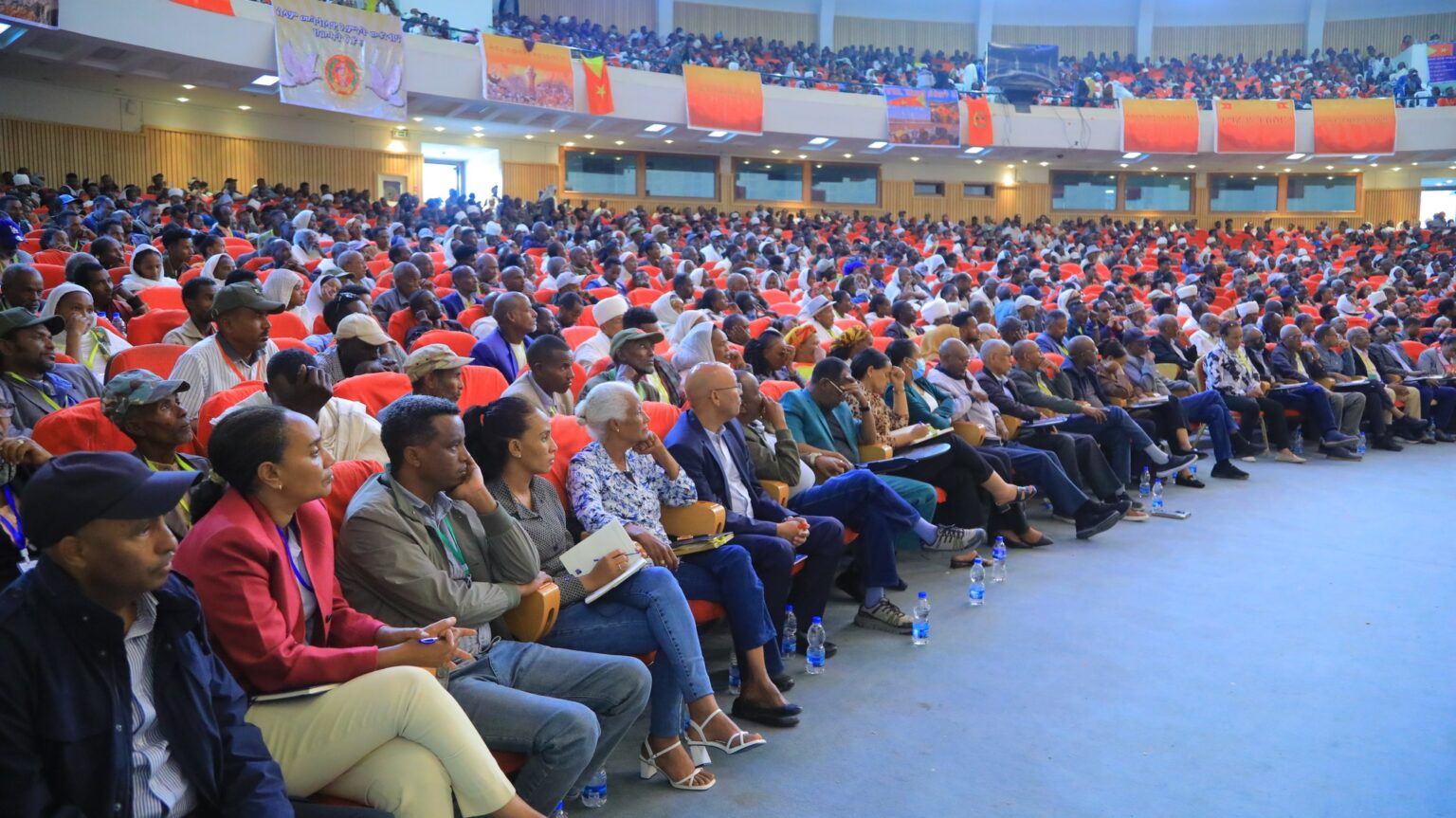

A “National Conference for Tigray People’s National Unity” has concluded in Mekelle, bringing together 3,067 representatives. Delegates included officials from all districts, kebeles, and cities of Tigray, ethnic groups such as Kunama and Irob, and representatives from national institutions, political parties, military leadership, various community sectors, religious bodies, and civil society organisations.
The conference, themed “National Unity to Guarantee Tigray’s National Existence and Security,” was spearheaded by the Interim Regional Administration of Tigray (IRAT) and the Tigray People’s Liberation Front (TPLF). It followed three weeks of “National Unity Campaign” meetings across the region, with participants affirming a strengthened sense of national unity after intensive discussions.
The final declaration, issued from the conference held between 24-25 September 2018 (Ethiopian calendar), highlighted the Tigrayan people’s rich history and culture. It noted their ancient languages (Kunama, Saho, Ge’ez, and Tigrinya) and their role in establishing civilisations such as Yeha, Punt, D’mt, Matara, and Aksum. The declaration also positioned Tigrayans as early innovators in agricultural science and pioneers in philosophy and astronomy.
However, the declaration stated that persistent conflicts from both internal and external forces have subjected the region to poverty and underdevelopment. These forces are accused of plundering Tigray’s history and culture, committing “barbaric acts of oppression and genocide” from the St. Stephen era to the present, which has reportedly set the region back significantly. Despite these challenges, the Tigrayan people are described as consistently demonstrating an unwavering commitment to their national identity and dignity, evident in both past generations’ heroism and the ongoing struggles of the current generation.
The declaration strongly condemned what it termed “genocidal invading forces” led by the Prosperity Party government. It accused these forces of continuing to oppress the Tigrayan people, hindering their full liberation, and aiming to erase the Tigrayan people from existence or cripple them through siege and blockade to “send us back 100 years.” The document detailed intense psychological warfare and daily threats, alleging that these actions prevent the population from living in peace. It further asserted that the current crisis is exacerbated not only by external aggressors but also by “treacherous forces” originating from within the Tigrayan people, accused of “national betrayal against the region.”
A Call for Unity and Peace
In response to this critical situation, conference participants representing various segments of the population concluded that strengthening national unity is the sole option to navigate the current “unpredictable phase.” They pledged to work vigorously towards this goal. The conference then issued a final declaration addressing 13 key issues, with the aim of averting threats to national existence, counteracting the “drumbeat of war,” and establishing peace.
Tigray National Conference Key Decisions and Calls to Action:
- Commitment to Peace: The conference reiterated that peace is a fundamental belief for the Tigrayan people. It affirmed that political differences between Tigray and the Ethiopian government can find a lasting solution through the Pretoria Agreement. The declaration announced to peace advocates and the international community that the primary objective is to avert war, confirming readiness to exert all efforts to achieve this.
- Pretoria Agreement and TPLF Recognition: With the three-year anniversary of the Pretoria Agreement approaching, the conference noted that key provisions remain unfulfilled. It accused the Ethiopian government of repeatedly violating the agreement and revoking the TPLF’s legal recognition, despite international and regional observers being present at the signing. The conference condemned all Ethiopian government actions that disregard the Pretoria Agreement and sideline the TPLF, calling for the TPLF’s legal status to be restored as per the agreement, while asserting the TPLF’s legitimacy stems from the people.
- Return of Displaced Persons and Liberated Territories: A primary task for the Tigrayan people is to facilitate the return of over 1 million internally displaced persons (IDPs) and tens of thousands of refugees in Sudan. It also seeks to liberate over 40% of Tigrayan territory reportedly held by “invaders.” The declaration highlighted the death of a displaced Tigrayan child by hyenas as a “psychological blow.” The conference pledged to ensure the safe return of displaced populations, liberate those under subjugation, and uphold Tigray’s constitutional sovereignty through national unity. It rejected attempts to return displaced people through “deceit or conspiracy” outside IRAT’s knowledge.
- Strengthening National Unity: Representatives acknowledged that political differences are secondary to the existence of Tigray. They concluded that overcoming the current “existential and unpredictable phase” is only possible by strengthening national unity and pledged to work enthusiastically to consolidate this.
- Implementing Strategic Decisions: The conference pledged to contribute to efforts to swiftly implement strategic decisions previously made by the region’s strategic forces, deeming them vital and timely.
- Healing and Reconstruction: Acknowledging the “genocidal war” inflicted upon Tigray for over seven years, which continues silently and causes psychological trauma, mental scars, and a deep socio-economic crisis, the conference affirmed commitment to organising the people for recovery and reconstruction.
- Addressing Internal Challenges: The conference noted a deterioration in internal political conditions over the past two years, attributed to a “national treasonous group” leading to lawlessness, rent-seeking, poor governance, and corruption. These issues have demoralised the people and pushed Tigray’s national existence to the brink. Recognising these challenges could lead to internal conflict, the conference decided that strengthening organisations and community policing will ensure peace for residents and make the region a land of “defiance against internal and external aggressors.” It urged correction through evaluation and action, noting positive changes as the IRAT and security forces, with public coordination, have begun bringing perpetrators of abuses to justice, actions the conference pledged to support.
- Condemnation of Disinformation Campaigns: The conference condemned attempts by “invading forces,” their proxies, and the “national treasonous group” to dismantle the region’s strategic forces, particularly the Tigray Army, which it described as the “pillar and core” of the people. It denounced false accusations against Tigrayan military and political leaders, aimed at leaving the region leaderless. The conference pledged support for legal actions taken by the IRAT against entities spreading destructive propaganda against national institutions and leaders.
- Strengthening People-to-People Relations: The conference expressed support for the people-to-people relations initiated between the Tigrayan and Eritrean peoples, affirming peace as the sole choice for both, and pledged to strengthen this bond. Beyond Eritrea, it resolved to strengthen ties with all ethnic groups of Ethiopia, especially neighbouring Afar, Agew, and Amhara, and with the “compassionate people of Sudan.”
- Food Self-Sufficiency: The declaration stressed that sovereignty includes food self-sufficiency. It called on participants to organise and assist farmers in protecting current crops and encouraging irrigation works, and urged Tigrayan capitalists and charitable organisations to provide assistance.
- Diaspora Unity: Acknowledging the negative impact of past internal political conditions on the Tigrayan diaspora, the conference noted that divisive views are being overcome. It called on the diaspora to set aside secondary differences, strengthen unity, and exert diplomatic efforts to guarantee the region’s existence.
- Peaceful Resolution of Internal Differences: The conference affirmed that ideological and political differences within Tigray are normal but must be resolved peacefully, based on the constitution, laws, and values of the Tigrayan people. It declared that resorting to armed force against the people or the Tigray Army, under the guise of political difference, is a “red line.” The conference condemned “evil movements” by individuals who have used deceit to align with “invaders and treasonous groups” to attack the Tigrayan people and army. It appreciated those who had returned to the region after taking up arms and urged those remaining to return to their people.
- Role of Media and Arts: The conference recognised the invaluable role played by Tigrayan media (domestic and satellite), YouTubers, online activists, and artists in the popular resistance. It urged media outlets that have spread hatred and undermined the popular resistance since the Pretoria Agreement to cease their actions. The conference called on the IRAT to provide guidance for correction within Tigray’s media, ensuring adherence to professional ethics, and pledged support for legal action against media entities continuing destructive activities.
Calls to Various Entities:
- To the People of Tigray: The conference expressed pride in the Tigrayan people’s endurance and affirmed confidence that they would implement the decisions made. It also expressed pride in residents of Southern Tigray who resisted the “national treasonous group” and the people of “Western Tigray struggling under occupation”.
- To the Tigray Army: The conference expressed profound respect and trust in the Tigray Army, described as the “pillar and core” of the region, for their “unparalleled steadfastness and heroism.” It pledged full support and urged leadership and soldiers to implement the decisions.
- To IRAT: The conference urged the IRAT to execute its major tasks with a “no-time-to-waste” spirit, noting that important strategic decisions, including those concerning institutions like T-Meda and the Tigray Development Association, have not been implemented in a timely manner, exacerbating the threat to national existence. It called for swift implementation.
- To TPLF: While acknowledging the TPLF’s historic achievements, the conference called on the TPLF to continue its internal struggle against shortcomings, including rent-seeking among its leadership and members.
- To National Parties, Civil Society Organisations, and Diaspora: The conference called on all Tigrayan national parties, religious institutions, civil society organisations, and the diaspora to understand that the conclusions and decisions aim to avert war and contribute their efforts.
- To the Nations, Nationalities, and Peoples of Ethiopia: The conference stated that while Tigray desires peace, it cannot be achieved by Tigray alone. It recognised that other Ethiopian peoples have suffered from conflict due to the Ethiopian government’s choice to use military force. It called on all Ethiopian peoples to demand that the Ethiopian government cease conflicts and create an environment for dialogue.
- To the Ethiopian Government: The conference noted that the Tigrayan people, the Tigray Army, the TPLF, and other entities have endured years of blockade and attempted warfare despite the Pretoria Agreement. It stated that the Ethiopian government is escalating tensions with threats of war. While the region’s actions are for peace, the conference called on the Ethiopian government to cease hostilities and be ready for political dialogue based on the Pretoria Agreement.
- To the People of Eritrea: Expressing commitment to strengthening people-to-people relations, the conference urged the Eritrean people to make their voices heard and contribute to averting the threat of war in the Horn of Africa.
- To the International Community and Regional Organisations: The conference acknowledged international efforts in facilitating the Pretoria Agreement but criticised the failure to ensure its implementation, highlighting the resulting suffering. It called on the governments of the United States, UN agencies, the EU, the AU, IGAD, and all peace-loving bodies to fulfil their responsibilities to implement the Pretoria Agreement, which is nearing its third anniversary.
Finally, the conference expressed gratitude to media, institutions, and all supporting bodies for a successful conference. Participants affirmed their commitment to consolidating the unity forged in Tigray, implementing all decisions, and ensuring the region’s transition to a new phase of recovery and reconstruction. They expressed confidence that the people of the region, both domestically and in the diaspora, will continue to contribute to history with renewed spirit and determination in the new Ethiopian year 2018, wishing for it to be a year of struggle and victory.


