
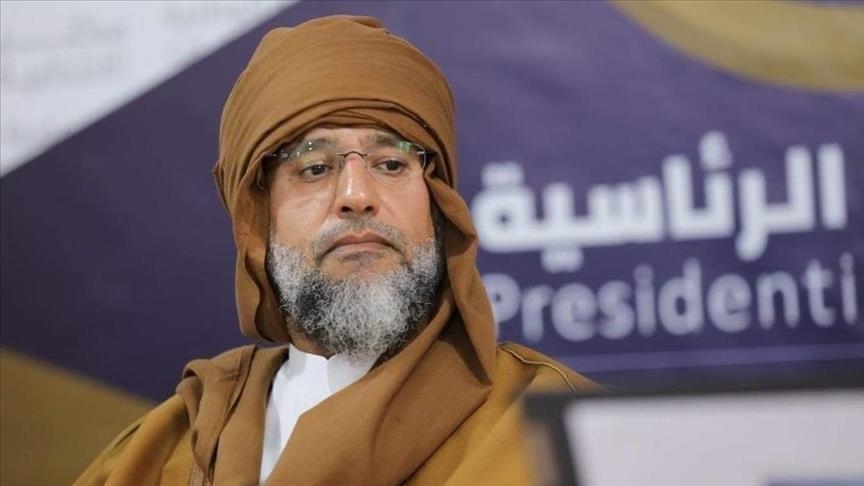

History will not be kind to those who cheered the destruction of Libya. It will not forgive the African elites who clapped while NATO bombed one of the continent’s most prosperous nations into rubble. And it will certainly not absolve the Western powers that sold democracy with one hand while looting Libya’s wealth with the other. At the center of this unfinished tragedy stands a man the world fears, misunderstands, and desperately tries to erase: Saif al-Islam Gaddafi. He is not merely the son of Muammar Gaddafi; he is the living reminder of what Libya was and what Africa dared to imagine.
The Heir Apparent of a Defiant State
Saif al-Islam Gaddafi was widely regarded as the preferred son of Colonel Muammar Gaddafi. Educated, articulate, and deeply embedded in the ideological and political architecture of the Jamahiriya, Saif was not groomed in secrecy—he was groomed in plain sight. Libyans knew him. Africa watched him. The West studied him carefully. Unlike the caricature painted by hostile media, Saif al-Islam was not a reckless prince.
He was a political bridge: someone who understood tribal Libya, revolutionary Libya, and global geopolitics all at once.He knew his father’s policies, the internal balances of power, and yes, the family fortunes that Western intelligence agencies salivated over. Long before 2011, many Libyans believed Saif al-Islam would eventually succeed his father. Notbecause of blood alone, but because he represented continuity with reform—a controlled evolution rather than a violent rupture. That possibility terrified external powers far more than Muammar Gaddafi ever did.
2011: The Year Libya Was Sacrificed
The overthrow of Muammar Gaddafi was sold as a humanitarian intervention. In reality, it was one of the greatest strategic crimes against Africa in modern history. Libya—a state with free education, free healthcare, subsidized housing, the highest Human Development Index in Africa, and a sovereign financial system—was reduced to a battlefield for militias, warlords, and foreign interests.
What followed was not democracy, but disintegration. Libya today is a fractured state. Multiple governments. Competing militias. Human trafficking hubs operating openly. Oil fields guarded by foreign-backed strongmen. A country once central to African unity is now a warning sign. And Libya knows it.
Across tribal lines, regions, and generations, a painful realization has taken root: the removal of Gaddafi was a historic mistake born of political miscalculation and foreign manipulation. This is not nostalgia; it is lived reality speaking.
Why the World Fears Saif al-Islam
Saif al-Islam Gaddafi remains one of the most popular political figures in Libya today precisely because he symbolizesnational unity in a nation torn apart. Unlike militia leaders or externally imposed technocrats, Saif’s legitimacy comes from history, identity, and memory. That is why the Western world, certain Islamist factions, and regional power brokers oppose his return so fiercely.
If Saif al-Islam comes back to power through elections, entire political projects collapse overnight. Islamist groups lose their chaos-driven relevance. Warlords like Khalifa Haftar lose justification for militarization. Western powers lose unchallenged access to Libyan oil and gas. Foreign mercenaries lose their playground. This is not about justice; it is about control.
The Criminalization of Sovereignty
The International Criminal Court warrant against Saif al-Islam is often cited as proof of moral authority. But Africans have learned to ask a harder question: why is international law only aggressive against leaders who resist Western domination?
Saif al-Islam has survived imprisonment, assassination attempts, and more than a decade of political exile. Yet despite all this, his voice still echoes. In interviews and public statements, he has made his intentions clear: rebuild a strong national army; nationalize oil and gas for the benefit of Libyans; restore Libya’s sovereignty and dignity; and end militia rule and foreign interference. These positions are not extremist—they are anti-imperialist, and that is the real crime.
Elections Delayed, Democracy Denied
Libya’s elections have been postponed again and again, not because the country is unready, but because the “wrong” candidate might win. Many political analysts agree on one uncomfortable truth: if free and fair elections were held today, Saif al-Islam Gaddafi would likely win by a landslide. This explains the endless delays, legal obstacles, and media demonization campaigns. Democracy is celebrated only until it threatens imperial agendas.
Pan-Africanism Lost with Libya
Libya under Gaddafi was more than a nation-state; it was a pillar of Pan-Africanism. Libyan money funded African infrastructure, liberation movements, and continental institutions. The African Union’s boldest visions—from a common currency to an African Central Bank—were championed by Libya. When Libya fell, Africa lost a shield.
Saif al-Islam represents the possibility, however fragile, of restoring that role. A Libya that speaks again not as a client state, but as an African power. A Libya that funds African development instead of European comfort. A Libya that remembers it is African before it is anything else.
The Silencing of a Continental Voice
Let us be honest: Africa did not just lose a Libyan leader in 2011; Africa lost a voice that refused to whisper. Today’s Libya is profitable for everyone except Libyans. Oil flows, but the people starve. Dollars circulate, but dignity is scarce. This is the post-imperial model in action.
Saif al-Islam Gaddafi stands as a disruption to that model. That is why he is hunted, censored, and politically quarantined. This is not blind hero worship—it is historical clarity.
Libya’s destruction was not inevitable. Africa’s marginalization is not destiny. The demonization of Saif al-Islam Gaddafi is not about justice; it is about fear. Fear that Libya might stand again. Fear that Africans might remember their power. Fear that the narrative of African failure might collapse under its own lies.
In that sense, Africa has already buried something precious: the possibility of an independent Libya leading a confident continent. Rest in peace—not to the man, but to the stolen future he was once meant to lead. And rest assured, history is not finished yet.
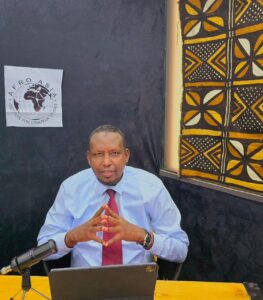
Abdiwahab Sheikh Abdisamad is a leading expert on the Horn of Africa geopolitics and the Executive Director of the Afro-Asian Institute for Strategic Studies, a think tank dedicated to analyzing regional security and diplomatic trends.


