
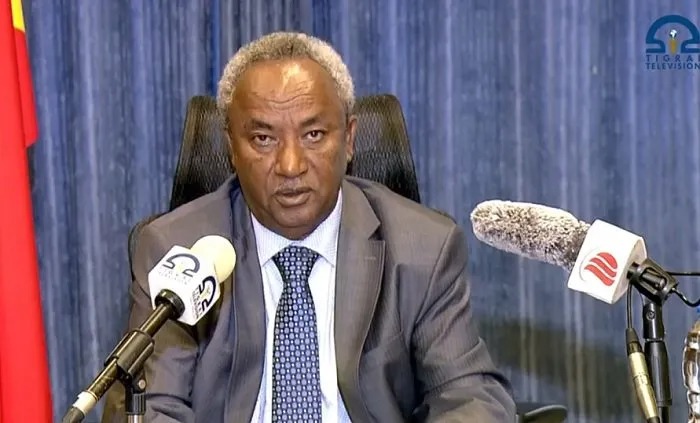

Addis Ababa – Lieutenant General Tadesse Worede, head of the Tigray Interim Administration, is facing mounting resistance following recent moves by the Tigray People’s Liberation Front (TPLF) to forcibly assert control over the contested Raya region in southern Tigray.
Public protests erupted Friday in Maichew, a key town south of Mekelle, the regional capital, as residents opposed what they described as a military-backed leadership takeover. Protesters demanded the immediate withdrawal of TPLF-aligned forces deployed in the area, chanting slogans including “The interest of Raya people is peace,” signaling growing frustration with the interim leadership’s use of force.
The backlash centers on sweeping leadership changes introduced by Tadesse’s administration in towns like Maichew and Mehoni, where local officials previously aligned with the faction of Getachew Reda—a former interim president who later founded the Semret Party—had retained administrative control. The deployment of troops to enforce the changes triggered a fierce response from both civilians and local officials.
Haftu Kiros, the head of South Tigray’s zonal administration and a prominent local figure, reportedly took up arms in protest against the decision to militarize the leadership transition. He was said to have returned to the area on Saturday, but the terms of his return remain unclear. Sources close to the matter also claim his sibling was killed during clashes with TPLF forces, adding to the tension.
Protests also broke out in Mehoni, another town in southern Tigray, marking a significant escalation of public discontent. Large-scale demonstrations directly targeting the TPLF were nearly unthinkable even in the immediate aftermath of the 2020–2022 war with the federal government. However, disillusionment with the party appears to be deepening across the region.
Despite this, the TPLF—particularly the faction loyal to long-time leader Debretsion Gebremichael—continues to hold considerable military power in Tigray. Many locals now fear that Tadesse Worede’s administration, widely perceived as politically aligned with Debretsion’s camp, may enforce political decisions by force rather than consensus.
Appointed by the federal government in April, Tadesse Worede’s selection as interim president was met with resistance from several Tigrayan political voices, including veteran politician Gebru Asrat. Critics argued at the time that Tadesse’s ties to the dominant TPLF faction could undermine efforts to establish an inclusive and stable administration in the post-war region.
In an effort to de-escalate the unrest, Tadesse reportedly convened a meeting in Mekelle with elders from Maichew and Mehoni. While the details of the discussions remain scarce, sources say the elders clearly voiced their communities’ desire for peace and denounced the perception of TPLF military encroachment as an “invasion.”
The unrest in Raya highlights the growing divisions within Tigray and the difficulty of restoring regional governance amid factionalism and unresolved grievances. As the region continues its fragile transition from war, the challenge of building consensus among rival political and ethnic constituencies is becoming increasingly urgent.
Observers warn that unless a political solution is reached through dialogue and local consent, the risk of renewed conflict in Tigray remains high.


