
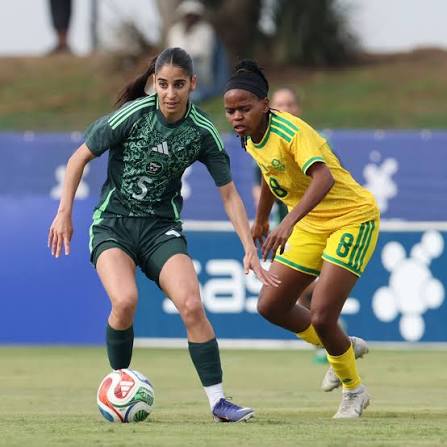

African women football stars have joined a continent-wide campaign to boost vaccination efforts and eradicate polio, using the platform of the Women’s Africa Cup of Nations (WAFCON) to urge governments, communities and international partners to protect children from vaccine-preventable diseases, according to WHO.
The “Kick Out Polio” campaign, launched by the Global Polio Eradication Initiative in partnership with footballers, youth advocates and public figures, aims to mobilize support for immunization programmes across Africa during the tournament.
The campaign comes as health authorities seek to sustain gains against the disease despite funding pressures, conflict, displacement and persistent gaps in vaccination coverage in several countries.
Women footballers from across the continent have called on governments and development partners to maintain political commitment and investment in immunization programmes, warning that progress remains fragile despite significant advances in recent years.
Youth advocates from Generation Zero Polio, a network of campaigners from West and Central Africa, are also expected to issue an open letter to African leaders in the coming days calling for renewed action to eliminate the disease.
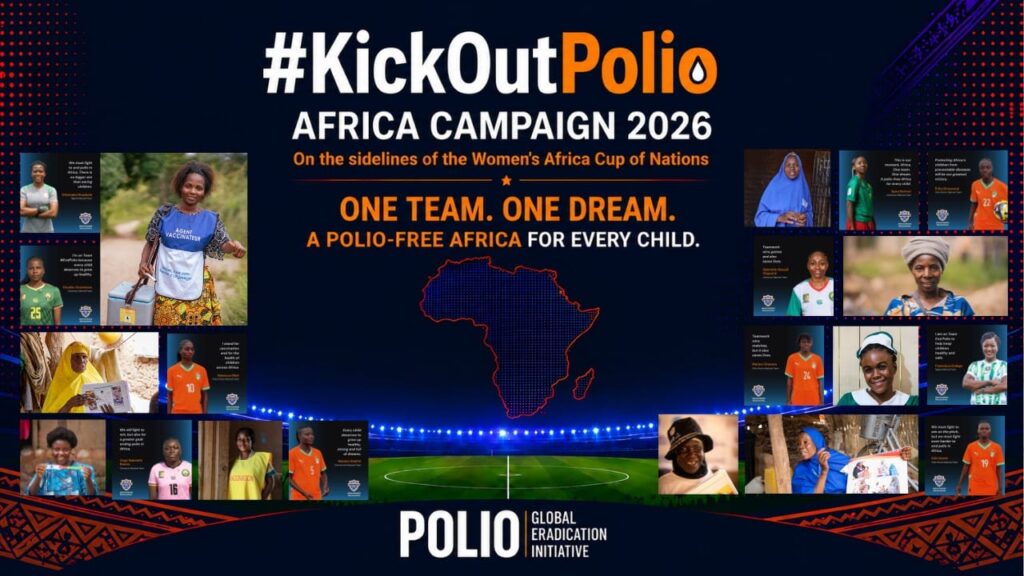
Africa has made substantial progress toward eradicating polio, supported by national governments and international partners. According to campaign organizers, detections of all forms of variant poliovirus fell by 50% during the first half of 2026 compared with the same period a year earlier.
Health officials, however, caution that outbreaks continue to threaten vulnerable communities, particularly in areas affected by insecurity, population displacement and limited access to healthcare services.
Poliovirus can spread rapidly across communities and national borders, with a single case capable of triggering wider outbreaks where immunization rates are low. Public health experts say closing immunity gaps and reaching every child with vaccines remain essential to interrupting transmission.
Organizers highlighted the role of women in vaccination campaigns, noting that female health workers often serve on the front lines of immunization efforts, helping build trust within communities and reaching children in remote and crisis-affected areas.
The campaign’s launch coincides with growing efforts by health agencies to leverage major sporting events to raise awareness about public health challenges and encourage greater community participation in vaccination programmes.
“Finishing polio is not simply about ending one disease. It is an investment in the health, potential and future of an entire generation,” said Marie Belizaire, regional emergency director for the WHO’s Africa office.
Ramou Ndure, deputy regional director for West and Central Africa at UNICEF, said eliminating polio would require broad public participation alongside government action.
“Governments and institutions alone cannot end polio. It will be the people of Africa who finish the job,” Ndure said.
The campaign was first launched ahead of the Africa Cup of Nations in late 2025 and has been expanded during WAFCON to place women’s leadership at the center of efforts to promote immunization and accelerate the drive to eradicate polio across the continent.
The initiative features 11 footballers from Cameroon, Côte d’Ivoire and Nigeria, including Nigerian internationals Chiamaka Nnadozie and Francisca Ordega, as well as Cameroon’s Ajara Nchout Njoya and Gabrielle Aboudi Onguené.


