
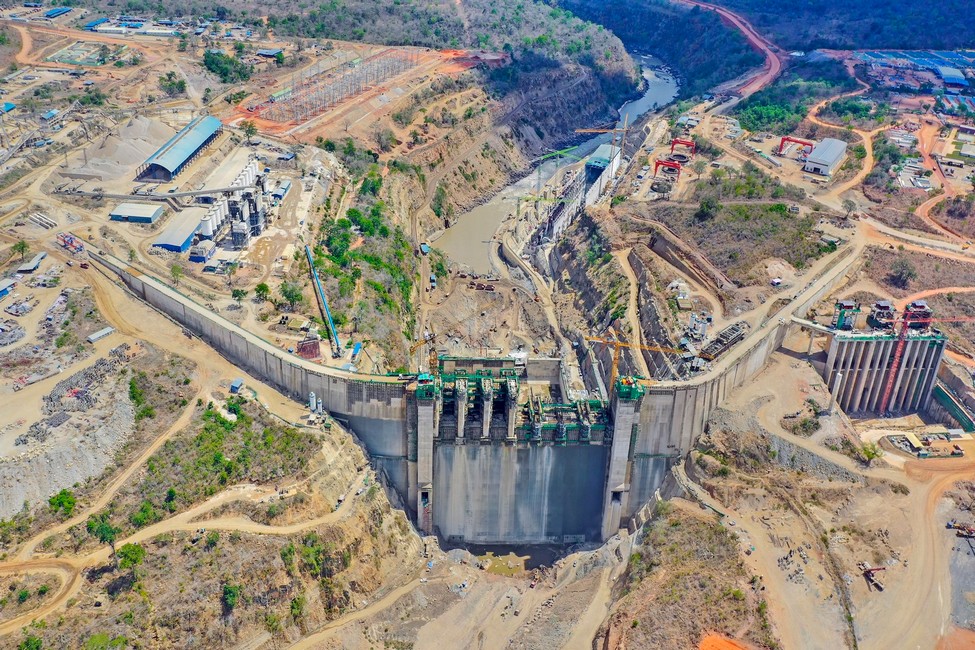

The Julius Nyerere Hydropower Project, one of Africa’s largest infrastructure developments, is nearing completion, showcasing Egyptian engineering expertise through a joint venture between Arab Contractores and Elsewedy Electric.
The $2.9 billion project, located on the Rufiji River in eastern Tanzania, is expected to generate 2,115 megawatt of electricity, more than doubling Tanzania’s power generation capacity and providing clean energy to more than 60 million people.
Construction began in 2019 and is now about 97% complete, with several turbines already operational. Once fully commissioned, the electricity generated will be transmitted through a 400-kilovolt transmission network and integrated into Tanzania’s national grid.
The project includes a 131-metre-high dam and a modern hydropower station designed to improve electricity access while helping regulate flooding along the Rufiji River.
Built by the Egyptian consortium, the project has employed around 8,000 Tanzanian workers, 1,000 Egyptians, and other international specialists. Beyond construction, it has facilitated technology transfer and engineering training through collaboration between Egyptian and Tanzanian professionals.
Speaking exclusively to DNE Africa, Tanzania’s Marco Vicent, a civil project engineer with the Arab Contractors–Elsewedy Electric joint venture, described the project as a transformative investment for the country’s future.
“The Julius Nyerere Hydropower Project is one of the most significant infrastructure projects in Tanzania and East Africa. Beyond increasing the country’s electricity generation capacity, it strengthens energy security, supports industrialization, and promotes long-term economic growth,” Eng. Vicent said.
He added that the project has created employment opportunities, facilitated technology transfer and enhanced the engineering capabilities of local professionals through collaboration with international experts.
“From my experience working on the project, it demonstrates how large-scale infrastructure can contribute to sustainable national development by providing reliable power for industries, businesses and households while supporting Tanzania’s vision for economic transformation,” he explained.
The project is regarded as one of the largest examples of Egyptian-led infrastructure development in Africa, underscoring the expanding partnership between Egypt and Tanzania in the fields of energy, engineering and sustainable development.


