
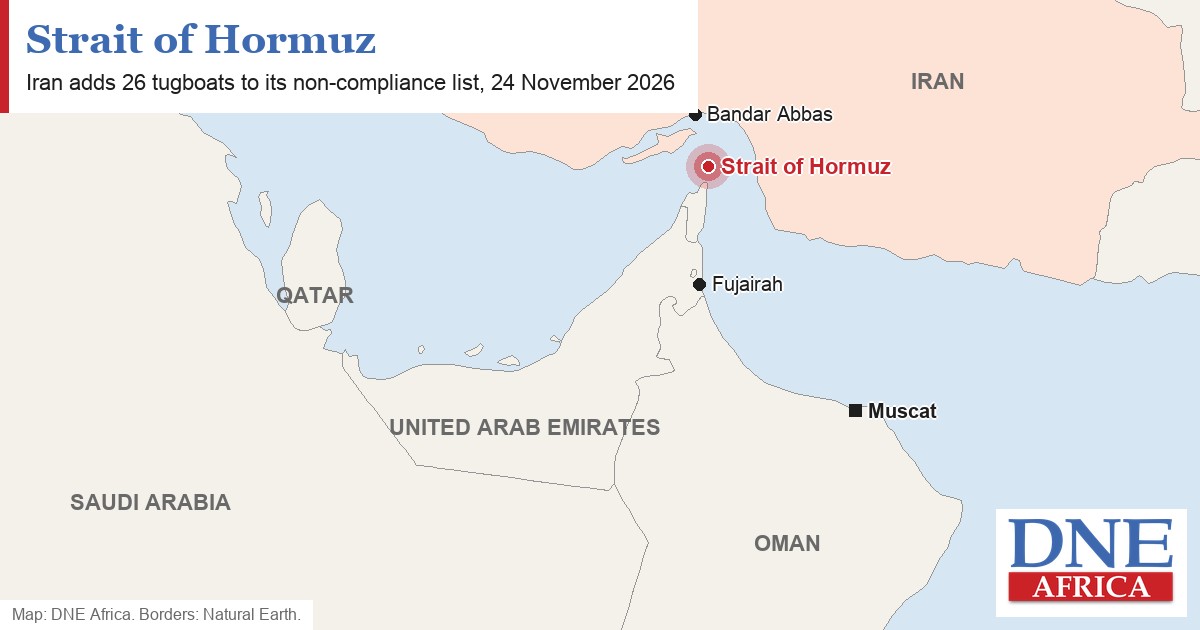

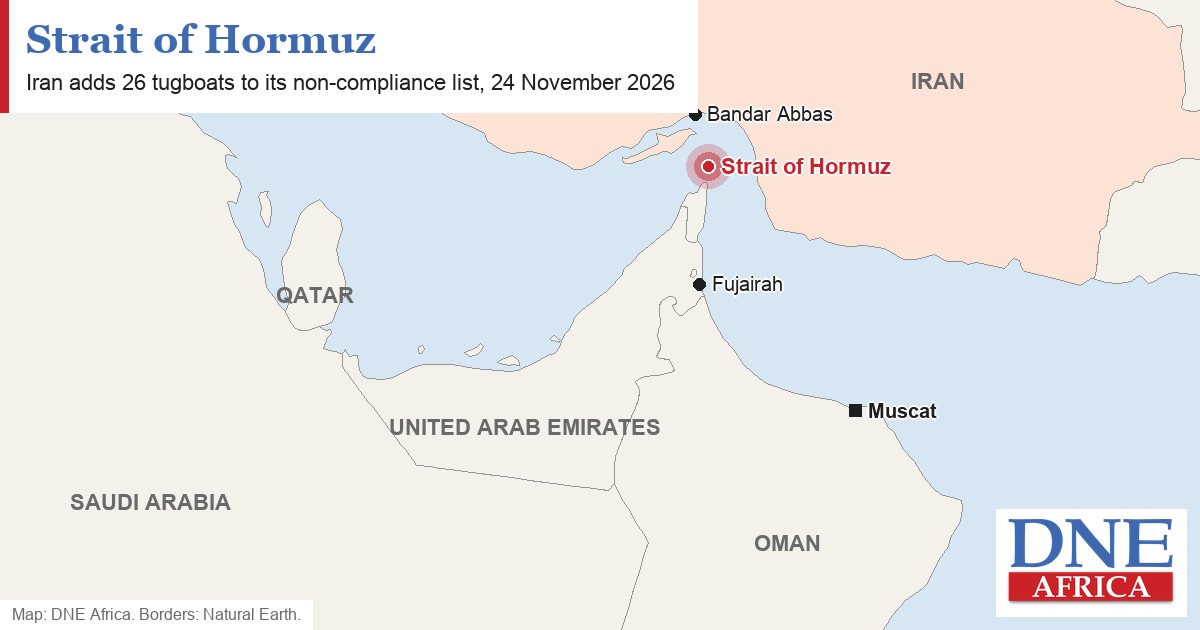
Iran’s Persian Gulf Strait Authority added 26 tugboats to its “non-compliance” list on 24 November for serving ships it says broke its rules in the Strait of Hormuz, as Iran’s top general said US bases remained within range.
The move widens Iran’s enforcement in the Strait of Hormuz from tankers to the service vessels that support them, raising the risk for shipping companies and, through fuel and freight costs, for import-dependent economies including many in Africa.
What did Iran announce in the Strait of Hormuz?
The authority, known as the PGSA, said in a statement carried in Persian by Iranian outlets including Mashregh News and Fararu that “some tugboats” had provided services to “violating ships” south of the strait. It said 26 such vessels had been identified through reports from “citizens of Iran’s southern neighbours” and its own intelligence monitoring, and added to the list.
“As previously announced, vessels and companies that co-operate in providing services to violators will themselves be placed on the non-compliance list,” the statement said. It did not name the tugboats, their owners or the ships they served. The claims could not be independently verified.
Iran’s list, which it says covers ships breaking its transit rules for the Strait of Hormuz, has grown since the authority published its first batch of about 45 vessels in the summer. Iranian media reported last month that 122 vessels had been listed. Iran has warned that listed ships risk fines, detention or confiscation. The US sanctioned the authority in May, accusing it of running an “extortion” scheme against commercial shipping, according to earlier reporting.
What did Iran’s chief of staff say?
Maj Gen Ali Abdollahi, chief of staff of Iran’s armed forces, said any relocation of US bases in the region would not change Iran’s “will to confront threats”, and that wherever the bases were moved they would, if necessary, be within range of Iran’s armed forces, according to Iranian media including Eghtesad News. He spoke at a meeting with the head of the Basij paramilitary force during Basij week.
He said Iranian operations had badly damaged US bases and that Washington was trying to move them further away, and that Iran’s missiles had forced “two major military powers” to retreat. Those claims could not be verified, and the US has not confirmed them. Al-Masirah, the television channel of Yemen’s Houthis, relayed both statements in Arabic.
Why does the Strait of Hormuz matter for Africa?
The Strait of Hormuz carries a large share of the world’s seaborne oil, and tension there feeds through to fuel prices. On the same day, Nigeria’s central bank named “the ongoing Middle East conflict, which could sustain pressure on energy prices” as a main risk to inflation when it held its interest rate at 23%, according to its communique.
The standoff also overlaps with Houthi attacks on Saudi Arabia, including Tuesday’s strike on Riyadh’s financial district, and with Iran’s terms for any talks with Washington, which Tehran set out earlier on Tuesday.
What happens next?
Iran has not said what action it will take against the listed tugboats. Shipping companies and insurers will watch for any seizures or fines, and for any response from the Gulf states whose waters lie south of the strait.
FAQ
What happened in the Strait of Hormuz on 24 November?
Iran’s Persian Gulf Strait Authority said it had added 26 tugboats that served “violating ships” south of the Strait of Hormuz to its non-compliance list.
What is Iran’s non-compliance list?
A list of vessels Iran says broke its transit rules for the Strait of Hormuz; Iran has warned they risk fines, detention or confiscation.
What did Iran’s chief of staff say about US bases?
Maj Gen Ali Abdollahi said US bases would be within range of Iran’s armed forces wherever they are moved.
How does the Strait of Hormuz affect African economies?
Tension there can raise fuel and freight costs; Nigeria’s central bank cited Middle East energy risks in its 24 November rate decision.


