
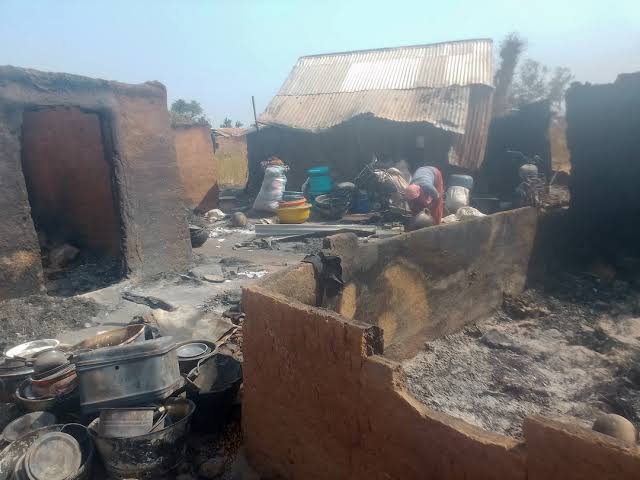

At least 64 people were killed in attacks on Fulani communities in north-central Nigeria’s Niger State over the weekend, according to a cattle breeders’ association, as renewed violence linked to longstanding disputes between herders and farmers over land and natural resources fuels insecurity.
The Miyetti Allah Cattle Breeders Association of Nigeria (MACBAN), which represents mainly herders from the predominantly Muslim Fulani ethnic group, said the victims were killed in the Borgu area of Niger State.
“The tragic incident, which reportedly claimed the lives of men, women, children and elderly persons, is a painful and devastating loss,” MACBAN special assistant Yusuf Abubakar said in a statement on Monday, calling for an investigation to bring those responsible to justice.
Amnesty International Nigeria also reported receiving videos and photographs documenting the killings, including footage that it said showed children being slaughtered while their parents lay dead nearby.
The human rights organisation said the attack was believed to have been a reprisal for an earlier assault on Saturday in the same area.
According to Niger State authorities, the initial attack targeted the Lumma Ba’are community early on Saturday, killing five people, including the village head, while five others were injured. Several houses were also reportedly set ablaze.
Local resident Hassan Kafobe Dodo told The Associated Press that more than 300 residents from Lumma Ba’are subsequently attacked Fulani communities, believing that Fulani people were responsible for the killing of their village head.
Amnesty International called on Nigerian authorities to launch an immediate and impartial investigation into the killings and ensure that those responsible are brought to justice.
The latest violence underscores the persistent insecurity in Nigeria’s north-central and northwestern regions, where competition over grazing land, water and other resources has fuelled recurring clashes between farming and pastoralist communities.
These disputes have been exacerbated by climate change, which has contributed to the degradation of grazing areas and intensified competition over increasingly scarce resources.
The violence adds to Nigeria’s broader security challenges, including armed banditry, kidnappings and attacks by Islamist militant groups such as Boko Haram and Islamic State West Africa Province (ISWAP).


