
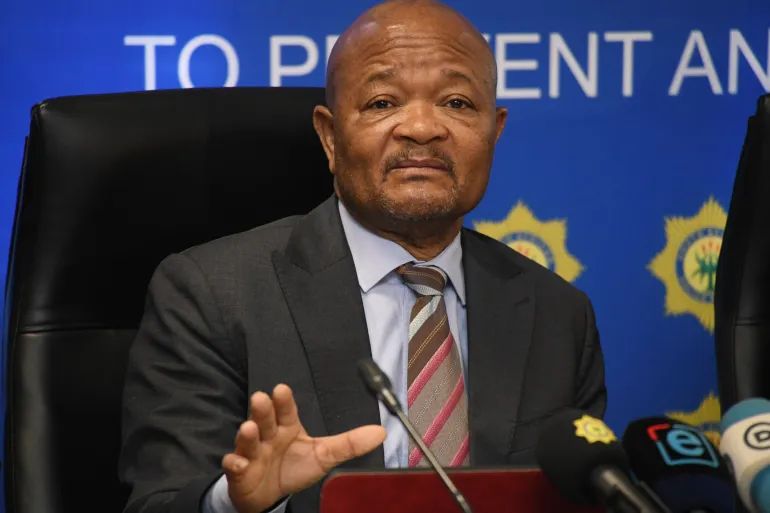

South Africa’s Police Minister, Senzo Mchunu, is facing explosive allegations of corruption and interference in high-profile political assassination investigations, according to a report published by The Times (UK).
In a nationally televised press conference, KwaZulu-Natal police commissioner Nhlanhla Mkhwanazi accused Mchunu of receiving illicit payments from a corruption suspect and of deliberately obstructing murder investigations involving senior political figures. Mkhwanazi claimed that files related to political killings were confiscated under Mchunu’s orders and that key cases involving powerful individuals were frozen.
According to The Times, Mkhwanazi alleged that “politicians, police officers, prison officials, prosecutors, and members of the judiciary have fallen under the control of drug syndicates and influential businessmen.” While he did not release evidence publicly, he stated he possessed documentation to support the claims and announced the launch of a criminal investigation into the matter.
President Cyril Ramaphosa has called the case “a serious threat to national security,” promising that the government will treat the allegations with utmost urgency. The presidency emphasized that any efforts to undermine state institutions will be dealt with decisively.
Mchunu, who previously served as Premier of KwaZulu-Natal before being appointed to the national cabinet, denied the allegations, calling them “baseless and unsupported by any credible evidence.” He insisted that his integrity remains intact and criticized what he described as politically motivated attacks.
Opposition parties have reacted strongly to the revelations. The Democratic Alliance demanded Mchunu’s immediate dismissal and called for an emergency session in Parliament. The Economic Freedom Fighters (EFF) urged the suspension of the police minister pending the outcome of investigations.
The controversy has reignited debate over corruption and political violence in South Africa, which is ranked seventh globally in the 2023 Organized Crime Index, according to the Geneva-based Global Initiative.
The Times report, authored by Africa correspondent Jane Flanagan, pointed to longstanding institutional damage from the era of former President Jacob Zuma (2009–2018), during which law enforcement agencies were widely perceived to be weakened. Despite President Ramaphosa’s pledge to restore integrity and combat corruption, critics argue that his administration has been slow to hold ruling party officials accountable.
The scandal underscores ongoing concerns about governance, impunity, and the deep entrenchment of organized crime within the state, just two years ahead of South Africa’s next general elections.


