
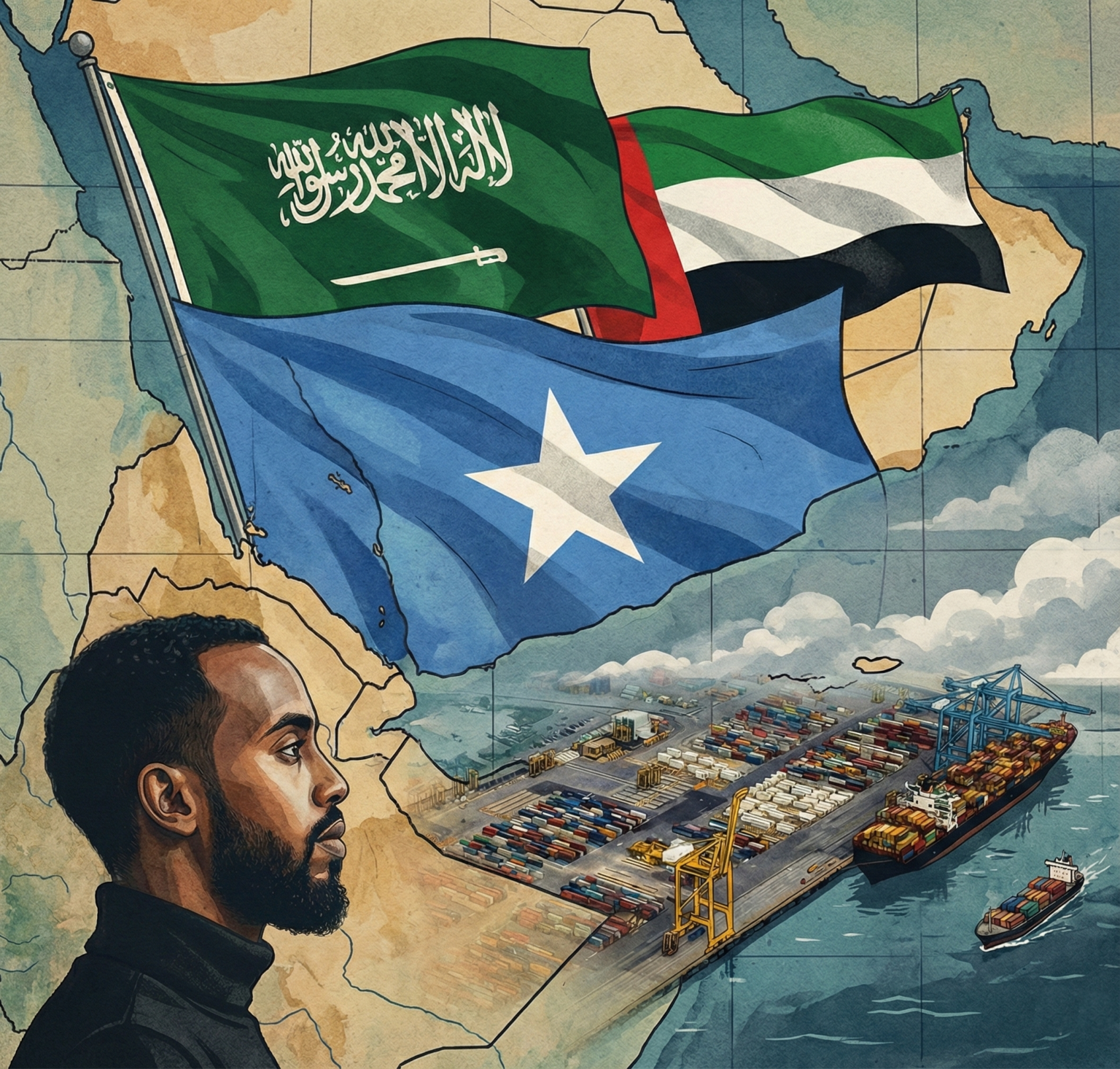

Somalia’s decision to dismantle its long-standing agreements with the United Arab Emirates (UAE) marks a seismic shift in the Horn of Africa’s diplomatic landscape. This rupture is not merely a bureaucratic disagreement but a forceful assertion of sovereignty triggered by a series of Emirati actions that Mogadishu views as existential threats. From the UAE’s role in facilitating Somaliland’s discreet outreach to Israel to the controversial transit of Yemeni Southern Transitional Council leader Aidarus al-Zubaidi through Somali territory, the trust between Mogadishu and Abu Dhabi has effectively evaporated. As the rivalry between the UAE and Saudi Arabia intensifies, Somalia is signaling a strategic realignment toward Riyadh and Cairo, even as it struggles to maintain internal cohesion.

Somalia’s Enforcement Paradox and the Limits of Federal Power
While the Federal Government in Mogadishu has issued decrees annulling port agreements managed by DP World in Berbera and Bosaso, the reality on the ground remains stubbornly complex. Somalia’s fragile federal system grants significant autonomy to regional states like Puntland and Jubaland, while Somaliland maintains a stance of total independence. Consequently, Villa Somalia finds itself in an enforcement paradox where it possesses the international standing to issue mandates but lacks the domestic mechanisms to execute them. Without a functioning Supreme or Constitutional Court to adjudicate these federal disputes, unilateral decrees remain largely symbolic, serving as political markers rather than enforceable laws.
The political distance between the capital and the regions further complicates this transition. Relations with the leadership in Garowe, Kismayo, and Hargeisa have deteriorated sharply over constitutional amendments and the proposed electoral framework. Any attempt at military enforcement would be catastrophic, as the Somali National Army is already heavily engaged in the existential fight against al-Shabab. Opening a second front against regional administrations would risk a total fracture of the state along clan lines. For any federal decree regarding the UAE to carry weight, Mogadishu must first find a path to internal reconciliation, rebuilding the trust necessary to speak with a single national voice.
The Berbera Dilemma: Diplomatic Pressure vs. Legal Reality
The Somaliland administration remains steadfast in its claim that its port agreements with the UAE are legitimate exercises of its authority. Because the Federal Government lacks a physical presence in Berbera, its only remaining lever is international legal pressure. However, the path to the International Court of Justice is fraught with procedural hurdles. Jurisdiction typically requires a ratified treaty or explicit consent from both parties, neither of which is currently present in the dispute with the UAE.
The legal waters are further muddied by historical precedent. In 2018, UAE officials claimed their arrangements in Berbera carried the “blessing” of the Somali federal government. Whether that informal approval constitutes a binding legal standing remains a point of contention. Without publicly available documentation of a formal ratification, Mogadishu’s contractual standing in international arbitration is significantly weakened. This gap between the rhetoric of sovereignty and the reality of territorial control remains one of the most intractable challenges facing the current administration.
The Israel Factor and the Shadow of Regional Conflict
Perhaps the most alarming development in this shift is the reported facilitation of diplomatic ties between Hargeisa and Israel by the UAE. Reliable reporting suggests that Somaliland’s leadership undertook a secretive visit to Israel in late 2025. For an Israeli administration facing domestic turmoil and regional isolation, a foothold in the Horn of Africa offers a strategic diversion. There are deep concerns in Mogadishu that such an alliance could effectively export the volatility of the Yemeni conflict and Red Sea tensions directly to Somali shores, potentially turning northern Somalia into a proxy battleground.
Furthermore, the specter of a displacement program for Palestinians—something Hargeisa denies but Mogadishu views with extreme skepticism—adds an ethical urgency to the rupture. Given that Somaliland previously denied relations with Israel only to be met with unilateral recognition from Tel Aviv last month, Mogadishu is treating all denials from Hargeisa with a heavy dose of suspicion. This perceived betrayal has served as the final catalyst for Somalia to align itself within the Saudi-UAE rivalry, choosing the stability offered by Riyadh over the more assertive and interventionist policies of Abu Dhabi.
A New Security Architecture for 2026
The consequences of this break are profound. For years, Emirati funding and training were central to the security of the Banadir region. However, Mogadishu is now betting on a new security pact with Saudi Arabia and enhanced military cooperation with Egypt to fill the void. This represents a historic departure for Riyadh, moving from purely diplomatic support to material military reinforcement. While Egypt’s engagement appears more focused on regime protection than total transformation, the combination of these two powers offers a potential alternative to the crumbling Emirati security framework.
The success of this pivot ultimately depends on the fast-approaching deadlines of 2026. With the Federal Parliament’s term ending in April and the Presidency in May, the window for a national conference is closing. If Villa Somalia cannot convene the regional leaders from Puntland and Jubaland to find a common compromise on the constitutional crisis, the new alliances with Saudi Arabia and Egypt will be built on a foundation of sand. Somalia stands at a crossroads where its foreign policy has evolved faster than its domestic unity; the coming months will determine if the nation can survive these unprecedented geopolitical shifts as a single, cohesive entity.
Suldan I. Mohamed, MA is a Somali political analyst, journalist and former governance advisor at the Office of the Prime Minister, Somalia. He has extensive experience on Somalia and the wider Horn of Africa region.


