
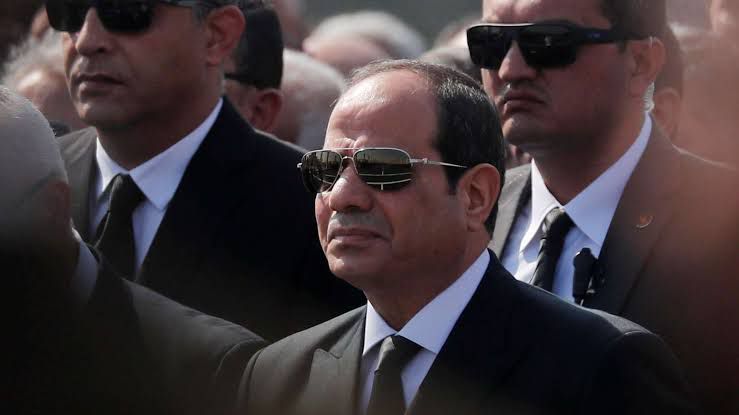

Egyptian President Abdel Fattah el-Sisi reaffirmed Cairo’s complete rejection of unilateral measures in the Eastern Nile Basin, which includes Egypt, Sudan, Ethiopia, the Blue Nile, and several tributaries.
Speaking at a joint press conference in Cairo with Ugandan President Yoweri Museveni on Tuesday, Sisi stressed that Egypt does not oppose development efforts by its partners in the Nile Basin. However, he made it clear that such projects must not affect the volume of water reaching Egypt.
“Our only concern is that other countries’ development should not impact the amount of water that flows to us,” Sisi said. “Anyone who thinks Egypt will overlook its water rights is mistaken. If we give up our share, we give up our life.”
The president noted that the Nile water issue was a major topic in his talks with Museveni. He explained that the annual flow in the White and Blue Nile amounts to around 1,600 billion cubic meters, with much lost through forests, swamps, evaporation, and groundwater seepage, leaving only a small portion reaching the Nile proper. Egypt, he stressed, has no alternative water sources and receives very little rainfall.
Last month, U.S. President Donald Trump said, “The United States funded the Grand Ethiopian Renaissance Dam (GERD), and I don’t know why.” He acknowledged the dam has caused tensions between Egypt and Ethiopia over the past years and affects downstream water flows, particularly in periods of drought.
In June, Trump publicly criticized the U.S. financing of the GERD, calling it “stupid funding” and warning that the dam “greatly reduces” water flow to the Nile. He also condemned Ethiopia’s “hardline” stance in negotiations and suggested Egypt might resort to “blowing up the dam” if it cannot secure its water needs.
Sisi welcomed Trump’s remarks, describing them as evidence of Washington’s seriousness under his leadership in resolving disputes and ending conflicts. In a social media post, Sisi expressed confidence in Trump’s ability to address complex problems and foster peace and stability globally, whether in Ukraine, Palestine, or Africa.


