

The Nuer are a large pastoralist community living in western Ethiopia and South Sudan in east Africa. They rely on livestock keeping and have special beliefs and customs about how to live with nature. These are passed down from parents to children through the telling of stories.
Uncommonly for east African pastoralists, the Nuer live in an expansive, low-lying floodplain. This Gambella region is shaped by the convergence of several rivers originating in the Ethiopian highlands. Its wetlands and lush greenery offer a unique habitat that supports both the Nuer and a wide variety of birds and other wildlife. The people have a centuries-old cultural connection with the local biodiversity.
Our collaborative study involved Ethiopian and European scientists from diverse fields (such as ornithology, ethno-ornithology, biodiversity and nature conservation). We conducted interviews and 15 group discussions with Nuer people to understand their interaction with and knowledge of birds. The study included two districts and 400 households. We found a significant and seldom studied relationship with birds, which serve a range of purposes in Nuer life.
Our study not only highlights the deep spiritual and cultural ties between the Nuer people and the avian world. It also underscores the importance of incorporating traditional ecological knowledge into contemporary conservation efforts.
The Nuer’s relationship to birds can be a valuable model for sustainable human-wildlife interactions. It can contribute to the conservation of bird diversity and promote a more harmonious coexistence between humans and nature.
The role of birds in Nuer life
Ethiopia, known for its rich biodiversity, is home to 821 bird species and over 80 indigenous ethnic groups. Among these, the Nuer community stands out for its unique admiration of birds, viewing them as sacred beings.
The Nuer use three interchangeable names for birds: gaatkuoth (sacred children of God), kuoth (bearers of spirit), and diit (symbols of human twins). These terms reflect spiritual beliefs and also influence cultural practices, such as naming twins after birds. This Nuer tradition connects the prolific nature of birds to human fertility.
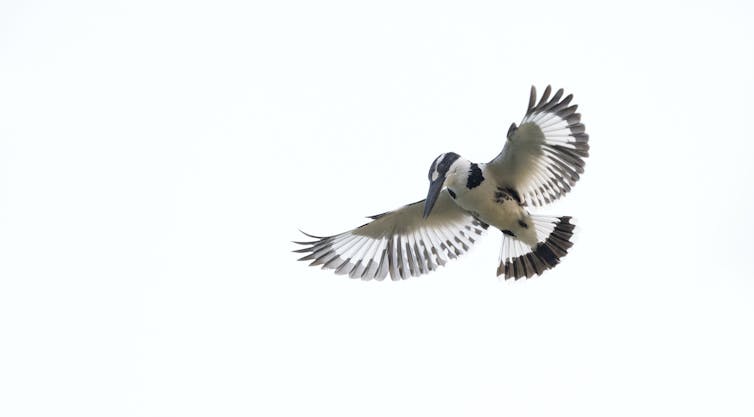
In our study, participants recognised 71 bird species as having unique cultural roles. The birds that live near Nuer villages have seven distinct uses. Ten species are used as bushmeat. Five are for traditional medicine. Eight are fish indicators – by meticulously observing species like the African fish eagle, African pygmy kingfisher, pied kingfisher or malachite kingfisher, people can identify areas with high fish populations.
Seven birds serve as omens – they signal potential dangers like the presence of wild animals. Three are used to create protective amulets. Three are used to indicate the change of seasons – for instance the return of migratory western yellow wagtails is a reliable sign that the sunny, dry season will be replacing the rainy, wet season. And 45 are hailed for their aesthetic beauty, often linked with a sense of place. The vibrant plumage, melodious songs and elegant flight patterns of birds like the black-crowned crane, blue-naped mousebird and purple heron create a spectacle that significantly enhances Nuer life.
This intricate knowledge of birds is communal: over 90% of participants agreed on the uses of these bird species.
Indigenous knowledge and sustainability
One of the most striking things about the Nuer community is the sustainable practice embedded within their traditional systems. When birds are used as amulets, for example, only small, non-invasive parts of the bird, like feathers, are utilised. These are fashioned into necklaces or bracelets believed to offer protection from dangers like diseases. The birds are not killed or significantly harmed, which preserves their populations.

There are strict limits on when and how birds can be used in Nuer society. The use of birds as bushmeat or for making traditional medicine is carefully controlled by elders and within family structures. Hunting is typically allowed only during severe food shortages. It’s often restricted to those in dire need, such as impoverished households. Families with a history of twins, who hold birds in special reverence, are not allowed to hunt them.
These cultural practices help prevent overexploitation of bird species, conserving them for future generations. They ensure that the use of natural resources remains sustainable.
It’s important to raise awareness about the conservation of birds, which are used for various purposes across Africa. Traditional medicine, bushmeat and the making of amulets has a direct impact on bird populations.
Nuer traditions balance human needs with the preservation of bird life. Our study therefore offers a compelling case and model for the conservation of avian and indigenous cultural diversity in Africa.
Why this matters
It is, however, essential to acknowledge that the Nuer’s cultural practices are not immune to the pressures of modern society. As globalisation and development continue to encroach on traditional lands, the Nuer people will face increasing challenges in maintaining their sustainable practices.
Threats such as habitat loss, climate change and illegal wildlife trading could jeopardise bird populations. In recent decades, the expansion of large-scale agriculture in the Gambella region has emerged as a driver of habitat loss and wildlife decline.
This makes the Nuer people’s traditional conservation practices even more relevant to future generations. By recognising and valuing their knowledge and practices, we can learn valuable lessons for broader conservation efforts.
Indigenous territories, despite their relatively small size, often harbour extraordinary biodiversity. Recognising this, the United Nations’ Post-2020 Global Biodiversity Framework places indigenous-occupied areas among conservation priority areas at the forefront of biodiversity preservation strategies.
It is crucial to help the Nuer community adapt to changing circumstances while preserving their cultural heritage and ensuring the sustainability of bird biodiversity.
Changkuoth Puok Diet, a lecturer at Gambella University in Ethiopia, contributed to this article.
Abebayehu Aticho, PhD student, researcher and conservationist, Jimma University; Abebe Beyene, Associate Professor, Department of Environmental Health Science and Technology, Jimma University; Andrew Gosler, Professor of Ethno-ornithology, University of Oxford; Desalegn Chala, Researcher, Natural History Museum, University of Oslo; Nils Christian Stenseth, Professor and Chair, Centre for Ecological and Evolutionary Synthesis (CEES), University of Oslo, and Shimelis Aynalem Zelelew, Associate Professor of Ecological and Systematic Zoology, Bahir Dar University
This article is republished from The Conversation under a Creative Commons license. Read the original article.


