
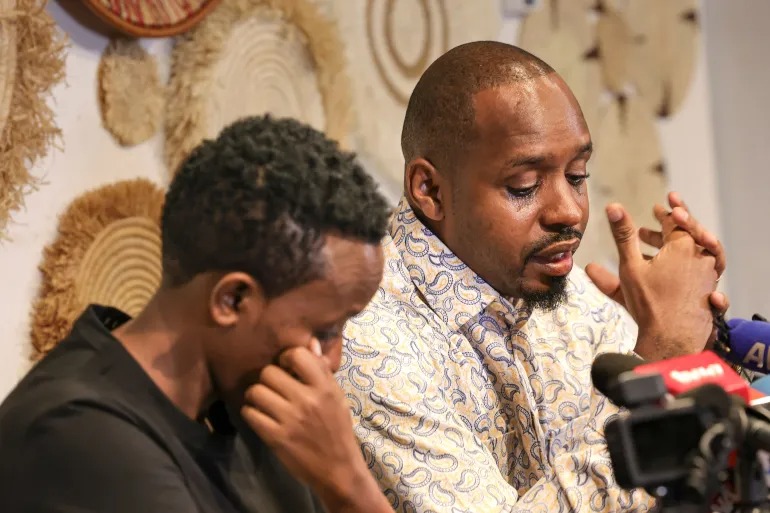

Kenyan authorities have released prominent human rights activist Boniface Mwangi on bail, two days after his arrest over alleged involvement in anti-government protests that turned violent last June.
Initially charged with “facilitating terrorist acts,” Mwangi later saw those accusations dropped and replaced with charges of illegal possession of ammunition. According to the police, a raid on his residence uncovered unused tear gas canisters and empty 7.62 mm cartridges.
Mwangi, a former photojournalist and outspoken critic of the government, had participated in protests demanding the resignation of President William Ruto. The demonstrations, sparked by widespread discontent with government economic policies, evolved into a national movement.
The courtroom was filled with hundreds of supporters during Mwangi’s appearance, many donning the Kenyan flag in solidarity. Calling the trial a “disgrace,” Mwangi maintained that authorities lacked any credible evidence to justify his detention.
Escalating Protests and Accusations Against Security Forces
Kenya has been gripped by a wave of public unrest since last year, as citizens express deepening frustration over soaring living costs, unemployment, and austerity measures. The unrest intensified into calls for President Ruto to step down.
Rights groups have condemned the government’s crackdown on dissent. They accuse security forces of grave human rights abuses, including abductions, torture, and extrajudicial killings.
More than 100 people have reportedly been killed since the protests began. That figure includes at least 31 individuals who died during a recent security operation and 19 others who were killed in demonstrations held in June.
Mounting Solidarity and Legal Concerns
Mwangi’s release followed mounting pressure from civil society organizations and an online campaign that trended under the hashtag #FreeBonifaceMwangi.
Dozens of rights organizations dismissed the charges as politically motivated and questioned the legality of the search warrant used during the police raid on Mwangi’s home.
In a joint statement, 37 organizations described the case as a “grave deviation from the justice system,” aimed at silencing dissenting voices. They warned that the systematic targeting of young activists poses a serious threat to the future of democracy in Kenya.
Despite the court dropping terrorism-related allegations, Mwangi still faces legal proceedings over the alleged illegal possession of ammunition. His case has come to symbolize the broader struggle between civil society and an increasingly repressive state apparatus.
As public anger swells and calls for reform grow louder, the government faces heightened scrutiny over its treatment of protesters and its commitment to democratic values.


