
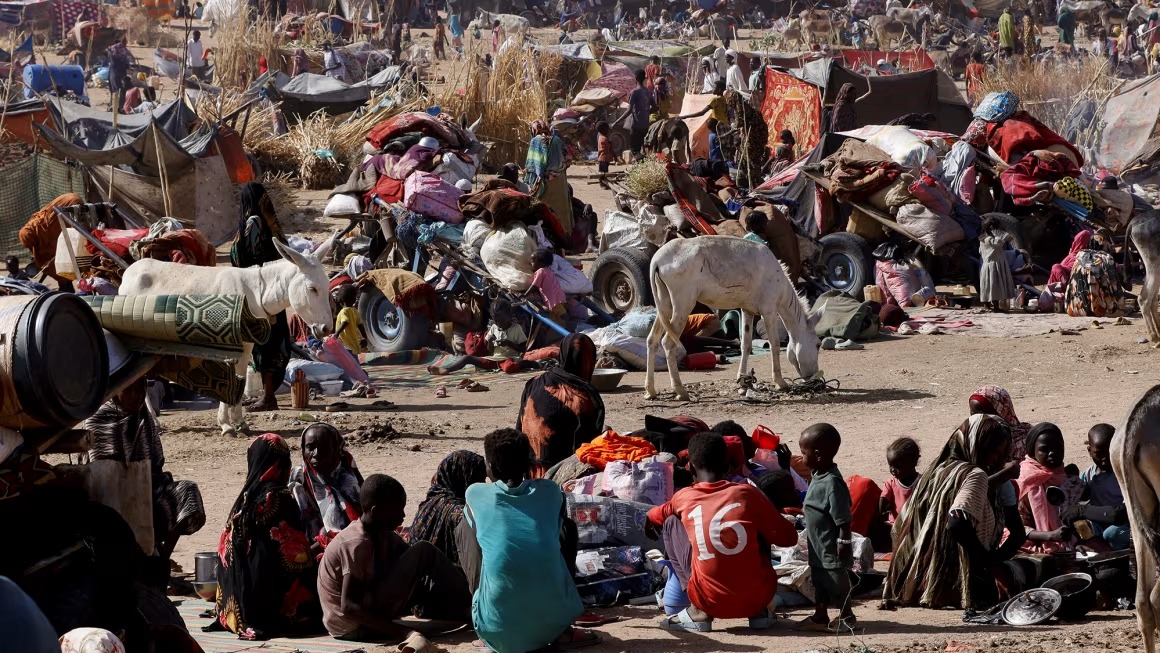

The International Criminal Court (ICC) has said it has reasonable grounds to believe that war crimes and crimes against humanity are currently being committed in Sudan’s Darfur region, amid a deepening civil conflict that has left tens of thousands dead and millions displaced.
Addressing the United Nations Security Council on Thursday, ICC Deputy Prosecutor Nazhat Shameem Khan described the humanitarian situation in Darfur as “intolerable,” warning that targeted attacks on civilians, sexual violence, famine, and abductions have become widespread.
“People are being deprived of food and water. Rape is being weaponized. Abductions have become common. And yet things could still get worse,” Khan said.
The tribunal has been collecting evidence from the ground and from refugee camps in neighboring Chad. According to Khan, over 7,000 items of testimonial, documentary, and digital evidence have been gathered over the past six months.
El Fasher under siege, displaced camps attacked
Khan highlighted the ongoing siege of El Fasher, the capital of North Darfur, by the paramilitary Rapid Support Forces (RSF) and affiliated armed groups. The RSF, which already controls most other Darfur state capitals, has reportedly targeted displaced persons camps in famine-stricken areas, including Zamzam camp.
The RSF’s assault on civilian areas, including humanitarian convoys and medical infrastructure, adds to mounting concerns of systematic atrocities reminiscent of Darfur’s earlier conflicts.
Sudan descended into full-scale civil war in April 2023 following a breakdown between the national army and the RSF. According to UN figures, over 40,000 people have been killed and nearly 13 million displaced—many across international borders.
International concern and legal accountability
In January, ICC Chief Prosecutor Karim Khan told the Security Council that both the Sudanese Armed Forces and the RSF may be responsible for war crimes and crimes against humanity in Darfur. Just prior to leaving office in January, the Biden administration officially declared that the RSF and allied militias were committing genocide.
Karim Khan has since temporarily stepped aside pending an unrelated investigation into misconduct allegations, which he denies. Deputy Prosecutor Khan assured the Council that Darfur remains a top priority.
“Those inflicting atrocities today may feel a sense of impunity. But the case of Janjaweed leader Ali Kushayb—now on trial—demonstrates that justice can prevail,” she added.
The ICC first intervened in Darfur two decades ago following a genocidal campaign by the Janjaweed militia. Up to 300,000 people were killed between 2003 and 2008, and more than 2.7 million displaced.
Today’s violence, observers say, risks returning the region to similar levels of devastation unless international pressure is increased and access is secured for humanitarian and legal institutions.
The Office of the Prosecutor has not disclosed specific indictments or timelines but emphasized that its progress is “concrete, positive and significant.”


