
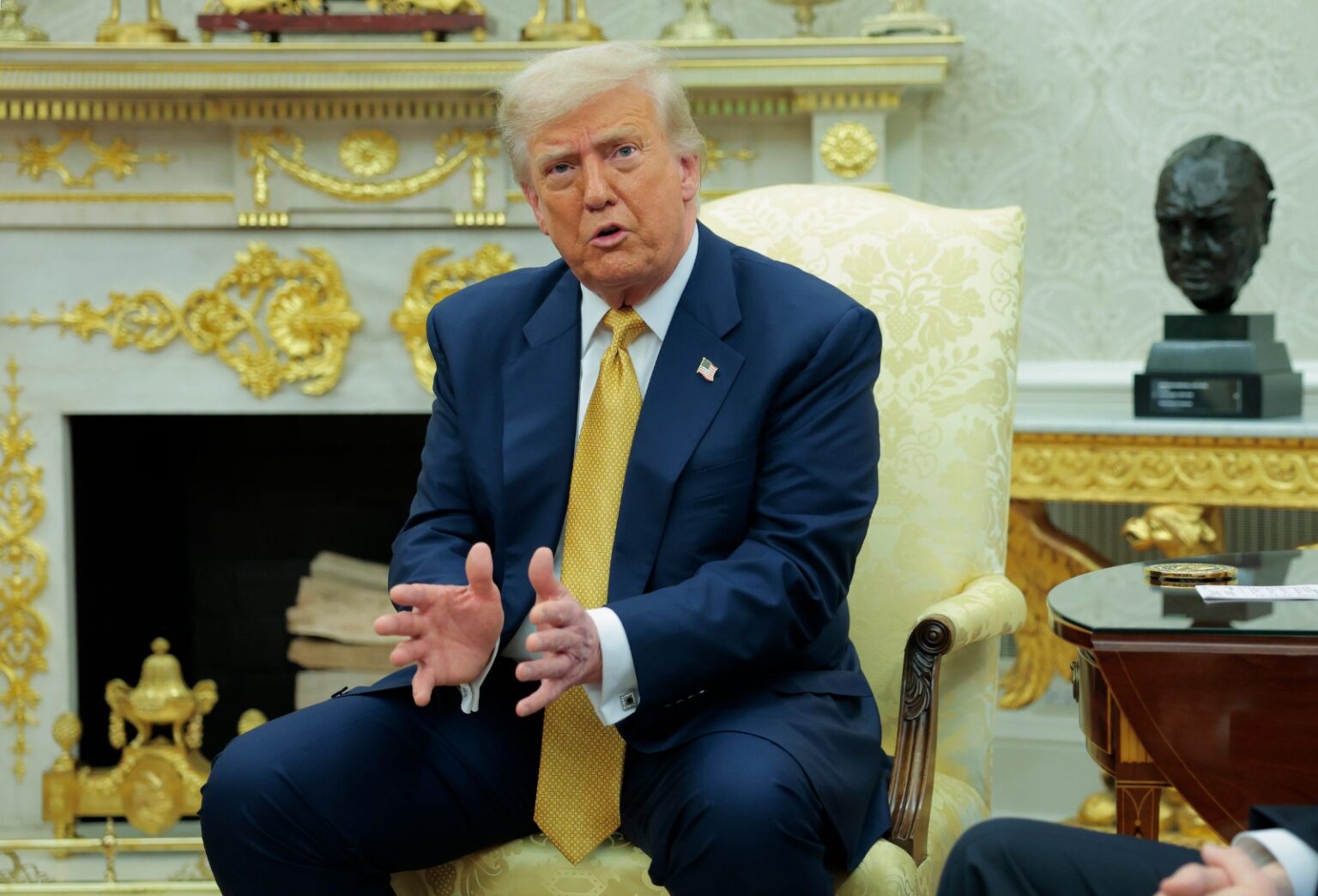

The Grand Ethiopian Renaissance Dam (GERD) Coordination Project Office addressed recent public claims made by former U.S. President Donald Trump regarding the financing of the dam, asserting Ethiopia’s full ownership of the project and reaffirming the nation’s diplomatic posture on the international stage.
Speaking at a press conference held in Addis Ababa, Fikerte Teamer, Deputy Executive Director of the GERD Coordination Office, clarified Ethiopia’s stance on the repeated assertions by Trump that the GERD was “mostly financed by American money.” Teamer firmly dismissed the claims, emphasizing that the Ethiopian government’s measured silence should not be mistaken for fear or guilt. “Our response is grounded in diplomacy, not in fear or timidity,” she said.
Teamer further emphasized the importance of substantiated evidence over rhetoric. “We are prepared to present documentation proving that the GERD is an entirely Ethiopian-funded project. Anyone is welcome to review the evidence,” she added.
Over the past month, Donald Trump has reiterated on at least three occasions that the GERD was built using U.S. financial resources. At a recent White House dinner, he claimed that Ethiopia used “mostly American money” to construct the dam. He echoed similar sentiments on his Truth Social platform, stating the U.S. had “stupidly financed” a project that “substantially reduces the water flowing into the Nile River.” These remarks follow earlier controversial statements Trump made in 2020, when he suggested Egypt might consider “blowing up” the dam—a comment that sparked diplomatic outrage in Addis Ababa at the time.
Ethiopia’s leadership has consistently maintained that the GERD is a sovereign project, financed domestically and constructed in alignment with the country’s development goals. The dam, which sits on the Blue Nile, has long been a point of contention among Nile Basin countries, particularly Egypt and Sudan, who fear downstream water shortages. However, Ethiopia argues that it contributes roughly 85% of the Nile’s water and has a legitimate right to utilize its resources for national development without harming downstream countries.
The GERD Coordination Office reaffirmed this message during the press conference, highlighting Ethiopia’s ongoing efforts to balance development with regional cooperation. Officials reiterated the government’s commitment to a peaceful and fair use of the Nile River, calling on the international community to acknowledge the facts and respect Ethiopia’s sovereignty over its infrastructure and natural resources.
While tensions remain between Ethiopia and some of its neighbors over the implications of the dam, officials expressed optimism that regional cooperation and dialogue will prevail. “We continue to prioritize diplomacy and mutual respect,” said Teamer, underscoring Ethiopia’s openness to negotiation and transparency regarding the GERD’s operations.
The dam, a centerpiece of Ethiopia’s energy and development strategy, is nearing full completion, with officials confirming that technical progress continues as planned. Once operational at full capacity, the GERD is expected to be Africa’s largest hydroelectric power plant, providing power to millions within Ethiopia and potentially across the continent.


