
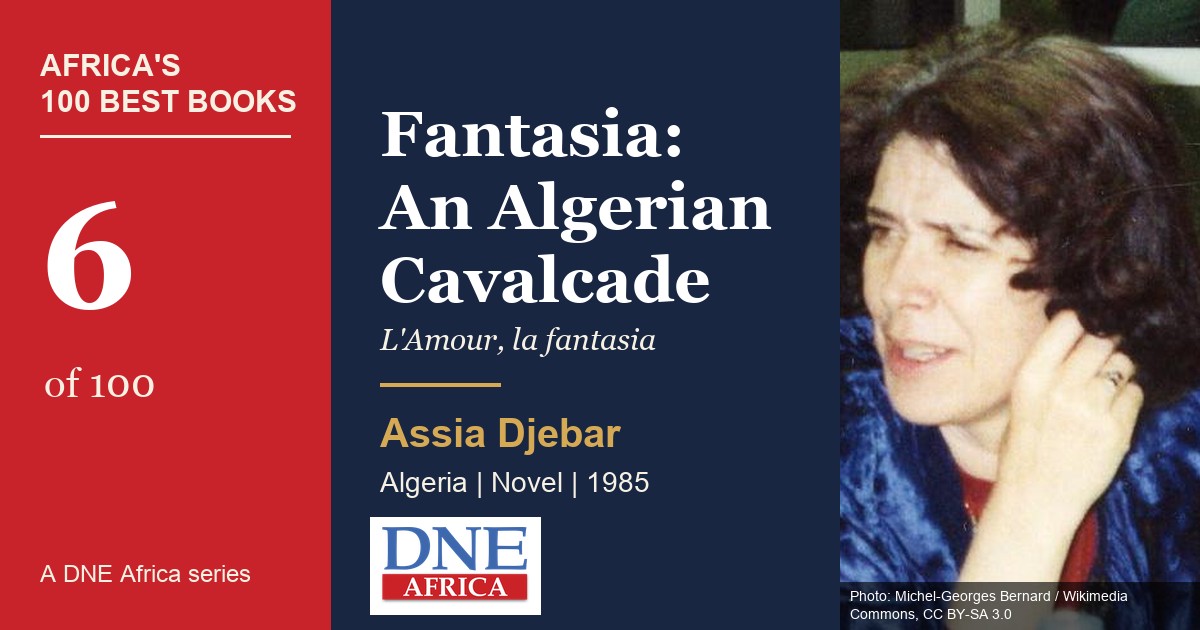

Fantasia: An Algerian Cavalcade, the 1985 novel by Algeria’s Assia Djebar, retells France’s conquest of Algeria through the reports and letters of the French officers who waged it, set against her own girlhood in French.
Africa’s 100 Best Books, No. 6 of 100. See the full list and every article in the series.
That double story is the book’s argument. Djebar, a historian by training, found that almost everything written about the fall of Algiers in 1830 was written by the invaders, in the language she herself had been schooled in. Algerian critics have since shown how much of the novel’s meaning sits in what it leaves unsaid, down to its table of contents.
The standard account is brief. L’Amour, la fantasia was published in Paris by J.-C. Lattès in 1985, according to the Académie française, which elected Djebar in 2005. Dorothy S. Blair translated it into English as Fantasia: An Algerian Cavalcade. It was the first volume of what Djebar called her Algerian quartet, and the jury of Africa’s 100 best books of the 20th century placed it in its top 12, according to the African Studies Centre Leiden.
A note on method: the novel is in copyright and DNE Africa found no legal free copy of the full text. The passages quoted here were checked against published scholarship that cites the French text by page, and the article draws first on Algerian critics.
Table of Contents
In this article
What is Fantasia: An Algerian Cavalcade about?
Fantasia: An Algerian Cavalcade moves between two times. One is the girlhood of an unnamed narrator in a village near the coast in the 1940s and 1950s, the daughter of an Algerian schoolteacher in the colonial French system. The book opens with her walking to school for the first time, “hand in hand with her father” (in the French, main dans la main du père, page 11 of the 1985 edition).
The other is the conquest itself, from the dawn in June 1830 when the French fleet appeared off Algiers to the campaigns of the 1840s. Djebar reconstructs it from French sources: the naval officer Amable Matterer, the aide-de-camp Baron Barchou de Penhoën, the theatre director J.-T. Merle, and later the letters home of captains Bosquet and Montagnac.
The third part, the longest, widens into the voices of Algerian women who lived through the war of independence in the 1950s, told to the narrator in their own languages and retold by her in French. The title plays on the fantasia, the charge of horsemen firing into the air at festivals, and on the French word for love: the conquest is written, unsettlingly, as a violent embrace. Fantasia: An Algerian Cavalcade has no conventional plot to give away.
What do Algerian critics find in the novel?
Assia Kacedali of the University of Algiers 2 offers the most original reading. In a 2014 study for the journal Synergies Algérie, she noticed that in the first two parts some sections carry titles in the table of contents while others are marked only by suspension points. The untitled sections, she argued, are exactly those about subjects hard to speak of: the conquest pictured as a lovers’ clinch, secret first love letters, the narrator’s wedding night. The silence of the contents page, in her reading, is part of the text.
Kacedali also traced how the autobiographical and historical sections alternate in a mirror pattern, and read the two italic prose poems that close the first parts, “Biffure” (erasure) and “Sistre” (sistrum), as a break from the cold documentary voice of the French witnesses.
Dalila Benhafsi of Abbès Laghrour University in Khenchela and Ikram Aya Bentounsi of the University of Oum El Bouaghi, writing in the journal Aleph, read the novel as an inquiry into identity. Djebar, they argued, set French colonial archives against Algerian women’s oral memory to build a collective, female history, and they framed her uneasy bond with French through her own phrase for it, a “stepmother tongue”. Fatiha Chaouib of the University of Ain Témouchent, in a 2024 study, read the caves of the Dahra as places of mass killing that official histories had kept quiet.
Why does Djebar tell the conquest in French officers’ words?
Because, the narrator says, those were nearly the only words there were. Of the accounts of July 1830, she counts that “thirty-seven descriptions will be published, only three of them from the side of the besieged” (page 66 of the Livre de Poche edition). The rest, apart from an English consul and an Austrian prince, are in French.
So Djebar reads the conquerors against themselves. The book’s most terrible chapter follows Colonel Pélissier, who in June 1845 lit fires at the mouths of the Dahra caves where the Ouled Riah tribe had taken refuge, killing hundreds, and then wrote a regulation report about it. The novel sets that report beside an eyewitness account from a Spanish officer and a soldier’s letter home, and contrasts it with Saint-Arnaud, who sealed another cave a few weeks later and left almost nothing in writing.
Katrien Lievois, a Belgian scholar, showed in a 2003 study in Linguistica Antverpiensia how often the book returns to interpreters and mistranslation, and why a chapter near its end is called “The tunic of Nessus”, the poisoned shirt of Greek myth. French, in the narrator’s telling, is her father’s gift: it freed her from seclusion and it burns. As a teenager, she writes, she suffered an “aphasia of love” in which “the written words, the learned words, drew back before me” whenever she tried to express feeling (page 183 of the 1985 edition).
Who was Assia Djebar?
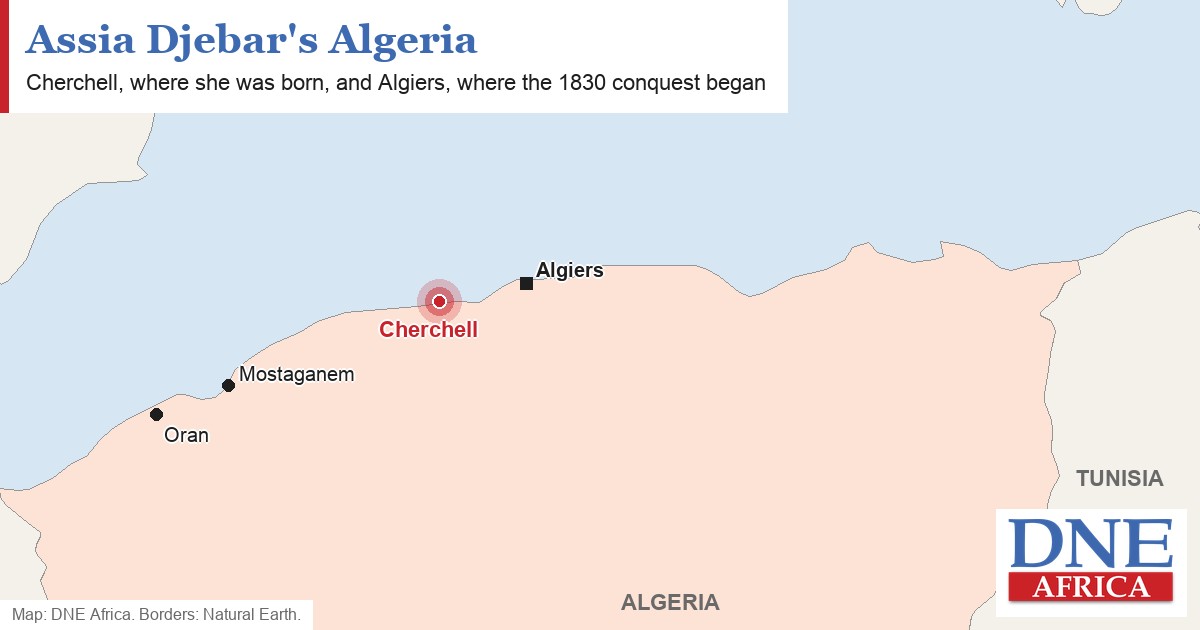
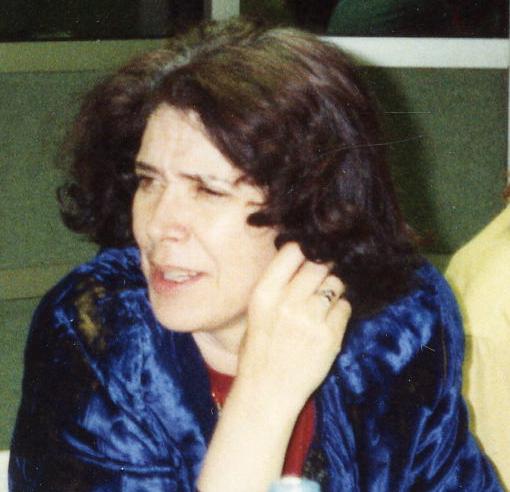
Assia Djebar was the pen name of Fatima-Zohra Imalayène, born in Cherchell, west of Algiers, on 30 June 1936, according to the Académie française and World Literature Today. Cherchell is the Roman Caesarea, the Césarée of her books, a sister city in stone to Timgad. Her father, a teacher in a French school, is the man who walks her to class in the novel’s opening scene.
She entered the École normale supérieure in Sèvres in 1955 and published her first novel, La Soif, in 1957. She taught history, and turned to film in the 1970s: La Nouba des femmes du Mont Chenoua won the international critics’ prize at the 1979 Venice Biennale, according to the Académie. She won the Neustadt International Prize for Literature in 1996 and the Peace Prize of the German Book Trade in 2000, was elected to the Académie française in June 2005 and died in Paris on 6 February 2015. She is buried in Cherchell.
How is the book read in Algeria now?
For much of her life Djebar was more celebrated in France and the United States than at home. She was criticised in Algeria for writing in French rather than Arabic, the Emirati daily Al-Ittihad reported in 2008. At her burial in 2015, Azzeddine Mihoubi, then head of Algeria’s High Council for the Arabic Language and later culture minister, called her death a double loss and urged the state to fund translations of her work, the Algerian site Algérie360 reported; others there said she was little read at home.
That has changed. The Grand Prix Assia Djebar du roman, created in 2015 by ANEP, the state publishing and advertising agency, rewards novels in Arabic, Tamazight and French. Its eighth edition, in October, went to Sarah Mohamed Mariche for Errefraf, Farida Sahoui for Aggus and the historian Hosni Kitouni for Ce que la mort m’a pris de toi, TSA Algérie reported.
In June ANEP marked the 90th anniversary of her birth with a conference in Algiers, where academics from Algiers, Tizi Ouzou and Tlemcen cited the novel’s account of the Dahra killings as an example of her rewriting of national memory, Radio Algérie reported. Hakim Miloud, a poet at the University of Tlemcen who chaired this year’s prize jury, has translated her into Arabic, according to the Institut français d’Algérie. DNE Africa could not confirm a published Arabic edition of Fantasia: An Algerian Cavalcade itself.
How does the novel read today?
Fantasia: An Algerian Cavalcade is not an easy book, and does not try to be. It asks the reader to hold a girl’s schooldays, an 1830 naval log and a widow’s memories of the 1950s in one frame, and its long, layered sentences can be hard going, especially in translation, where the play between French, Arabic and Berber is flattened.
Its strength is moral clarity without slogans. Djebar never invents Algerian heroes to answer the French officers; she reads their own prose closely enough that it condemns itself, and she admits the cost of doing so in their language. Like Mariama Bâ’s So Long a Letter, No. 3 in this series, it gives women’s private speech public weight, and like Naguib Mahfouz’s Cairo Trilogy, No. 2, it ties a family to a nation’s history. Forty years on, Fantasia: An Algerian Cavalcade reads less as a memoir than as a method: how to write history when the archive belongs to the other side.
Questions for discussion
- The novel opens with a girl walking to school hand in hand with her father. Why might Djebar begin a history of conquest with that scene?
- Djebar builds the story of 1830 almost entirely from French accounts. Does reading the conquerors against themselves give the colonised a voice, or only an echo?
- Why do you think some sections have no titles in the table of contents?
- The narrator calls French both a gift and a burning shirt. Can a writer be free in a language that came with conquest?
- How do the women’s oral accounts in the third part change what you make of the written archive?
- Would the novel mean something different if it were first read in Arabic or Tamazight?
Read next in the series
- So Long a Letter by Mariama Bâ (Senegal), No. 3: a woman’s letter that turns private grief into social argument.
- Nedjma by Kateb Yacine (Algeria), No. 68: the founding novel of Algerian writing in French, also built from fragments (coming soon).
- The Algeria trilogy by Mohammed Dib (Algeria), No. 43: colonial Algeria seen from a poor family in Tlemcen (coming soon).
More from Africa’s 100 Best Books
- Previous, No. 5: Nervous Conditions by Tsitsi Dangarembga (Zimbabwe)
- Next, No. 7: Sleepwalking Land by Mia Couto (Mozambique) (coming next in the series)
- All 100 books in the series
FAQ
Who wrote Fantasia: An Algerian Cavalcade?
Assia Djebar, the Algerian novelist, historian and film-maker, born Fatima-Zohra Imalayène in Cherchell in 1936. The French original, L’Amour, la fantasia, was published by J.-C. Lattès in Paris in 1985.
What is Fantasia: An Algerian Cavalcade about?
It interweaves the narrator’s girlhood in colonial Algeria with the French conquest from 1830, told through French officers’ accounts, and with Algerian women’s memories of the war of independence.
Who translated Fantasia: An Algerian Cavalcade into English?
Dorothy S. Blair, who also translated Djebar’s next novel, Ombre sultane, as A Sister to Scheherazade.
What are the Dahra caves in the novel?
Caves in north-western Algeria where, in June 1845, French troops under Colonel Pélissier lit fires at the entrances and killed hundreds of the Ouled Riah tribe who had taken refuge inside. The novel retells the event from Pélissier’s own report and other witnesses.
Is there a prize named after Assia Djebar?
Yes. Algeria’s Grand Prix Assia Djebar du roman, created in 2015 by the state agency ANEP, rewards novels in Arabic, Tamazight and French each year.


