

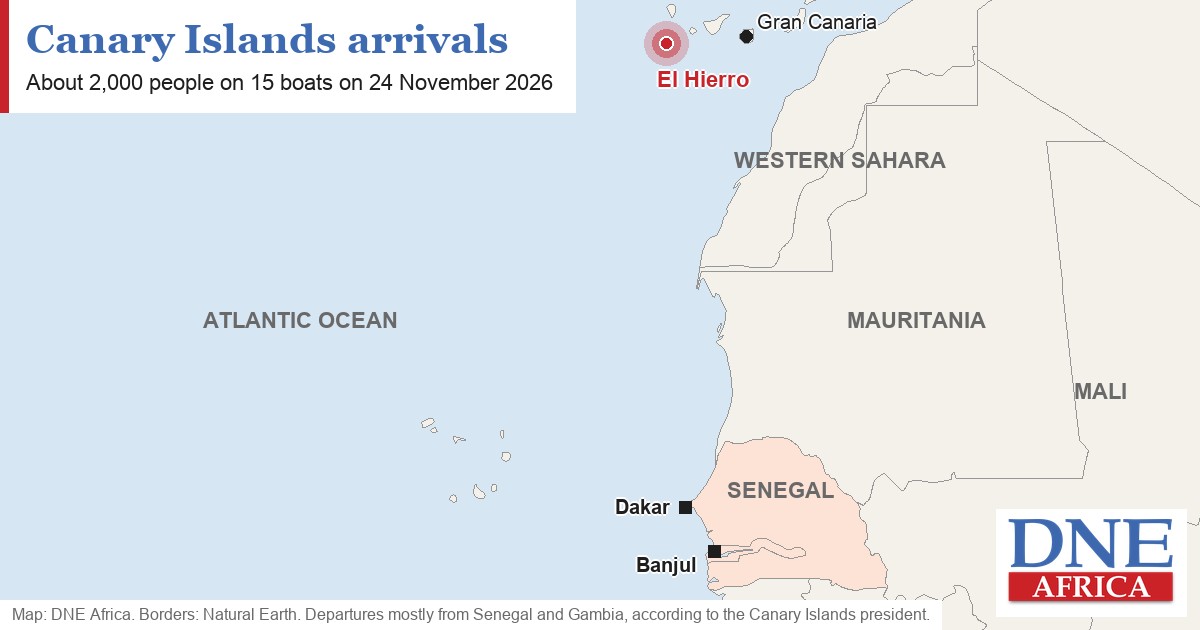
Canary Islands arrivals hit a one-day record on Tuesday 24 November, when 1,990 people on 15 boats reached the Spanish archipelago, most of them having left Senegal and Gambia, Spain’s maritime rescue service said.
The surge on the Atlantic route piles pressure on the small island of El Hierro and on the West African governments the boats leave from, and lands days before Spain’s national election on Sunday 29 November, in which migration is a leading issue.
How many Canary Islands arrivals were there in a day?
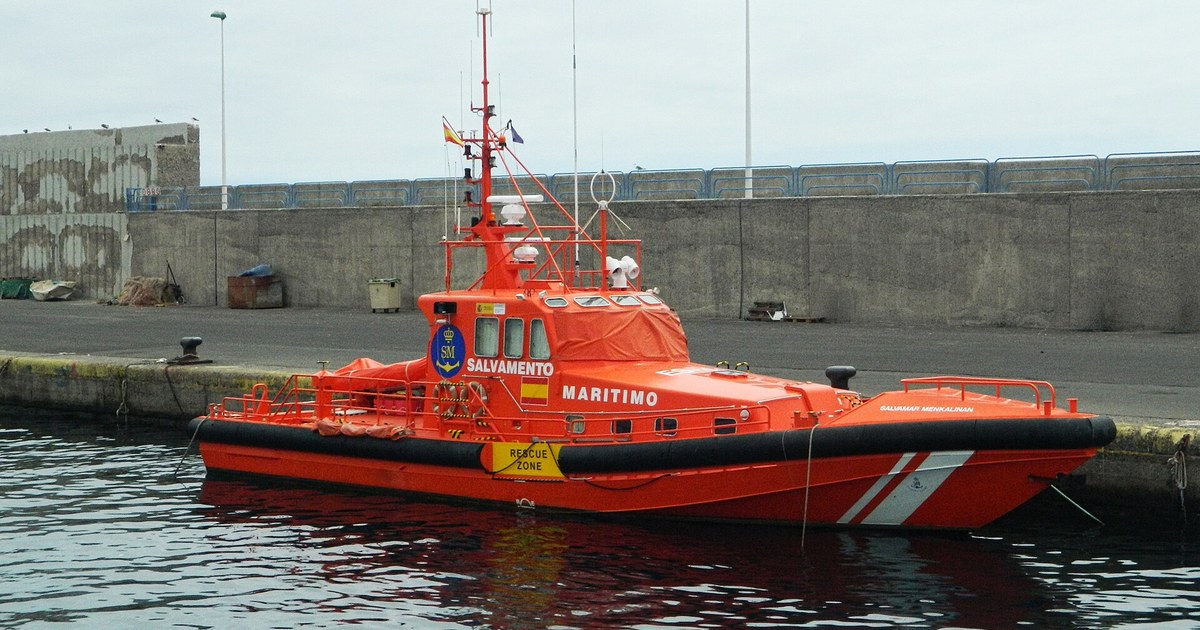
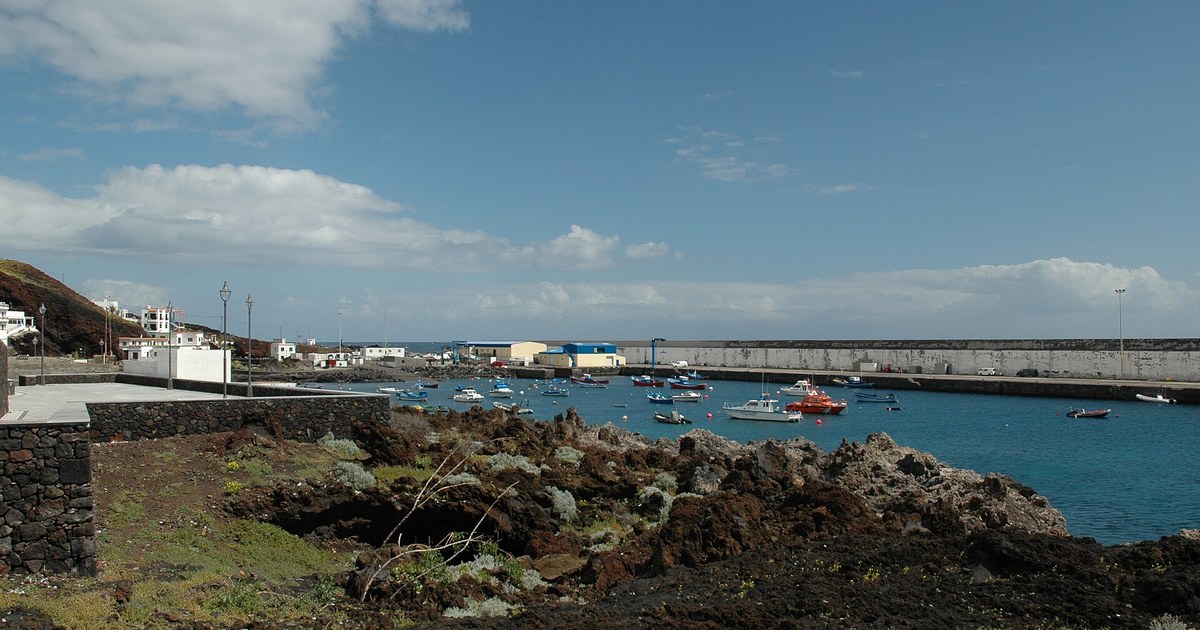
Rescue vessels from Salvamento Maritimo, Spain’s maritime rescue service, escorted most of the 15 boats to El Hierro, an island of about 11,400 residents, the rescue service said. A separate count covering the 24 hours to Wednesday, also from the rescue service’s data, put the total above 2,100. The two figures differ because they cover different time windows.
Either figure beats the previous one-day high for Canary Islands arrivals, set only ten days earlier. On Saturday 14 November the rescue service counted 1,580 people on 15 boats, according to a provisional tally reported by Spain’s EFE news agency at the time, when DNE Africa reported that record. One person was found dead aboard one of Tuesday’s boats, and a woman gave birth during the crossing from West Africa.
Fernando Clavijo, president of the Canary Islands regional government, told Spanish radio Cadena SER that about 100 of Tuesday’s arrivals were minors, including a baby of four days born at sea. He called it a historic day, “sadly”, and said calm seas and a full moon had favoured the crossings (quotes translated from Spanish).
Why are Canary Islands arrivals rising again?
The autumn surge in Canary Islands arrivals reverses a sharp fall earlier in the year. Spain’s Ministry of the Interior said in its fortnightly report on irregular migration that 24,364 people reached the Canary Islands between 1 January and 15 November, 65.9% more than in the same period of 2025. Of those, 11,037 arrived on 106 boats in the first half of November alone. In April, Canary Islands arrivals had been running about 80% below the previous year’s level, according to the ministry’s figures at the time.
Later counts put the year’s total of Canary Islands arrivals above 28,000 by late November, more than in the whole of 2025 but well below the record of 46,843 set in 2024. Clavijo said most of Tuesday’s boats had come from Senegal and Gambia. Departures from West Africa usually rise in the autumn, before winter seas turn rough.
The Mixed Migration Centre, a research body, found in a May 2026 study based on 1,216 surveys with migrants in Mauritania and Spain in 2025 that crossings to the islands left mainly from Morocco (41%), Mauritania (30%) and Senegal (24%). It said about one in three departures came from countries south of Mauritania, which it linked to a shift towards longer routes that avoid heavily patrolled northern coasts, and assessed that smuggling networks in Senegal and Gambia appeared less systematic than those further north.
What are Senegal, Spain and the EU doing about Canary Islands arrivals?
Senegal’s navy said on 18 November that it had rescued or intercepted 1,424 people trying to leave the country over two days, on nine boats at sea and on shore near Saint-Louis, where 104 people were stopped before boarding. The crossings carry a high toll: a boat carrying about 100 people sank near Dakar on 19 November. DNE Africa could not find a public statement from the Gambian government on Tuesday’s arrivals.
Clavijo asked for an urgent meeting with Ursula von der Leyen, the president of the European Commission, and wrote on X that the Canaries “can’t take it anymore” in the face of “unprecedented migration pressure” (translated from Spanish). He told Cadena SER he was satisfied with the transfer of adult migrants to mainland Spain, asked other Spanish regions to take in unaccompanied minors and said “Europe is on the wrong path”. He called the plan by Austria, Denmark, Germany, Greece and the Netherlands to open a return hub in Rwanda “ridiculous”. DNE Africa could not find a published Commission response by Wednesday evening.
Pedro Sanchez, Spain’s prime minister, said Europe needed a comprehensive approach that included stronger border co-operation with the Senegalese and Gambian authorities and legal routes for workers in sectors short of labour. His Socialist-led government faces the conservative Popular Party on Sunday, which would probably need the support of the far-right Vox, a party that campaigns on deporting migrants.
How deadly is the Atlantic route?
Caminando Fronteras, a Spanish non-governmental group that tracks deaths and disappearances at sea, said in its report on the first five months of 2026 that 635 people died or went missing on the Atlantic route to the Canaries between January and May, the highest figure on any route to Spain. The group’s count is based on calls from families and people at sea and has not been independently verified. It said that while Canary Islands arrivals had fallen, the route had become proportionally deadlier, with 21 deaths for every 100 arrivals against 14 a year earlier.
The next Interior Ministry report on Canary Islands arrivals, covering the second half of November, is due in early December, after Sunday’s vote.
FAQ
How many Canary Islands arrivals were there on 24 November?
Spain’s maritime rescue service said 1,990 people reached the islands on 15 boats on Tuesday 24 November, a one-day record. A 24-hour count to Wednesday put the figure above 2,100.
Where did the boats leave from?
Canary Islands president Fernando Clavijo said most of the boats had come from Senegal and Gambia. Most were brought to El Hierro, the westernmost island.
How many Canary Islands arrivals have there been in 2026?
Spain’s Interior Ministry counted 24,364 arrivals from 1 January to 15 November, up 65.9% on the same period of 2025. Later counts put the total above 28,000 by late November, below the record of 46,843 in 2024.
What has the Canary Islands government asked for?
Clavijo asked for an urgent meeting with European Commission president Ursula von der Leyen and called for a European response, and asked other Spanish regions to take in unaccompanied minors.


