
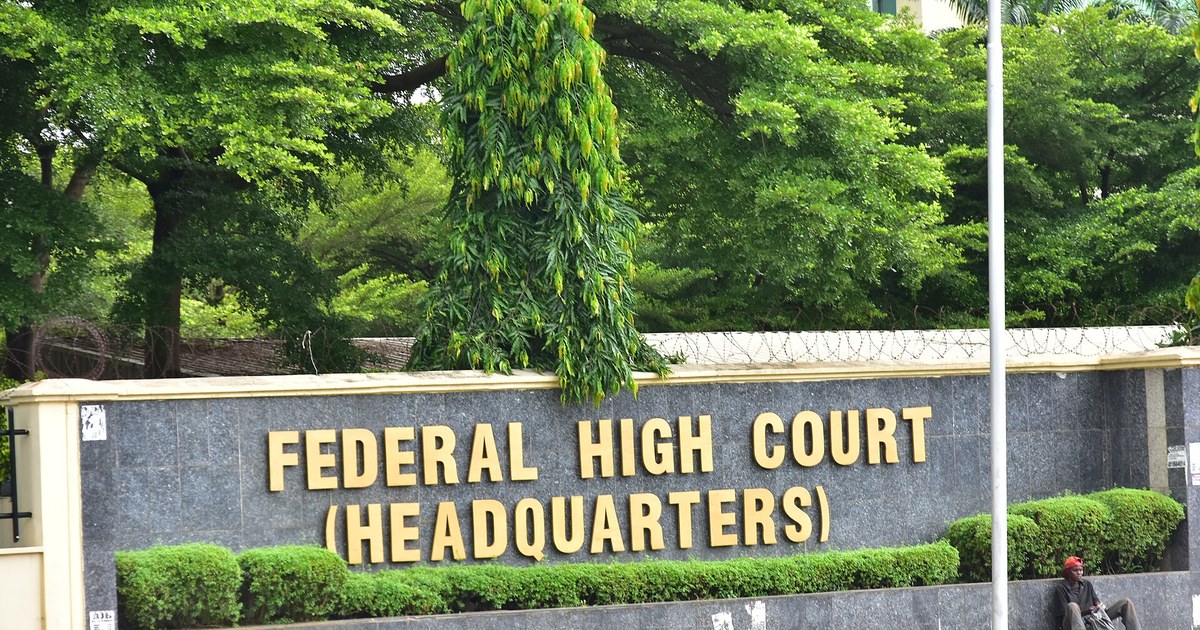

A Nigerian rights group, the Socio-Economic Rights and Accountability Project (SERAP), has sued the country’s data protection regulator and the electoral commission to force an independent investigation of suspected AI-generated photos in the INEC voter register.
The case tests whether Nigeria’s 2023 data protection law can be used to hold the Independent National Electoral Commission (INEC) to account over its own database, which holds the personal data of millions of voters, ahead of the 2027 general elections.
What is SERAP asking the court to do?
In suit FHC/ABJ/CS/2863/2026, filed at the Federal High Court in Abuja last week, SERAP is seeking orders of mandamus compelling the Nigeria Data Protection Commission (NDPC) to make “an independent and reasoned determination” on the allegations, including whether to open an investigation, SERAP said in a statement on 22 November.
It also wants the regulator to obtain and examine INEC’s records on the INEC voter register, carry out a forensic examination of the affected database and systems, and use its enforcement powers, including corrective orders, fines and compensation for any voters affected by an established violation.
SERAP asks the court to direct the NDPC to decide whether the incidents amount to a personal data breach under section 65 of the Nigeria Data Protection Act 2023, and whether INEC met its notification and record-keeping duties. “An internal review by INEC cannot substitute for the NDPC’s independent exercise of its statutory data-protection mandate,” the group said.
What has INEC said about the INEC voter register photos?
INEC said on 27 October that “a number of questionable registration records” had been identified and flagged during the nationwide display of the preliminary register from 9 to 15 October, and that it was examining “possible technical or procedural lapses”, according to the commission’s statement as quoted by SERAP and Nigerian media. Images had circulated on social media after the preliminary INEC voter register was published online on 26 October.
Lawrence Bayode, INEC’s director of information and communication technology, told Channels Television on 1 November that the commission’s Automated Biometric Identification System had flagged 268 records for review. He said some of the pictures were AI-generated and others were poor-quality registrations, and that some registration officers had used their official access to add them. “Those that we have seen, we are cleaning up,” he said.
The commission has said the preliminary list is not the final INEC voter register, which it plans to certify on 15 December after verification and data clean-up. No public response from INEC or the NDPC to the lawsuit could be found at the time of publication, and the case had not yet been assigned to a judge, according to Nigerian media reports.
Why does the case matter for data protection in Nigeria?
The NDPC has used its investigative powers against large data handlers before, including an inquiry into the online retailer Temu earlier this year. Turning those powers on the body that runs the country’s elections would be a first test of a different kind, Techpoint Africa noted in its report on the case.
SERAP had written to President Bola Tinubu on 31 October asking him to direct the NDPC to investigate, and warned that it would go to court if no action was taken within seven days. Opposition groups have also called for a forensic audit of the INEC voter register. INEC is already under scrutiny over the coming polls, as reported in our coverage of the Atiku ruling and its appeal.
“Nigerians should not have to worry that their personal information could be altered, manipulated or accessed without proper safeguards,” SERAP said.
FAQ
Why is SERAP suing over the INEC voter register?
SERAP wants the court to compel the Nigeria Data Protection Commission to investigate suspected AI-generated photos and altered records in the preliminary register, and to decide whether INEC breached the Nigeria Data Protection Act 2023.
How many records did INEC flag?
INEC’s ICT director said on 1 November that its biometric system had flagged 268 records for review. That is a count of flagged records, not of confirmed AI-generated photos.
When will the final INEC voter register be certified?
INEC has said it will certify the final register on 15 December 2026, after verification and data clean-up.
Has a court date been set?
No hearing date had been announced, and Nigerian media reported that the suit had not yet been assigned to a judge.


